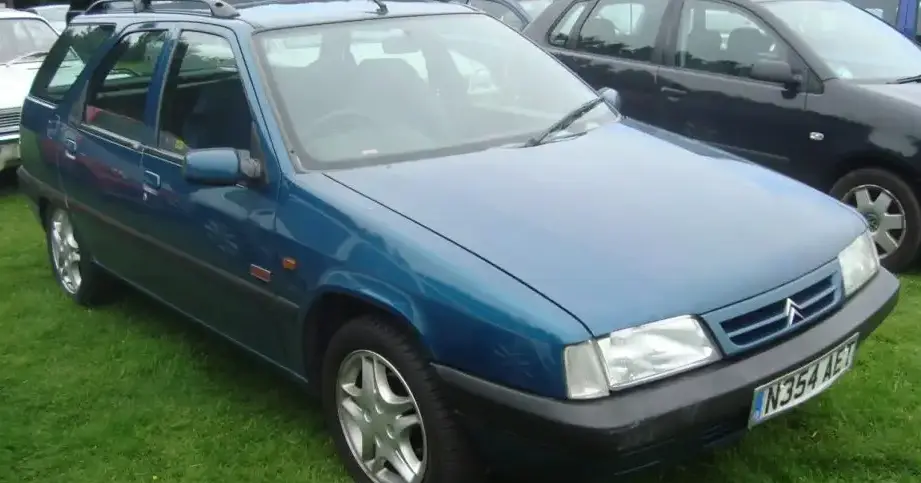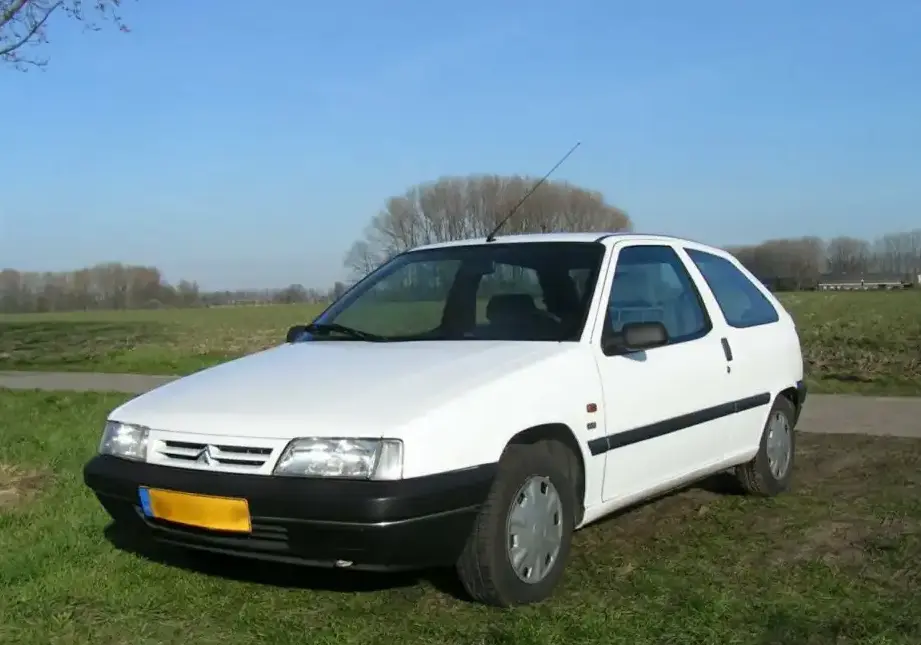
The Citroën ZX (N2, Phase II) 3-door 1.1 i, produced between 1994 and 1997, represented the entry point into the ZX range, a compact hatchback designed to replace the aging BX. Positioned as an affordable and practical family car, this variant offered a balance of economy and usability. It was part of the N2 series, representing the second phase of the ZX, which brought refinements to the original design launched in 1992. The ZX, as a whole, aimed to provide a modern alternative to rivals like the Ford Escort and Volkswagen Golf, offering distinctive Citroën styling and a focus on comfort. This 1.1-liter model was particularly important in markets where smaller engine capacities were favored due to taxation or fuel economy concerns.
Technical Specifications
| Brand | Citroen |
| Model | ZX |
| Generation | ZX (N2, Phase II) 3-door |
| Type (Engine) | 1.1 i (60 Hp) |
| Start of production | 1994 |
| End of production | 1997 |
| Powertrain Architecture | Internal Combustion engine |
| Body type | Hatchback |
| Seats | 5 |
| Doors | 3 |
| Fuel Type | Petrol (Gasoline) |
| Maximum speed | 155 km/h (96.31 mph) |
| Weight-to-power ratio | 15.6 kg/Hp, 64.2 Hp/tonne |
| Weight-to-torque ratio | 10.5 kg/Nm, 95.2 Nm/tonne |
| Power | 60 Hp @ 6200 rpm |
| Power per litre | 53.4 Hp/l |
| Torque | 89 Nm @ 3800 rpm (65.64 lb.-ft. @ 3800 rpm) |
| Engine layout | Front, Transverse |
| Engine Model/Code | HDZ TU1M+L3 |
| Engine displacement | 1124 cm3 (68.59 cu. in.) |
| Number of cylinders | 4 |
| Engine configuration | Inline |
| Cylinder Bore | 72 mm (2.83 in.) |
| Piston Stroke | 69 mm (2.72 in.) |
| Compression ratio | 9.7:1 |
| Number of valves per cylinder | 2 |
| Fuel injection system | Single-point injection |
| Engine aspiration | Naturally aspirated engine |
| Valvetrain | OHC |
| Engine oil capacity | 3.5 l (3.7 US qt | 3.08 UK qt) |
| Coolant | 6.5 l (6.87 US qt | 5.72 UK qt) |
| Kerb Weight | 935 kg (2061.32 lbs) |
| Max. weight | 1465 kg (3229.77 lbs) |
| Max load | 530 kg (1168.45 lbs) |
| Trunk (boot) space – minimum | 324 l (11.44 cu. ft.) |
| Trunk (boot) space – maximum | 1146 l (40.47 cu. ft.) |
| Fuel tank capacity | 54 l (14.27 US gal | 11.88 UK gal) |
| Max. roof load | 75 kg (165.35 lbs) |
| Permitted trailer load with brakes (12%) | 900 kg (1984.16 lbs) |
| Permitted trailer load without brakes | 465 kg (1025.15 lbs) |
| Permitted towbar download | 70 kg (154.32 lbs) |
| Length | 4071 mm (160.28 in.) |
| Width | 1688 mm (66.46 in.) |
| Height | 1397 mm (55 in.) |
| Wheelbase | 2540 mm (100 in.) |
| Front track | 1414 mm (55.67 in.) |
| Rear (Back) track | 1407 mm (55.39 in.) |
| Front overhang | 849 mm (33.43 in.) |
| Rear overhang | 682 mm (26.85 in.) |
| Minimum turning circle (turning diameter) | 11.1 m (36.42 ft.) |
| Drivetrain Architecture | The Internal combustion engine (ICE) drives the front wheels of the vehicle. |
| Drive wheel | Front wheel drive |
| Number of gears and type of gearbox | 5 gears, manual transmission |
| Front suspension | Independent type McPherson, Wishbone |
| Rear suspension | Hydro-pneumatic element, Trailing arm |
| Front brakes | Disc |
| Rear brakes | Drum |
| Assisting systems | ABS (Anti-lock braking system) |
| Steering type | Steering rack and pinion |
| Power steering | Hydraulic Steering |
| Tires size | 165/70 R13 |
Powertrain & Engine Architecture
The heart of the ZX 1.1 i is the HDZ engine, a member of Citroën and Peugeot’s TU1M family of inline-four cylinder petrol engines. This 1124cc unit featured a single overhead camshaft (OHC) operating two valves per cylinder. The HDZ engine utilized a single-point fuel injection system, a relatively simple and cost-effective technology for the time. This system injected fuel into the intake manifold rather than directly into the cylinders, resulting in slightly lower efficiency and power compared to multi-point injection. The engine produced 60 horsepower at 6200 rpm and 89 Nm (65.64 lb-ft) of torque at 3800 rpm. The engine’s relatively low compression ratio of 9.7:1 was typical for the era and allowed it to run on lower octane fuel. The engine was transversely mounted, driving the front wheels. The standard transmission was a five-speed manual gearbox, optimized for fuel efficiency rather than outright performance.
Driving Characteristics
The ZX 1.1 i, with its modest 60 horsepower, was not designed for spirited driving. Acceleration was leisurely, and overtaking required careful planning. However, the engine proved to be surprisingly flexible, with usable torque available from relatively low engine speeds. The five-speed manual transmission allowed drivers to keep the engine in its optimal power band. Compared to the more powerful 1.6 and 2.0-liter versions of the ZX, the 1.1 i felt significantly slower, but it offered a more relaxed and economical driving experience. The gear ratios were spaced to prioritize fuel economy, meaning that highway cruising required the engine to work a little harder. The ZX’s renowned hydropneumatic suspension, even in its simpler form on this model, provided a comfortable ride, absorbing bumps and imperfections in the road surface effectively.
Equipment & Trim Levels
The 1.1 i ZX was typically the base model, and as such, came with a relatively basic level of equipment. Standard features included power steering, central locking, and a basic stereo system. Interior upholstery was typically cloth, and the dashboard featured a simple, functional design. Optional extras included power windows, a sunroof, and upgraded audio systems. The trim level was designed to appeal to budget-conscious buyers who prioritized practicality and reliability over luxury features. The 3-door configuration further emphasized the car’s youthful appeal and practicality for urban driving.
Chassis & Braking
The ZX featured an independent McPherson strut front suspension and a trailing arm rear suspension with Citroën’s signature hydropneumatic elements. This suspension system provided a remarkably comfortable ride and excellent handling characteristics. The 1.1 i model typically used smaller diameter tires (165/70 R13) and featured disc brakes on the front wheels and drum brakes on the rear. ABS (Anti-lock Braking System) was often included as standard equipment, enhancing safety. The suspension was tuned to provide a balance between comfort and handling, prioritizing ride quality over sporty performance.
Market Reception & Comparison
The Citroën ZX 1.1 i was generally well-received as an affordable and practical family car. Critics praised its comfortable ride, spacious interior, and fuel efficiency. However, the engine’s lack of power was a common criticism. Compared to the 1.6-liter and 2.0-liter ZX models, the 1.1 i offered significantly lower performance but also lower running costs. The 1.9 TDI diesel version provided superior fuel economy and torque but at a higher purchase price. The 1.1 i appealed to buyers who primarily used their cars for short journeys and urban driving, where its fuel efficiency and ease of use were highly valued.
Legacy
The HDZ engine, while not known for its blistering performance, proved to be a reliable and durable unit. ZX 1.1 i models, if properly maintained, can still be found on the road today. The hydropneumatic suspension, while requiring occasional maintenance, is renowned for its longevity and ride comfort. In the used car market, the ZX 1.1 i represents an affordable and practical classic car, offering a unique driving experience and a glimpse into Citroën’s innovative engineering heritage. Parts availability can be a challenge, but a dedicated community of enthusiasts continues to support the model. The ZX, as a whole, is remembered as a stylish and comfortable family car that offered a refreshing alternative to more conventional rivals.