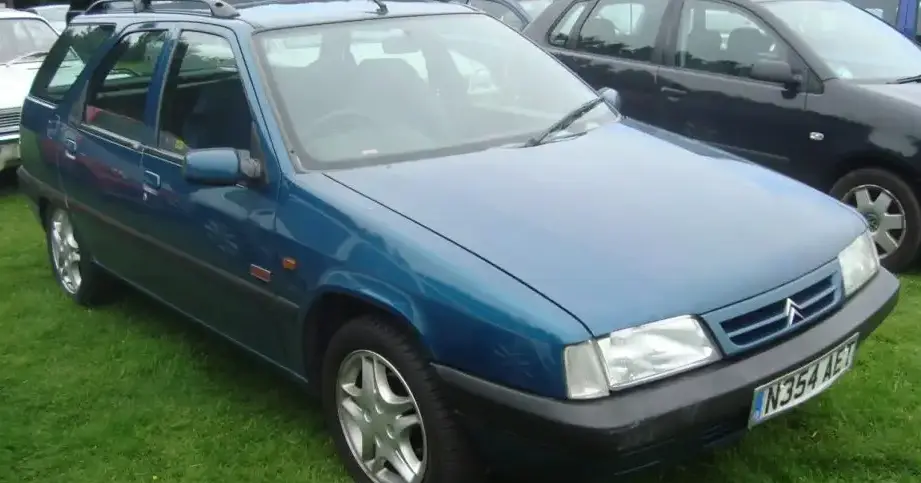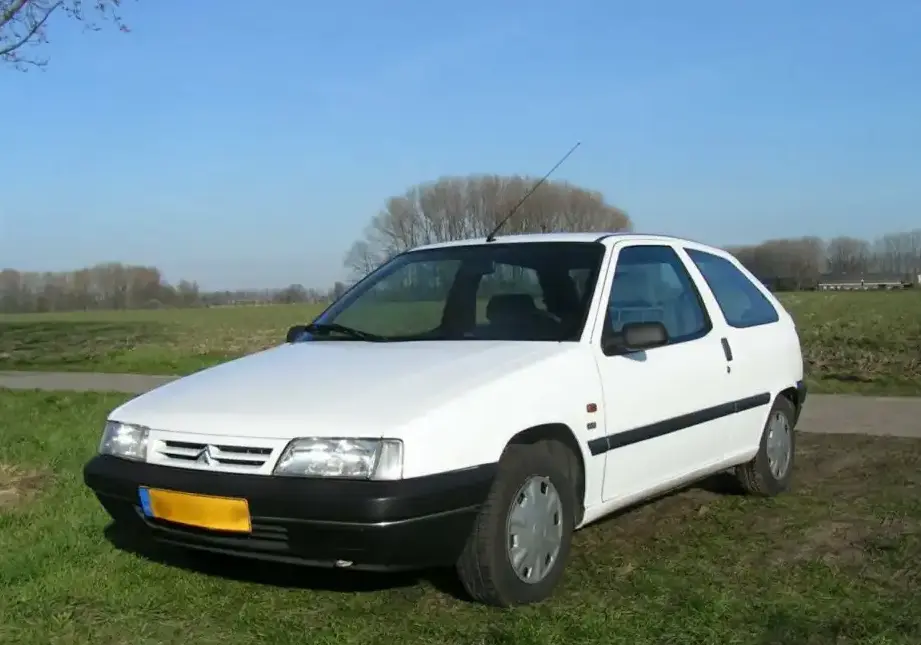
The Citroën ZX (N2, Phase II) 3-door 1.8 i 16V, produced between 1996 and 1997, represented a refinement of Citroën’s compact hatchback offering. Positioned as a mid-range variant within the ZX lineup, it aimed to provide a balance between performance and affordability. This model was part of the broader ZX (N2) generation, which itself was a successor to the popular Citroën BX, and utilized the PSA Group’s P84 platform. The Phase II update brought cosmetic and mechanical revisions, enhancing the car’s appeal in a competitive European market. The 3-door body style catered to buyers seeking a sportier aesthetic and a slightly more compact footprint.
Technical Specifications
| Brand | Citroen |
| Model | ZX |
| Generation | ZX (N2, Phase II) 3-door |
| Type (Engine) | 1.8 i 16V (110 Hp) |
| Start of production | 1996 |
| End of production | 1997 |
| Powertrain Architecture | Internal Combustion engine |
| Body type | Hatchback |
| Seats | 5 |
| Doors | 3 |
| Fuel Type | Petrol (Gasoline) |
| Power | 110 Hp @ 5500 rpm |
| Power per litre | 62.5 Hp/l |
| Torque | 158 Nm @ 4250 rpm (116.53 lb.-ft. @ 4250 rpm) |
| Engine layout | Front, Transverse |
| Engine Model/Code | LFY XU7JP4 |
| Engine displacement | 1761 cm3 (107.46 cu. in.) |
| Number of cylinders | 4 |
| Engine configuration | Inline |
| Cylinder Bore | 83 mm (3.27 in.) |
| Piston Stroke | 81.4 mm (3.2 in.) |
| Compression ratio | 10.4:1 |
| Number of valves per cylinder | 4 |
| Fuel injection system | Multi-port manifold injection |
| Engine aspiration | Naturally aspirated engine |
| Valvetrain | DOHC |
| Engine oil capacity | 4.25 l (4.49 US qt | 3.74 UK qt) |
| Coolant | 8 l (8.45 US qt | 7.04 UK qt) |
| Trunk (boot) space – minimum | 324 l (11.44 cu. ft.) |
| Trunk (boot) space – maximum | 1146 l (40.47 cu. ft.) |
| Fuel tank capacity | 54 l (14.27 US gal | 11.88 UK gal) |
| Length | 4071 mm (160.28 in.) |
| Width | 1688 mm (66.46 in.) |
| Height | 1399 mm (55.08 in.) |
| Wheelbase | 2540 mm (100 in.) |
| Front track | 1422 mm (55.98 in.) |
| Rear (Back) track | 1415 mm (55.71 in.) |
| Front overhang | 849 mm (33.43 in.) |
| Rear overhang | 682 mm (26.85 in.) |
| Minimum turning circle (turning diameter) | 11.1 m (36.42 ft.) |
| Drivetrain Architecture | The Internal combustion engine (ICE) drives the front wheels of the vehicle. |
| Drive wheel | Front wheel drive |
| Number of gears and type of gearbox | 5 gears, manual transmission |
| Front suspension | Independent type McPherson, Wishbone |
| Rear suspension | Hydro-pneumatic element, Trailing arm |
| Front brakes | Ventilated discs |
| Rear brakes | Drum |
| Steering type | Steering rack and pinion |
| Power steering | Hydraulic Steering |
| Tires size | 185/60 R14 |
| Wheel rims size | 5.5J x 14 |
Powertrain & Engine Architecture
The heart of the ZX 1.8 i 16V was the LFY XU7JP4 engine, a 1.8-liter inline-four cylinder powerplant. This engine was a product of the PSA Group’s engineering, known for its robust construction and relatively simple design. The ‘XU7JP4’ designation indicates a 16-valve, multi-point fuel-injected engine. The engine featured a double overhead camshaft (DOHC) valvetrain, contributing to its improved breathing and higher power output compared to earlier, single overhead cam versions. The multi-port fuel injection system, controlled by a basic engine control unit (ECU), delivered fuel directly to each cylinder, optimizing combustion efficiency. The engine produced 110 horsepower at 5500 rpm and 158 Nm (116.53 lb-ft) of torque at 4250 rpm. The engine was transversely mounted, driving the front wheels.
Driving Characteristics
The 1.8L 16V engine provided a noticeable step up in performance compared to the base 1.6L models. While not a sports car, the ZX 1.8 offered brisk acceleration and comfortable cruising speeds. The five-speed manual transmission was well-matched to the engine’s characteristics, providing adequate gear spacing for both city driving and highway overtaking. The gear ratios were tuned for a balance of fuel economy and responsiveness. Compared to the more powerful (and expensive) V6 variants, the 1.8 offered a more economical driving experience, albeit with less outright performance. The handling was typical of Citroëns of the era – comfortable and composed, with the hydropneumatic suspension absorbing bumps effectively. However, it wasn’t particularly sporty or engaging for drivers seeking a more dynamic experience.
Equipment & Trim Levels
The ZX 1.8 i 16V typically came equipped with a reasonable level of standard features. Interior appointments included cloth upholstery, a basic dashboard layout with analog gauges, and power steering. Depending on the specific market and optional packages, features like electric windows, central locking, and an upgraded audio system were available. The 3-door configuration generally featured sportier seats than the 5-door models. The trim level sat in the middle of the ZX range, offering more comfort and features than the entry-level models but lacking the luxury appointments of the top-of-the-line versions.
Chassis & Braking
The ZX utilized an independent McPherson strut front suspension and a unique hydro-pneumatic rear suspension system. This hydropneumatic system, a Citroën hallmark, provided a remarkably smooth and comfortable ride, automatically adjusting ride height and damping characteristics. The front brakes were ventilated discs, providing good stopping power, while the rear brakes were drums. This combination was adequate for the car’s weight and performance, but not as sophisticated as the all-disc setups found on higher-spec models. Stabilizer bars were fitted to both the front and rear axles to reduce body roll during cornering.
Market Reception & Comparison
The Citroën ZX 1.8 i 16V was generally well-received by automotive critics as a practical and comfortable family hatchback. It was praised for its smooth ride, spacious interior, and relatively fuel-efficient engine. However, some critics noted that the styling was somewhat conservative and that the interior lacked the flair of some competitors. Compared to rivals like the Ford Escort and Volkswagen Golf, the ZX offered a unique driving experience thanks to its hydropneumatic suspension. Fuel economy was competitive for the time, averaging around 30-35 mpg in mixed driving conditions. Reliability was generally good, although the hydropneumatic suspension required periodic maintenance.
Legacy
The Citroën ZX, and specifically the 1.8 i 16V variant, has developed a modest following among classic car enthusiasts. The XU7JP4 engine is known for its durability and relative simplicity, making it a relatively easy engine to maintain. However, the hydropneumatic suspension remains a potential source of expense, requiring specialized knowledge and parts. Today, well-maintained examples of the ZX 1.8 i 16V are becoming increasingly rare, and are sought after by those who appreciate its unique blend of comfort, practicality, and French automotive engineering. The car represents a significant chapter in Citroën’s history, showcasing the brand’s commitment to innovative suspension technology and comfortable driving experiences.