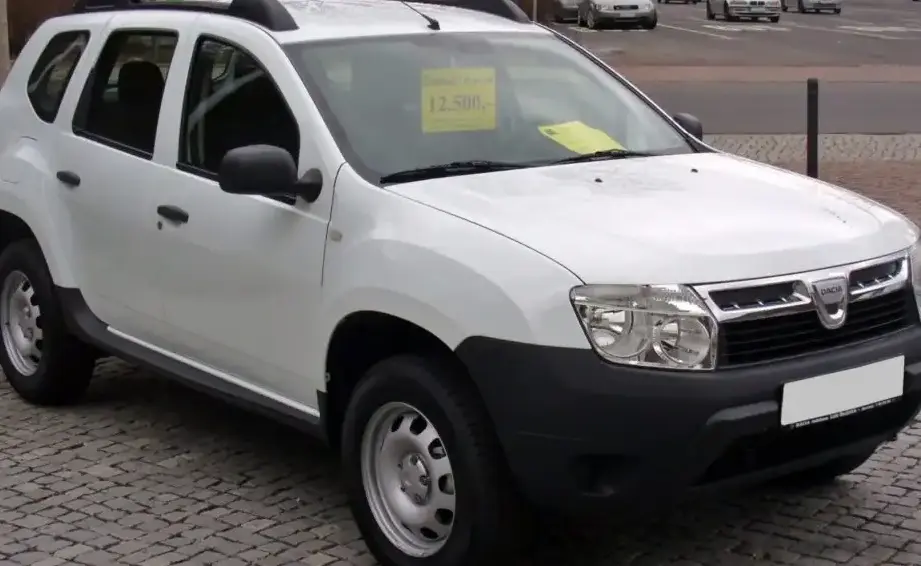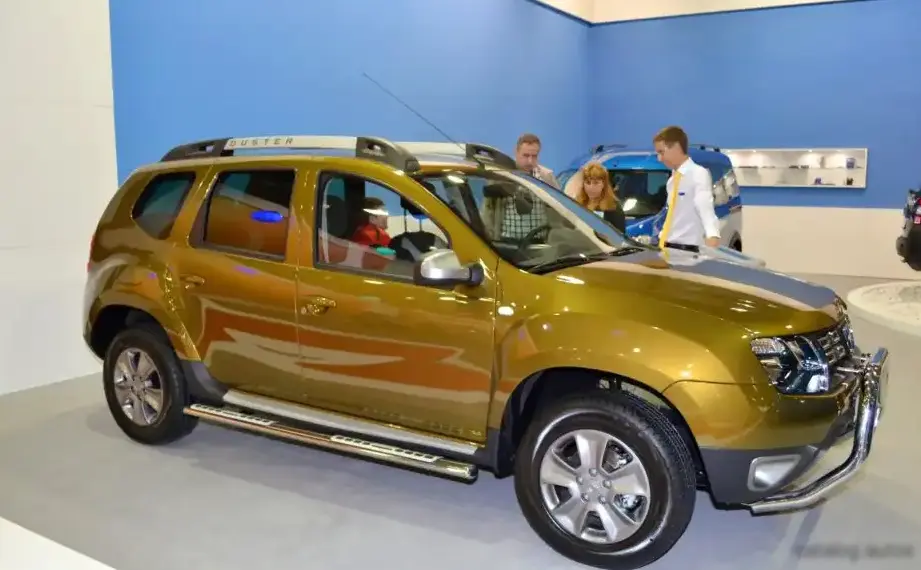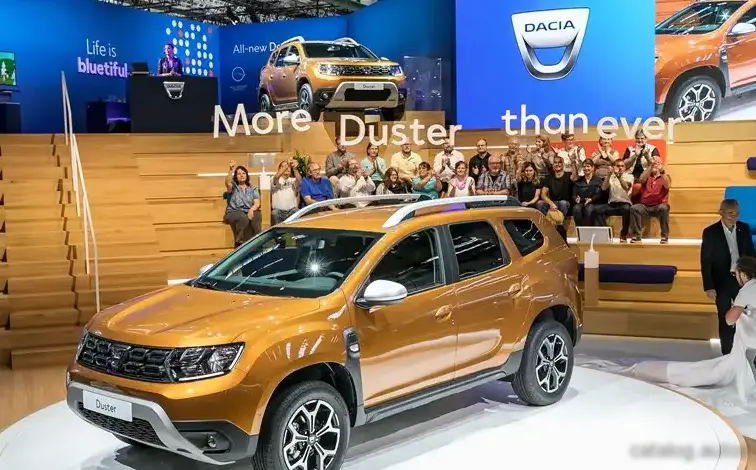
The Dacia Duster II 1.5 dCi, producing 116 horsepower, was a key variant in the second generation of Dacia’s popular SUV, sold from 2018 to 2021. Positioned as a mid-range offering, it balanced fuel efficiency with adequate performance for everyday driving. The Duster II, built on the B0/B+ platform, represented a significant step up in refinement and features compared to its predecessor, and this 1.5 dCi engine option was a mainstay in many European markets where diesel fuel remained prevalent. This model aimed to provide a practical and affordable SUV option for families and individuals seeking a versatile vehicle.
Technical Specifications
| Brand | Dacia |
| Model | Duster |
| Generation | Duster II |
| Type (Engine) | 1.5 dCi (116 Hp) |
| Start of production | 2018 |
| End of production | 2021 |
| Powertrain Architecture | Internal Combustion engine |
| Body type | SUV |
| Seats | 5 |
| Doors | 5 |
| Fuel consumption (urban) | 4.7 l/100 km (50 US mpg, 60.1 UK mpg, 21.3 km/l) |
| Fuel consumption (extra urban) | 4.3 l/100 km (54.7 US mpg, 65.7 UK mpg, 23.3 km/l) |
| Fuel consumption (combined) | 4.4 l/100 km (53.5 US mpg, 64.2 UK mpg, 22.7 km/l) |
| CO2 emissions | 115 g/km |
| Fuel Type | Diesel |
| Acceleration 0 – 100 km/h | 10.5 sec |
| Acceleration 0 – 62 mph | 10.5 sec |
| Acceleration 0 – 60 mph | 10 sec |
| Maximum speed | 179 km/h (111.23 mph) |
| Emission standard | Euro 6d |
| Weight-to-power ratio | 11.4 kg/Hp, 87.9 Hp/tonne |
| Weight-to-torque ratio | 5.1 kg/Nm, 197 Nm/tonne |
| Power | 116 Hp @ 3750 rpm |
| Power per litre | 79.4 Hp/l |
| Torque | 260 Nm @ 1750 rpm (191.77 lb.-ft. @ 1750 rpm) |
| Engine layout | Front, Transverse |
| Engine Model/Code | K9K 872 |
| Engine displacement | 1461 cm3 (89.16 cu. in.) |
| Number of cylinders | 4 |
| Engine configuration | Inline |
| Cylinder Bore | 76 mm (2.99 in.) |
| Piston Stroke | 80.5 mm (3.17 in.) |
| Compression ratio | 15.5:1 |
| Number of valves per cylinder | 2 |
| Fuel injection system | Diesel Commonrail |
| Engine aspiration | Turbocharger, Intercooler |
| Engine oil capacity | 5.7 l (6.02 US qt | 5.02 UK qt) |
| Coolant | 11 l (11.62 US qt | 9.68 UK qt) |
| Kerb Weight | 1320 kg (2910.1 lbs.) |
| Max. weight | 1848 kg (4074.14 lbs.) |
| Max load | 528 kg (1164.04 lbs.) |
| Trunk (boot) space – minimum | 445 l (15.72 cu. ft.) |
| Trunk (boot) space – maximum | 1623 l (57.32 cu. ft.) |
| Fuel tank capacity | 50 l (13.21 US gal | 11 UK gal) |
| AdBlue tank | 14.4 l (3.8 US gal | 3.17 UK gal) |
| Permitted trailer load with brakes (12%) | 1500 kg (3306.93 lbs.) |
| Permitted trailer load without brakes | 695 kg (1532.21 lbs.) |
| Length | 4341 mm (170.91 in.) |
| Width | 1804 mm (71.02 in.) |
| Width including mirrors | 2052 mm (80.79 in.) |
| Height | 1693 mm (66.65 in.) |
| Wheelbase | 2674 mm (105.28 in.) |
| Front track | 1563 mm (61.54 in.) |
| Rear (Back) track | 1570 mm (61.81 in.) |
| Front overhang | 841 mm (33.11 in.) |
| Rear overhang | 826 mm (32.52 in.) |
| Ride height (ground clearance) | 210 mm (8.27 in.) |
| Minimum turning circle (turning diameter) | 10.14 m (33.27 ft.) |
| Approach angle | 30.0° |
| Departure angle | 33.0° |
| Ramp-over (brakeover) angle | 21.0° |
| Drivetrain Architecture | The Internal combustion engine (ICE) drives the front wheels of the vehicle. |
| Drive wheel | Front wheel drive |
| Number of gears and type of gearbox | 6 gears, manual transmission |
| Front suspension | Independent, type McPherson with coil spring and anti-roll bar |
| Rear suspension | dependent spring suspension |
| Front brakes | Ventilated discs |
| Rear brakes | Drum |
| Assisting systems | ABS (Anti-lock braking system) |
| Steering type | Steering rack and pinion |
| Power steering | Electric Steering |
| Tires size | 215/65 R16 |
| Wheel rims size | 6.5J x 16 |
INTRODUCTION
The Dacia Duster II 1.5 dCi (116 Hp) was a significant offering in the second-generation Duster lineup, launched in 2018. This variant was particularly important in European markets, where diesel engines continued to hold a strong presence due to their fuel efficiency. The 1.5 dCi engine, designated K9K 872, was a Renault-Nissan alliance design, known for its robustness and relatively low running costs. Within the Duster II range, this engine and power output represented a sweet spot for buyers prioritizing economy and practicality over outright performance. It sat between the base 90 hp diesel and the more powerful 115 hp petrol options.
Powertrain & Engine Architecture
The heart of this Duster variant is the 1.5-liter, four-cylinder diesel engine, specifically the K9K 872 code. This engine utilizes a common rail direct injection system, delivering fuel at high pressure for improved combustion efficiency and reduced emissions. The engine features a single overhead camshaft (SOHC) operating two valves per cylinder. A turbocharger with an intercooler is employed to boost power and torque, providing 116 horsepower at 3750 rpm and 260 Nm (191.77 lb-ft) of torque at 1750 rpm. The engine’s compression ratio is relatively high at 15.5:1, contributing to its efficiency. The 1.5 dCi was typically paired with a six-speed manual transmission, although an automated manual transmission (AMT) was also available in some markets. The AMT, while offering some convenience, wasn’t as smooth or responsive as a traditional automatic.
Driving Characteristics
The 116 hp 1.5 dCi-powered Duster offered a comfortable and practical driving experience. Acceleration from 0-100 km/h (0-62 mph) took around 10.5 seconds, which is adequate for everyday driving but doesn’t provide particularly brisk performance. The engine’s strong low-end torque made it well-suited for navigating urban environments and tackling inclines. The six-speed manual transmission allowed for efficient cruising on highways, while the gear ratios were optimized for fuel economy rather than outright speed. Compared to the lower-powered 90 hp diesel, the 116 hp version felt noticeably more responsive, especially when fully loaded or traveling uphill. However, it lacked the punch of the petrol engines, particularly during overtaking maneuvers. The suspension setup prioritized comfort over sporty handling, resulting in a slightly soft and body-roll-prone ride.
Equipment & Trim Levels
The Duster II 1.5 dCi (116 Hp) was available in various trim levels, typically including Essential, Comfort, and Prestige (or equivalent names depending on the market). The base Essential trim offered basic features such as air conditioning, power steering, and a basic audio system. The Comfort trim added features like alloy wheels, electric windows, and a more advanced infotainment system. The top-of-the-line Prestige trim included features like automatic climate control, parking sensors, and a rearview camera. Interior upholstery was typically cloth, with higher trims offering upgraded fabric or leather options. Optional extras included a panoramic sunroof, satellite navigation, and a more comprehensive safety package.
Chassis & Braking
The Dacia Duster II featured a McPherson strut front suspension and a torsion beam rear suspension. This setup provided a good balance between comfort and handling, although it wasn’t particularly sophisticated. The front brakes were ventilated discs, while the rear brakes were typically drums, a cost-saving measure common in this segment. ABS (Anti-lock Braking System) was standard across all trim levels. The Duster’s relatively high ground clearance of 210 mm (8.27 in) made it capable of handling rough roads and light off-road conditions. The steering was a rack and pinion system with electric power assistance, providing light and easy steering feel.
Market Reception & Comparison
The Dacia Duster II 1.5 dCi (116 Hp) was generally well-received by critics and consumers alike. It was praised for its affordability, practicality, and fuel efficiency. Compared to the 90 hp diesel version, the 116 hp model offered a noticeable improvement in performance, making it a more versatile option for a wider range of drivers. However, some reviewers criticized the engine’s noise and vibration levels, which were typical of diesel engines of this era. Compared to the petrol versions, the 1.5 dCi offered superior fuel economy, but at the cost of some refinement and performance. The Duster consistently represented excellent value for money, undercutting many of its competitors in terms of price.
Legacy
The K9K 872 engine has proven to be a relatively reliable unit, although regular maintenance is crucial. Common issues include potential problems with the turbocharger and fuel injectors. The Duster II 1.5 dCi remains a popular choice in the used car market, particularly for buyers seeking an affordable and fuel-efficient SUV. Its robust construction and relatively simple mechanicals make it a relatively easy vehicle to maintain. While newer SUVs offer more advanced technology and features, the Duster II 1.5 dCi continues to represent a practical and value-oriented option for those seeking a no-frills, dependable vehicle.