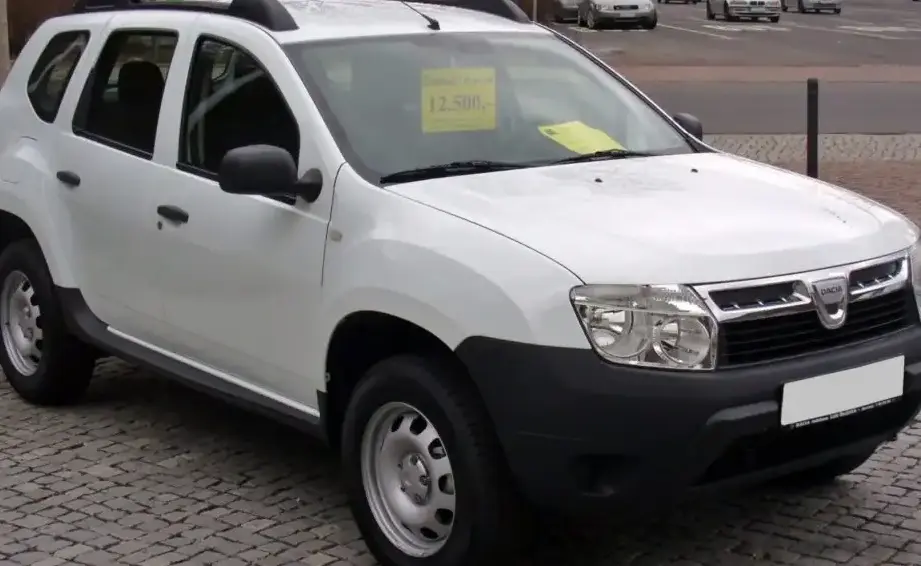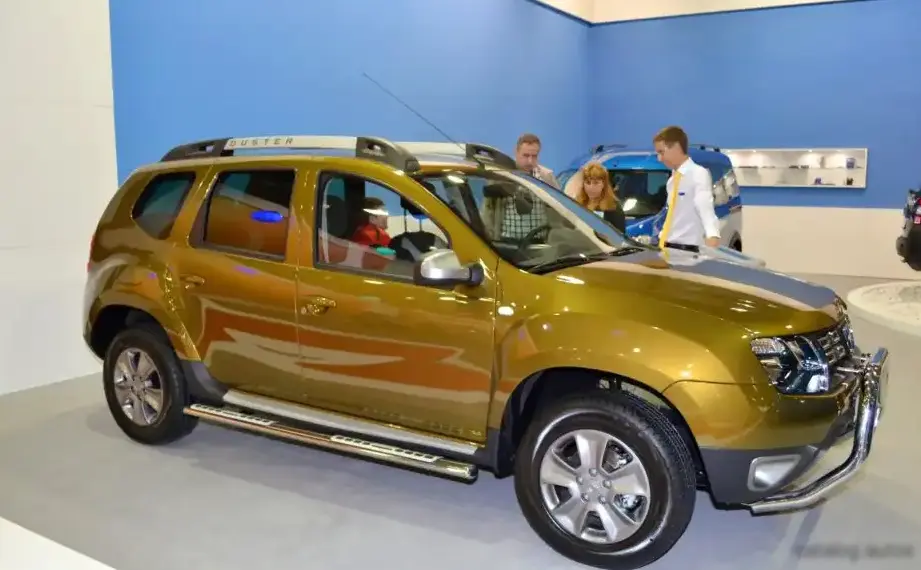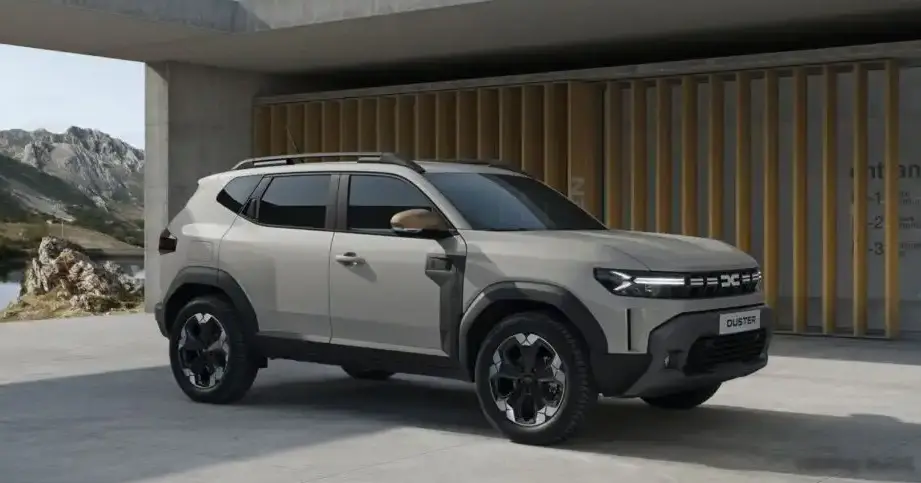
The Dacia Duster III 1.2 TCe (130 hp) Mild Hybrid 4×4, launched in February 2024, represents the latest iteration of Dacia’s popular compact SUV. Positioned as a mid-range offering within the third-generation Duster lineup, this variant combines a turbocharged three-cylinder gasoline engine with a 48-volt mild hybrid system and all-wheel drive. It builds upon the success of previous Duster models, known for their affordability and practicality, while incorporating modern technology to improve fuel efficiency and reduce emissions. The Duster III is based on the CMF-B platform, shared with other Renault Group vehicles, and is primarily aimed at the European market, offering a budget-friendly SUV option with enhanced capabilities.
Technical Specifications
| Brand | Dacia |
| Model | Duster |
| Generation | Duster III |
| Type (Engine) | 1.2 TCe (130 Hp) Mild Hybrid 4×4 |
| Start of production | February, 2024 |
| Powertrain Architecture | MHEV (Mild Hybrid Electric Vehicle) |
| Body type | SUV |
| Seats | 5 |
| Doors | 5 |
| Fuel consumption at Low speed (WLTP) | 6.9 l/100 km (34.1 US mpg, 40.9 UK mpg, 14.5 km/l) |
| Fuel consumption at Medium speed (WLTP) | 5.3 l/100 km (44.4 US mpg, 53.3 UK mpg, 18.9 km/l) |
| Fuel consumption at high speed (WLTP) | 5.3 l/100 km (44.4 US mpg, 53.3 UK mpg, 18.9 km/l) |
| Fuel consumption at very high speed (WLTP) | 6.8 l/100 km (34.6 US mpg, 41.5 UK mpg, 14.7 km/l) |
| Combined fuel consumption (WLTP) | 6.1 l/100 km (38.6 US mpg, 46.3 UK mpg, 16.4 km/l) |
| CO2 emissions (WLTP) | 137 g/km |
| Fuel Type | Petrol (Gasoline) |
| Acceleration 0 – 100 km/h | 11 sec |
| Acceleration 0 – 62 mph | 11 sec |
| Acceleration 0 – 60 mph | 10.5 sec |
| Maximum speed | 180 km/h (111.85 mph) |
| Emission standard | Euro 6d-ISC-FCM |
| Weight-to-power ratio | 10 kg/Hp, 99.7 Hp/tonne |
| Weight-to-torque ratio | 5.7 kg/Nm, 176.4 Nm/tonne |
| Gross battery capacity | 0.8 kWh |
| Battery voltage | 48 V |
| Battery technology | Lithium-ion (Li-Ion) |
| Power | 130 Hp |
| Torque | 230 Nm (169.64 lb.-ft.) |
| Engine layout | Front, Transverse |
| Engine Model/Code | HR12 |
| Engine displacement | 1199 cm3 (73.17 cu. in.) |
| Number of cylinders | 3 |
| Engine configuration | Inline |
| Number of valves per cylinder | 4 |
| Fuel injection system | Direct injection |
| Engine aspiration | Turbocharger, Intercooler |
| Engine systems | Start & Stop System, Particulate filter |
| Kerb Weight | 1304-1390 kg (2874.83 – 3064.43 lbs.) |
| Max. weight | 1895 kg (4177.76 lbs.) |
| Max load | 505-591 kg (1113.33 – 1302.93 lbs.) |
| Trunk (boot) space – minimum | 456 l (16.1 cu. ft.) |
| Trunk (boot) space – maximum | 1548 l (54.67 cu. ft.) |
| Fuel tank capacity | 50 l (13.21 US gal, 11 UK gal) |
| Permitted trailer load with brakes (12%) | 1500 kg (3306.93 lbs.) |
| Permitted trailer load without brakes | 730 kg (1609.37 lbs.) |
| Length | 4343 mm (170.98 in.) |
| Width | 1813 mm (71.38 in.) |
| Width including mirrors | 2069 mm (81.46 in.) |
| Height | 1661 mm (65.39 in.) |
| Wheelbase | 2658 mm (104.65 in.) |
| Ride height (ground clearance) | 217 mm (8.54 in.) |
| Minimum turning circle | 10.86 m (35.63 ft.) |
| Drivetrain Architecture | ICE and electric motor drive front wheels, rear drive via clutch |
| Drive wheel | All wheel drive (4×4) |
| Number of gears | 6 |
| Gearbox type | Manual transmission |
| Front brakes | Ventilated discs |
| Rear brakes | Drum |
| Assisting systems | ABS (Anti-lock braking system) |
| Steering type | Steering rack and pinion |
| Power steering | Electric Steering |
| Tires size | 215/65 R17; 215/60 R18 |
| Wheel rims size | 17; 18 |
Powertrain & Engine Architecture
The heart of the Duster III 1.2 TCe Mild Hybrid 4×4 is the HR12 engine, a 1.2-liter turbocharged three-cylinder gasoline engine. This engine utilizes direct fuel injection and is paired with a 48-volt mild hybrid system. The mild hybrid system consists of a small electric motor and a battery, which assist the engine during acceleration and allow for start-stop functionality to improve fuel economy. The HR12 engine produces 130 horsepower and 230 Nm (169.64 lb.-ft.) of torque. The engine’s turbocharger and intercooler contribute to its improved power output and efficiency. The 48V system doesn’t allow for fully electric driving, but it does provide regenerative braking to recapture energy during deceleration. The powertrain is coupled with a six-speed manual transmission, delivering power to all four wheels via Dacia’s all-wheel-drive system.
Driving Characteristics
The 1.2 TCe Mild Hybrid 4×4 offers a balance between performance and fuel efficiency. While not exceptionally quick, with a 0-60 mph time of around 10.5 seconds, it provides adequate power for everyday driving and occasional off-road excursions. The mild hybrid system provides a noticeable boost during initial acceleration, improving responsiveness. The six-speed manual transmission allows for precise control, and the all-wheel-drive system enhances traction on slippery surfaces. Compared to higher-powered Duster variants, this version prioritizes fuel economy and affordability over outright performance. The gear ratios are tuned for efficiency, resulting in a comfortable cruising experience, but may require more frequent downshifts when overtaking or climbing hills.
Equipment & Trim Levels
The Duster III 1.2 TCe Mild Hybrid 4×4 typically comes equipped with a range of standard features, including air conditioning, a touchscreen infotainment system with smartphone integration (Apple CarPlay and Android Auto), and basic safety features like ABS, ESP, and multiple airbags. Higher trim levels offer additional features such as automatic climate control, a larger touchscreen display, rear parking sensors, and a rearview camera. Interior upholstery is typically cloth, with options for upgraded materials on higher trims. Optional extras may include alloy wheels, a panoramic sunroof, and advanced driver-assistance systems (ADAS) like adaptive cruise control and lane departure warning.
Chassis & Braking
The Duster III utilizes a robust chassis designed to handle both on-road and off-road conditions. The suspension system consists of MacPherson struts at the front and a multi-link setup at the rear, providing a comfortable ride and good handling characteristics. The front brakes are ventilated discs, while the rear brakes are drums, a cost-saving measure common in this segment. The all-wheel-drive system features an automatic mode that distributes torque between the front and rear axles as needed, and a lock mode for more challenging terrain. Stabilizer bars are fitted to both the front and rear axles to reduce body roll during cornering.
Market Reception & Comparison
The Dacia Duster III 1.2 TCe Mild Hybrid 4×4 has been well-received in the European market, praised for its affordability, practicality, and improved fuel efficiency. Critics have noted that the mild hybrid system provides a noticeable improvement in fuel economy without significantly impacting performance. Compared to other Duster variants, such as those with diesel engines or higher-powered gasoline engines, this version offers a more accessible price point and lower running costs. However, some reviewers have pointed out that the interior materials are basic and the overall driving experience is not as refined as some of its competitors.
Legacy
The HR12 engine, in its various iterations, has proven to be a reliable and durable powertrain. The addition of the mild hybrid system in the Duster III is expected to further enhance its longevity by reducing stress on the engine. As a used car, the Duster III 1.2 TCe Mild Hybrid 4×4 is likely to hold its value well due to its practicality, affordability, and fuel efficiency. The combination of all-wheel drive and a mild hybrid system makes it a compelling option for buyers seeking a versatile and economical SUV.