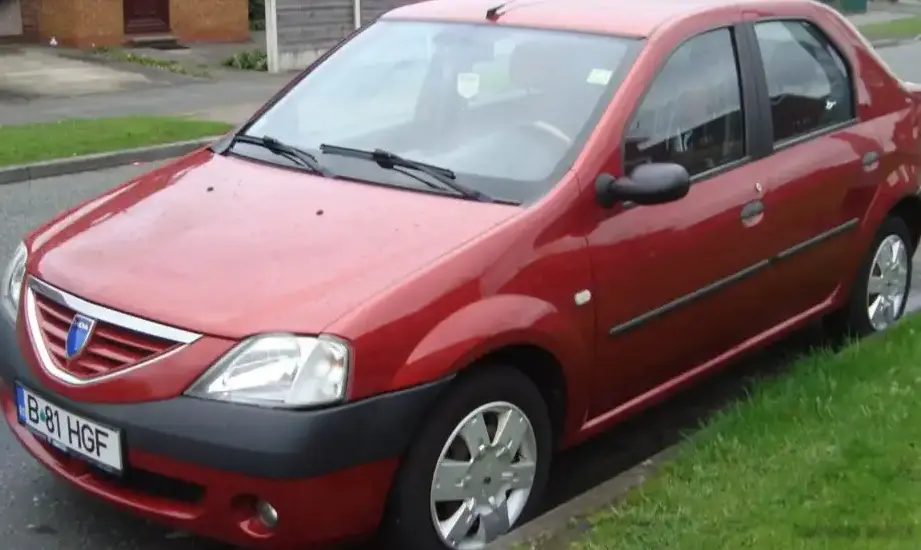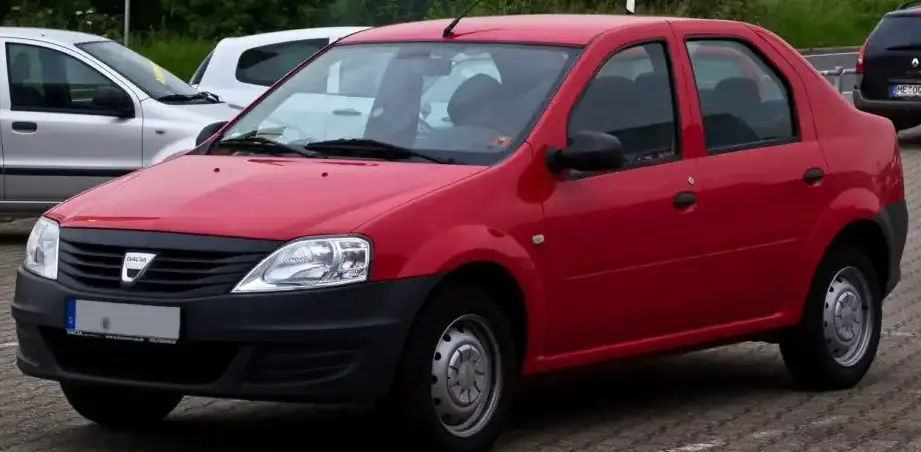
The Dacia Logan I (facelift, produced 2008-2012) 1.5 dCi 90 hp variant represents a significant offering within the first generation Logan lineup. Introduced in 2010, this model combined a fuel-efficient diesel engine with a five-speed manual transmission, aiming to provide an affordable and practical transportation solution, particularly in European markets. Positioned as a mid-range option, it slotted between the base 75 hp diesel and higher-specification trims. The facelift brought cosmetic updates and minor mechanical refinements to the original Logan, enhancing its appeal to budget-conscious buyers.
Technical Specifications
| Brand | Dacia |
| Model | Logan |
| Generation | Logan I (facelift 2008) |
| Type (Engine) | 1.5 dCi (90 Hp) FAP |
| Start of production | 2010 |
| End of production | 2012 |
| Powertrain Architecture | Internal Combustion engine |
| Body type | Sedan |
| Seats | 5 |
| Doors | 4 |
| Fuel consumption (urban) | 4.9 l/100 km (48 US mpg, 57.6 UK mpg, 20.4 km/l) |
| Fuel consumption (extra urban) | 3.6 l/100 km (65.3 US mpg, 78.5 UK mpg, 27.8 km/l) |
| Fuel consumption (combined) | 4 l/100 km (58.8 US mpg, 70.6 UK mpg, 25 km/l) |
| Fuel Type | Diesel |
| Acceleration 0 – 100 km/h | 12.8 sec |
| Acceleration 0 – 62 mph | 12.8 sec |
| Acceleration 0 – 60 mph | 12.2 sec |
| Maximum speed | 173 km/h (107.5 mph) |
| Weight-to-power ratio | 11.9 kg/Hp, 83.7 Hp/tonne |
| Weight-to-torque ratio | 5.4 kg/Nm, 186 Nm/tonne |
| Power | 90 Hp @ 3750 rpm |
| Power per litre | 61.6 Hp/l |
| Torque | 200 Nm @ 1750 rpm (147.51 lb.-ft. @ 1750 rpm) |
| Engine layout | Front, Transverse |
| Engine Model/Code | K9K 892 |
| Engine displacement | 1461 cm3 (89.16 cu. in.) |
| Number of cylinders | 4 |
| Engine configuration | Inline |
| Number of valves per cylinder | 2 |
| Fuel injection system | Diesel Commonrail |
| Engine aspiration | Turbocharger, Intercooler |
| Engine oil capacity | 4.5 l (4.76 US qt | 3.96 UK qt) |
| Coolant capacity | 4.5 l (4.76 US qt | 3.96 UK qt) |
| Engine systems | Particulate filter |
| Kerb Weight | 1075 kg (2369.97 lbs.) |
| Max. weight | 1540 kg (3395.12 lbs.) |
| Max load | 465 kg (1025.15 lbs.) |
| Fuel tank capacity | 50 l (13.21 US gal | 11 UK gal) |
| Length | 4288 mm (168.82 in.) |
| Width | 1740 mm (68.5 in.) |
| Height | 1534 mm (60.39 in.) |
| Wheelbase | 2630 mm (103.54 in.) |
| Drivetrain Architecture | The Internal combustion engine (ICE) drives the front wheels of the vehicle. |
| Drive wheel | Front wheel drive |
| Number of gears and type of gearbox | 5 gears, manual transmission |
| Assisting systems | ABS (Anti-lock braking system) |
| Steering type | Steering rack and pinion |
| Tires size | 185/65 R15 |
| Wheel rims size | 15 |
Powertrain & Engine Architecture
The heart of this Logan variant is the Renault-sourced K9K 892 1.5-liter inline-four diesel engine. This engine is a common sight in many Renault, Dacia, and Nissan vehicles. The K9K engine family is known for its robust design and relatively simple mechanicals. The 90 hp version utilizes a turbocharger with an intercooler to boost power output. Fuel is delivered via a common rail direct injection system, contributing to improved fuel efficiency and reduced emissions. The engine features two valves per cylinder and a single overhead camshaft. The five-speed manual transmission, also a Renault design, provides a straightforward and durable shifting experience. The transmission’s gear ratios are tuned for fuel economy and everyday usability rather than outright performance.
Driving Characteristics
The 1.5 dCi 90 hp Logan offers a practical and economical driving experience. Acceleration is modest, taking approximately 12.8 seconds to reach 62 mph (100 km/h). However, the engine delivers a useful amount of torque – 200 Nm (147 lb-ft) – from relatively low engine speeds (1750 rpm). This makes it suitable for everyday driving and carrying passengers or cargo. Compared to the lower-powered 75 hp version, the 90 hp model provides noticeably more responsiveness, especially when overtaking or climbing hills. It doesn’t offer the sporty feel of higher-performance Logan variants, but it excels in providing a comfortable and efficient ride. The manual transmission allows for driver control, but the gear ratios are spaced to prioritize fuel economy.
Equipment & Trim Levels
The 1.5 dCi 90 hp Logan typically came equipped with basic but functional features. Standard equipment generally included power steering, central locking, electric front windows, and an adjustable steering column. Interior upholstery was typically cloth, and the dashboard featured a simple, utilitarian design. Optional extras could include air conditioning, a radio/CD player, and alloy wheels. Trim levels varied depending on the market, but this variant generally represented a step up from the base model, offering a slightly more refined interior and additional convenience features.
Chassis & Braking
The Logan I utilized a relatively simple chassis design. The front suspension consisted of MacPherson struts, while the rear suspension employed a torsion beam axle. This setup prioritized cost-effectiveness and durability over sophisticated handling. Braking systems varied depending on the market and trim level. Lower-spec models often featured drum brakes on the rear wheels, while higher-spec versions received disc brakes all around. ABS (Anti-lock Braking System) was typically standard equipment, enhancing safety. Stabilizer bars were included to reduce body roll during cornering, but the overall handling characteristics were geared towards comfort and stability rather than sporty dynamics.
Market Reception & Comparison
The Dacia Logan, in general, was well-received in European markets as an affordable and practical vehicle. The 1.5 dCi 90 hp variant struck a good balance between fuel economy, performance, and price. Critics praised its spacious interior, robust build quality, and low running costs. Compared to the 75 hp diesel, the 90 hp version offered a noticeable improvement in performance, making it a more appealing option for drivers who frequently travel on highways or carry heavy loads. Compared to gasoline-powered Logan models, the diesel offered significantly better fuel economy, although it came with a higher purchase price. Reliability was generally good, although the diesel particulate filter (DPF) could require maintenance, particularly for drivers who primarily undertake short journeys.
Legacy
The Dacia Logan I 1.5 dCi 90 hp remains a popular choice in the used car market, particularly for budget-conscious buyers. The K9K engine is known for its durability, and with proper maintenance, it can provide many years of reliable service. However, potential buyers should be aware of the potential for DPF issues and the need for regular servicing. The Logan’s simple design and readily available parts make it relatively easy and inexpensive to repair. This variant helped establish the Logan as a benchmark for affordable motoring in Europe, paving the way for subsequent generations of the model.