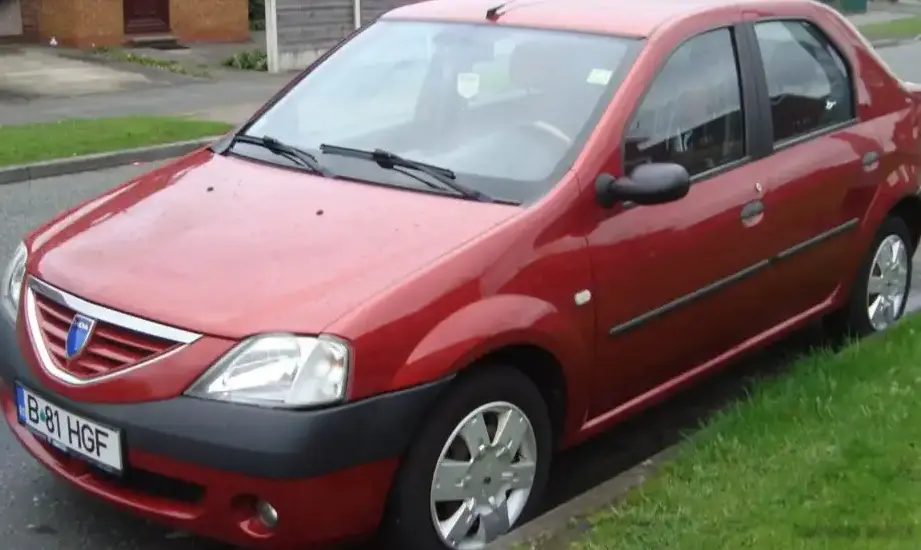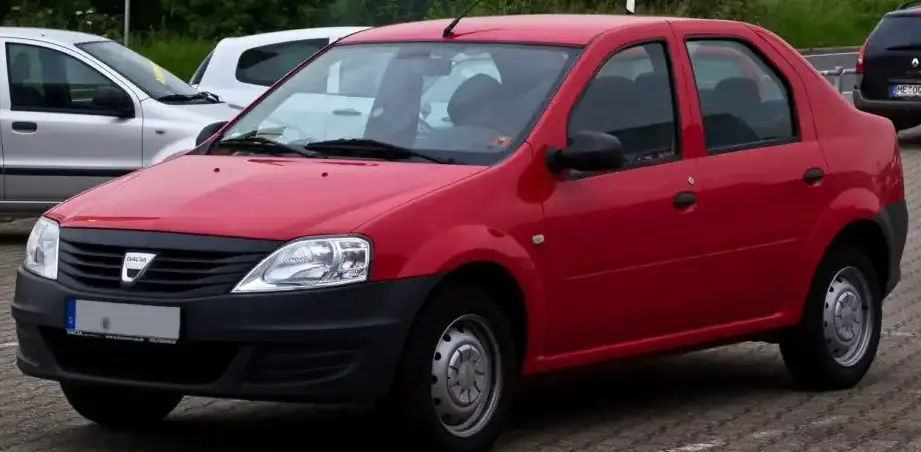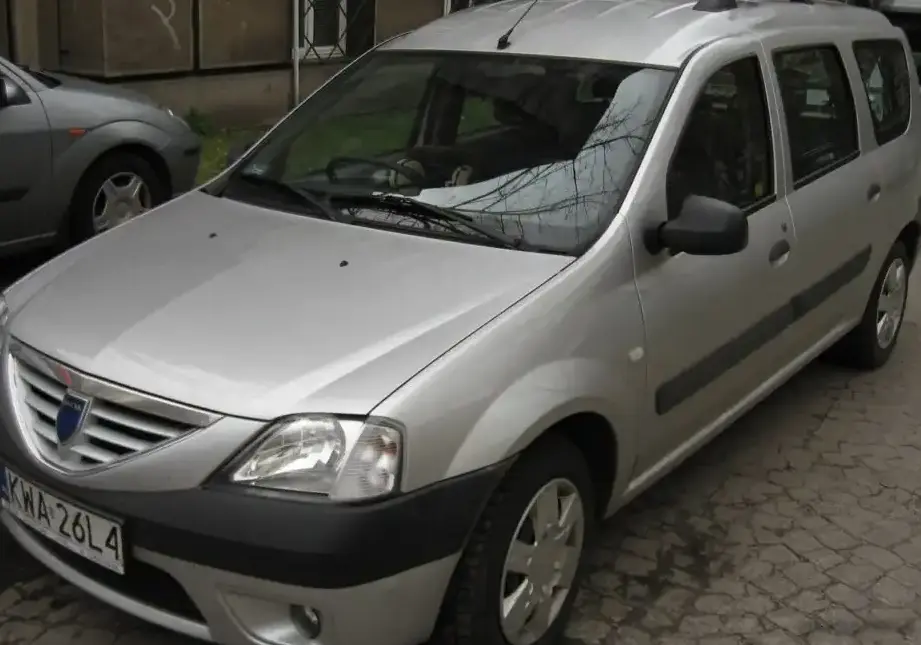
The Dacia Logan I MCV 1.6 16V 7-seat variant, produced from 2006 to 2008, represents a significant expansion of the Logan range, offering increased practicality and passenger capacity. Part of the first generation Logan MCV (Multi-Capacity Vehicle) – internally designated as the KS0/1 series – this model aimed to provide affordable family transport, particularly in emerging markets. The MCV, essentially a station wagon version of the Logan sedan, distinguished itself with its generous interior space and robust, no-frills engineering. The 1.6 16V engine with 105 horsepower was positioned as a mid-range offering, balancing performance with fuel economy and cost. It sat above the base 1.4L engine and below any potential higher-performance variants, appealing to families needing space and occasional highway capability.
Technical Specifications
| Brand | Dacia |
| Model | Logan |
| Generation | Logan I MCV |
| Type (Engine) | 1.6 16V (105 Hp) 7 Seats |
| Start of production | 2006 |
| End of production | 2008 |
| Powertrain Architecture | Internal Combustion engine |
| Body type | Station wagon (estate) |
| Seats | 7 |
| Doors | 5 |
| Fuel consumption (urban) | 9.8 l/100 km (24 US mpg, 28.8 UK mpg, 10.2 km/l) |
| Fuel consumption (extra urban) | 6.3 l/100 km (37.3 US mpg, 44.8 UK mpg, 15.9 km/l) |
| Fuel consumption (combined) | 7.5 l/100 km (31.4 US mpg, 37.7 UK mpg, 13.3 km/l) |
| CO2 emissions | 178 g/km |
| Fuel Type | Petrol (Gasoline) |
| Acceleration 0 – 100 km/h | 12.1 sec |
| Acceleration 0 – 62 mph | 12.1 sec |
| Acceleration 0 – 60 mph | 11.5 sec |
| Maximum speed | 174 km/h (108.12 mph) |
| Emission standard | Euro 4 |
| Weight-to-power ratio | 11.7 kg/Hp, 85.7 Hp/tonne |
| Weight-to-torque ratio | 8.3 kg/Nm, 120.8 Nm/tonne |
| Power | 105 Hp @ 5750 rpm |
| Power per litre | 65.7 Hp/l |
| Torque | 148 Nm @ 3750 rpm (109.16 lb.-ft. @ 3750 rpm) |
| Engine layout | Front, Transverse |
| Engine Model/Code | K4M 690 |
| Engine displacement | 1598 cm3 (97.52 cu. in.) |
| Number of cylinders | 4 |
| Engine configuration | Inline |
| Cylinder Bore | 79.5 mm (3.13 in.) |
| Piston Stroke | 80.5 mm (3.17 in.) |
| Compression ratio | 9.8:1 |
| Number of valves per cylinder | 4 |
| Fuel injection system | Multi-port manifold injection |
| Engine aspiration | Naturally aspirated engine |
| Valvetrain | DOHC |
| Engine oil capacity | 4.8 l (5.07 US qt | 4.22 UK qt) |
| Coolant capacity | 4.5 l (4.76 US qt | 3.96 UK qt) |
| Kerb Weight | 1225 kg (2700.66 lbs.) |
| Max. weight | 1840 kg (4056.51 lbs.) |
| Max load | 615 kg (1355.84 lbs.) |
| Trunk (boot) space – minimum | 198 l (6.99 cu. ft.) |
| Trunk (boot) space – maximum | 2350 l (82.99 cu. ft.) |
| Fuel tank capacity | 50 l (13.21 US gal | 11 UK gal) |
| Max. roof load | 80 kg (176.37 lbs.) |
| Permitted trailer load with brakes (12%) | 1300 kg (2866.01 lbs.) |
| Permitted trailer load without brakes | 650 kg (1433 lbs.) |
| Permitted towbar download | 75 kg (165.35 lbs.) |
| Length | 4450 mm (175.2 in.) |
| Width | 1740 mm (68.5 in.) |
| Width including mirrors | 1993 mm (78.46 in.) |
| Height | 1674 mm (65.91 in.) |
| Wheelbase | 2905 mm (114.37 in.) |
| Front track | 1481 mm (58.31 in.) |
| Rear track | 1458 mm (57.4 in.) |
| Ride height (ground clearance) | 160 mm (6.3 in.) |
| Minimum turning circle | 11.25 m (36.91 ft.) |
| Drivetrain Architecture | ICE, Front wheel drive |
| Number of gears | 5 |
| Gearbox type | Manual transmission |
| Front suspension | Independent, McPherson with coil spring and anti-roll bar |
| Rear suspension | Coil spring, Torsion |
| Front brakes | Ventilated discs, 259 mm |
| Rear brakes | Drum, 203 mm |
| Assisting systems | ABS (Anti-lock braking system) |
| Steering type | Steering rack and pinion |
| Power steering | Hydraulic |
| Tires size | 185/65 R15 |
| Wheel rims size | 6J x 15 |
Powertrain & Engine Architecture
The heart of the Logan MCV 1.6 16V is the K4M 690 engine, a 1.6-liter inline-four cylinder gasoline engine. This engine, developed by Renault and shared with other brands within the Renault-Nissan-Mitsubishi Alliance, is known for its simplicity and durability. It features a multi-point fuel injection system and a double overhead camshaft (DOHC) valvetrain, operating four valves per cylinder. This configuration allows for improved breathing and a broader powerband compared to engines with two valves per cylinder. The engine produces 105 horsepower at 5750 rpm and 148 Nm (109 lb-ft) of torque at 3750 rpm. The engine’s design prioritizes reliability and low-cost maintenance over outright performance. The 5-speed manual transmission was the standard offering, chosen for its efficiency and affordability. The transmission’s gear ratios were tuned for everyday driving, prioritizing fuel economy and smooth operation rather than sporty acceleration.
Driving Characteristics
The 1.6L engine provided adequate, though not exhilarating, performance for the Logan MCV. Acceleration from 0-60 mph took around 11.5 to 12.1 seconds, and the top speed was approximately 108 mph. The engine felt relatively responsive in the mid-range, making it suitable for overtaking maneuvers on the highway. However, it lacked the punch of more powerful engines, and required downshifting for quicker acceleration. The manual transmission offered precise shifts, and the clutch was relatively light. The suspension was tuned for comfort, providing a reasonably smooth ride over uneven surfaces. However, this came at the expense of handling precision, with noticeable body roll in corners. The 7-seat configuration, while adding versatility, did impact the vehicle’s handling and ride quality when fully loaded.
Equipment & Trim Levels
The 1.6 16V 7-seat Logan MCV typically came with a basic level of equipment, reflecting its budget-oriented positioning. Standard features included power steering, central locking, and an immobilizer. Interior upholstery was typically cloth, and the dashboard featured a functional, if somewhat spartan, design. Optional extras included air conditioning, power windows, and a radio/CD player. The 7-seat configuration involved a fold-and-tumble second-row seat and two jump seats in the rear, which were best suited for occasional use by children. Trim levels varied slightly depending on the market, but generally focused on adding convenience features rather than significant performance upgrades.
Chassis & Braking
The Logan MCV utilized a relatively simple chassis design, featuring an independent McPherson strut suspension at the front and a torsion beam suspension at the rear. The front brakes were ventilated discs, providing adequate stopping power, while the rear brakes were drums. ABS (Anti-lock Braking System) was standard, enhancing safety. The suspension was tuned for comfort and durability, prioritizing ride quality over sporty handling. Stabilizer bars were included to reduce body roll, but the overall handling characteristics were geared towards practicality and ease of driving.
Market Reception & Comparison
The Dacia Logan MCV 1.6 16V 7-seat variant was generally well-received in markets where affordability and practicality were paramount. Critics praised its spacious interior, generous cargo capacity, and low running costs. However, it was also criticized for its basic interior, unrefined engine, and somewhat lackluster handling. Compared to other vehicles in its class, such as the Skoda Octavia Estate or the Ford Focus Estate, the Logan MCV offered a lower price point but lacked the refinement and driving dynamics of its competitors. Fuel economy was respectable, averaging around 31.4 US mpg in combined driving, making it an economical choice for families.
Legacy
The K4M engine, used in the Logan MCV, proved to be a reliable and durable powerplant. While not known for its performance, it was capable of high mileage with proper maintenance. Today, used Logan MCV 1.6 16V models are still relatively common, particularly in Eastern Europe and other emerging markets. They represent an affordable and practical option for those needing a spacious family vehicle. Maintenance costs remain low, and spare parts are readily available. However, potential buyers should be aware of the vehicle’s age and potential for wear and tear, particularly on suspension components and the braking system. The Logan MCV, and this variant specifically, played a crucial role in establishing Dacia as a major player in the European automotive market, demonstrating that a functional and affordable car could be successful.