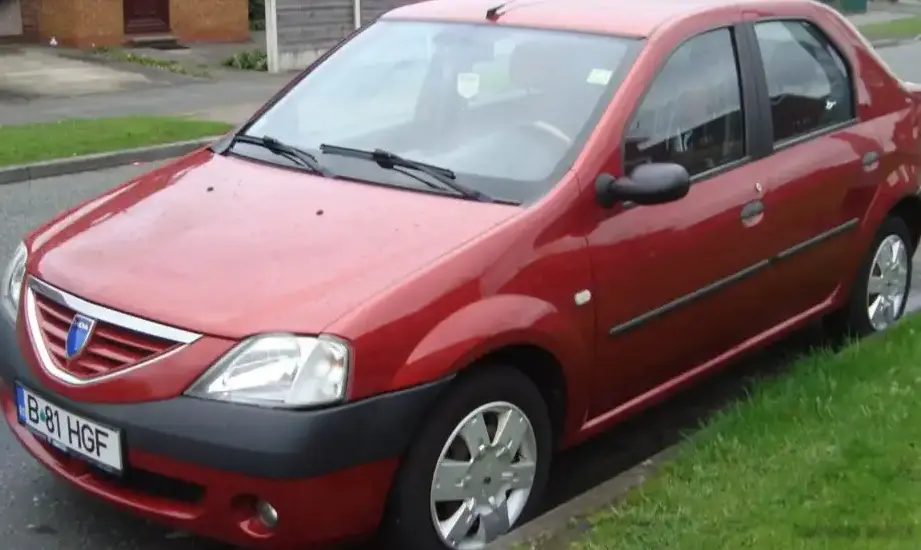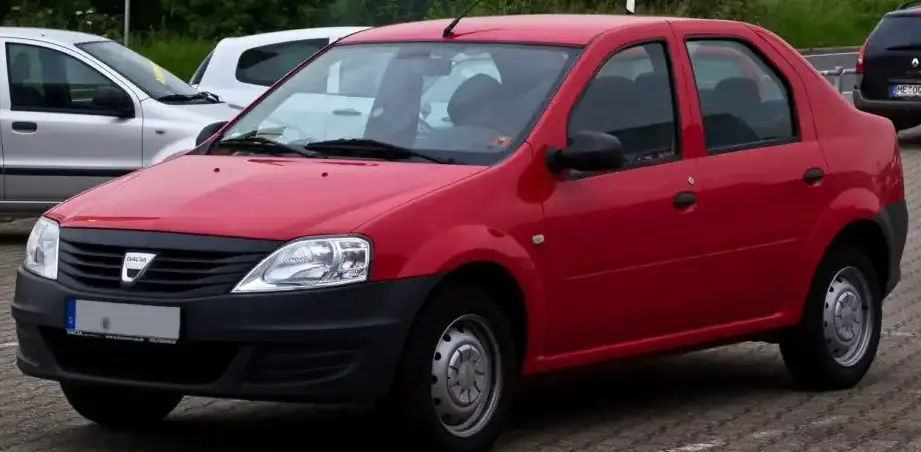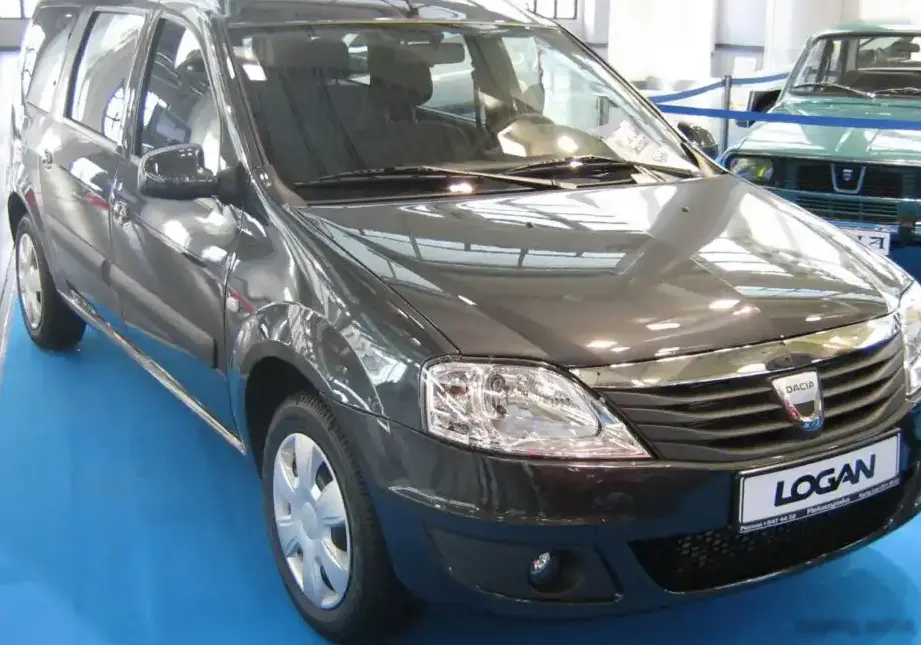
The Dacia Logan I MCV (facelift, produced 2008-2013) 1.5 dCi 75 hp variant represents an entry-level offering within the broader Logan MCV (Multi-Capacity Vehicle) lineup. Introduced as a practical and affordable station wagon, the Logan MCV aimed to provide spaciousness and utility, particularly in markets where budget-conscious buyers prioritized functionality over outright performance. This specific 75 horsepower diesel version, equipped with a manual transmission and a Diesel Particulate Filter (DPF), was positioned as the most economical option, targeting buyers seeking low running costs and maximizing fuel efficiency. Production of this variant ran from 2010 to 2013, falling within the lifespan of the first-generation Logan MCV, internally designated as the CS0/1 series.
Technical Specifications
| Brand | Dacia |
| Model | Logan |
| Generation | Logan I MCV (facelift 2008) |
| Type (Engine) | 1.5 dCi (75 Hp) FAP |
| Start of production | 2010 |
| End of production | 2013 |
| Powertrain Architecture | Internal Combustion engine |
| Body type | Station wagon (estate) |
| Seats | 5 |
| Doors | 5 |
| Fuel consumption (urban) | 5.5 l/100 km (42.8 US mpg, 51.4 UK mpg, 18.2 km/l) |
| Fuel consumption (extra urban) | 4.2 l/100 km (56 US mpg, 67.3 UK mpg, 23.8 km/l) |
| Fuel consumption (combined) | 4.6 l/100 km (51.1 US mpg, 61.4 UK mpg, 21.7 km/l) |
| CO2 emissions | 120 g/km |
| Fuel Type | Diesel |
| Acceleration 0 – 100 km/h | 15.3 sec |
| Acceleration 0 – 62 mph | 15.3 sec |
| Acceleration 0 – 60 mph | 14.5 sec |
| Maximum speed | 157 km/h (97.56 mph) |
| Emission standard | Euro 5 |
| Weight-to-power ratio | 16.1 kg/Hp |
| Weight-to-torque ratio | 6.7 kg/Nm |
| Power | 75 Hp @ 4000 rpm |
| Torque | 180 Nm @ 1750 rpm (132.76 lb.-ft. @ 1750 rpm) |
| Engine layout | Front, Transverse |
| Engine Model/Code | K9K 892 |
| Engine displacement | 1461 cm3 (89.16 cu. in.) |
| Number of cylinders | 4 |
| Engine configuration | Inline |
| Cylinder Bore | 76 mm (2.99 in.) |
| Piston Stroke | 80.5 mm (3.17 in.) |
| Compression ratio | 17.6:1 |
| Number of valves per cylinder | 2 |
| Fuel injection system | Diesel Commonrail |
| Engine aspiration | Turbocharger, Intercooler |
| Valvetrain | SOHC |
| Engine oil capacity | 4.5 l (4.76 US qt | 3.96 UK qt) |
| Coolant capacity | 4.5 l (4.76 US qt | 3.96 UK qt) |
| Kerb Weight | 1205 kg (2656.57 lbs.) |
| Max. weight | 1806 kg (3981.55 lbs.) |
| Max load | 601 kg (1324.98 lbs.) |
| Trunk (boot) space – minimum | 700 l (24.72 cu. ft.) |
| Trunk (boot) space – maximum | 2350 l (82.99 cu. ft.) |
| Fuel tank capacity | 50 l (13.21 US gal | 11 UK gal) |
| Max. roof load | 80 kg (176.37 lbs.) |
| Permitted trailer load (braked) | 1300 kg (2866.01 lbs.) |
| Permitted trailer load (unbraked) | 640 kg (1410.96 lbs.) |
| Permitted towbar download | 75 kg (165.35 lbs.) |
| Length | 4473 mm (176.1 in.) |
| Width | 1740 mm (68.5 in.) |
| Width including mirrors | 1993 mm (78.46 in.) |
| Height | 1640 mm (64.57 in.) |
| Wheelbase | 2905 mm (114.37 in.) |
| Front track | 1469 mm (57.83 in.) |
| Rear track | 1466 mm (57.72 in.) |
| Front overhang | 797 mm (31.38 in.) |
| Rear overhang | 771 mm (30.35 in.) |
| Ride height (ground clearance) | 160 mm (6.3 in.) |
| Drag coefficient (Cd) | 0.36 |
| Minimum turning circle | 11.25 m (36.91 ft.) |
| Drivetrain | Front wheel drive |
| Number of gears | 5 |
| Gearbox type | Manual transmission |
| Front suspension | Independent type McPherson, Transverse stabilizer |
| Rear suspension | Coil spring, Torsion |
| Front brakes | Ventilated discs, 259 mm |
| Rear brakes | Drum, 203 mm |
| Assisting systems | ABS (Anti-lock braking system) |
| Steering type | Steering rack and pinion |
| Power steering | Hydraulic Steering |
| Tires size | 185/65 R15 |
| Wheel rims size | 6J x 15 |
Powertrain & Engine Architecture
The heart of this Logan MCV variant is the Renault-sourced K9K 892 1.5-liter inline-four diesel engine. This engine is a common sight in many Renault, Dacia, and Nissan vehicles of the period. The K9K engine family is known for its robust design and relatively simple mechanicals. The 75 hp version utilizes a turbocharger with an intercooler to boost power output, and a diesel common rail fuel injection system for efficient combustion. The engine features a single overhead camshaft (SOHC) operating two valves per cylinder. The inclusion of a Diesel Particulate Filter (DPF) was crucial for meeting Euro 5 emission standards. The five-speed manual transmission was the only gearbox option available with this engine, prioritizing fuel economy over rapid acceleration.
Driving Characteristics
The 1.5 dCi 75 hp Logan MCV is not a performance-oriented vehicle. Acceleration is modest, with a 0-60 mph time of around 14.5 seconds. The engine delivers its peak torque of 180 Nm (132.76 lb.-ft.) at a relatively low 1750 rpm, providing adequate pulling power for everyday driving and hauling loads. However, the engine can feel strained when fully loaded or climbing steep hills. The five-speed manual transmission is well-matched to the engine’s characteristics, with gear ratios optimized for fuel efficiency. Compared to higher-output versions of the Logan MCV, such as those with the 90 hp engine, this variant offers a more relaxed driving experience, but at the expense of outright performance.
Equipment & Trim Levels
The 1.5 dCi 75 hp Logan MCV typically came with a basic level of equipment. Standard features generally included power steering, central locking, electric front windows, and an adjustable steering column. Interior upholstery was typically cloth, and the dashboard featured a functional, if somewhat spartan, design. Optional extras could include air conditioning, a radio/CD player, and alloy wheels. This trim level was aimed at buyers who prioritized practicality and affordability over luxury features.
Chassis & Braking
The Logan MCV utilizes a simple yet effective chassis design. The front suspension consists of independent MacPherson struts, while the rear suspension employs a coil spring and torsion beam setup. This configuration provides a comfortable ride, although it’s not particularly sporty. The braking system features ventilated discs on the front wheels and drum brakes on the rear. Anti-lock Braking System (ABS) was standard, enhancing safety. The suspension and braking systems were tuned to suit the vehicle’s weight and intended use as a practical family vehicle.
Market Reception & Comparison
The Dacia Logan I MCV 1.5 dCi 75 hp was well-received in markets where affordability was a key consideration. Critics praised its spacious interior, large trunk capacity, and low running costs. However, the engine’s modest power output and basic interior were often noted as drawbacks. Compared to other trims in the Logan MCV lineup, this variant offered the best fuel economy and lowest purchase price. It was a popular choice for fleet operators and budget-conscious families.
Legacy
The K9K engine, in its various iterations, has proven to be a durable and reliable powerplant. While the DPF can be a potential source of issues if not properly maintained, the engine itself is generally robust. Today, used examples of the Logan MCV 1.5 dCi 75 hp are still relatively common and can be found at very affordable prices. They continue to appeal to buyers seeking a practical and economical station wagon. The Logan MCV, and this variant in particular, played a significant role in establishing Dacia as a major player in the European automotive market, demonstrating that a functional and affordable car could be a viable alternative to more expensive competitors.