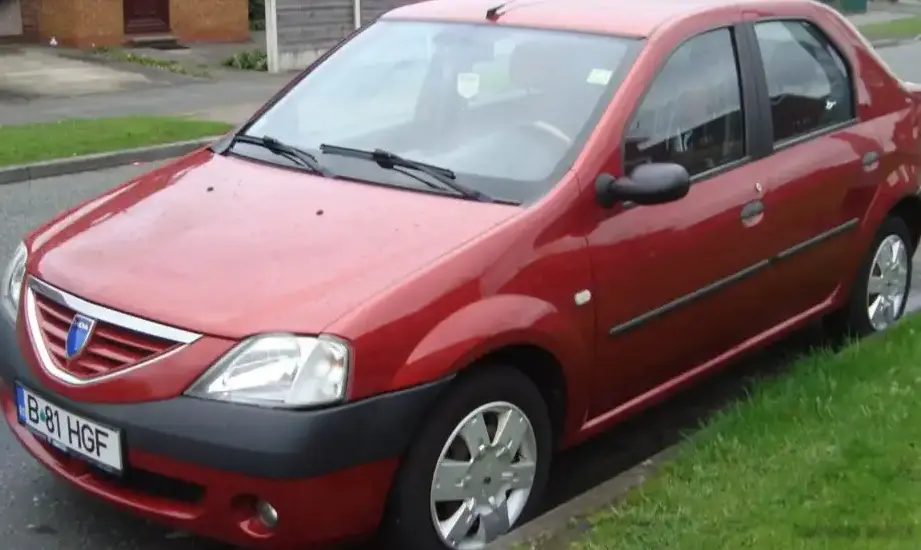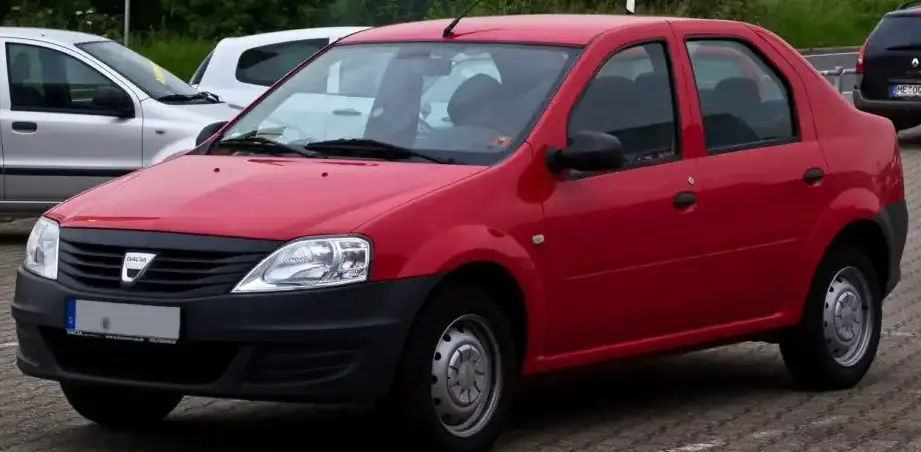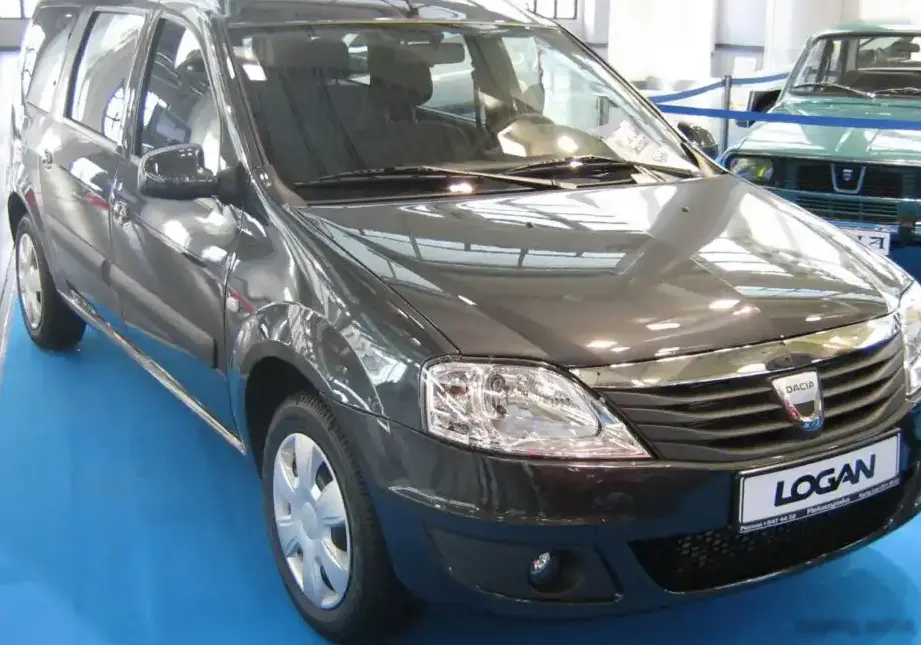
The Dacia Logan I MCV (facelift 2008) 1.6 16V Ethanol 7-seat variant, produced from 2010 to 2013, represents a unique offering within the first generation Logan MCV (Multi-Capacity Vehicle) range. Positioned as a practical and affordable family vehicle, this model combined the spaciousness of the MCV estate body style with a flexible-fuel 1.6-liter engine capable of running on both gasoline and E85 ethanol. It was primarily marketed in Europe, particularly in Eastern European countries, where affordability and practicality were key purchasing factors. The facelifted Logan MCV, introduced in 2008, brought updated styling and improved interior features compared to the original model launched in 2006.
Technical Specifications
| Brand | Dacia |
| Model | Logan |
| Generation | Logan I MCV (facelift 2008) |
| Type (Engine) | 1.6 16V (105 Hp) Ethanol 7 Seats |
| Start of production | 2010 |
| End of production | 2013 |
| Powertrain Architecture | Internal Combustion engine |
| Body type | Station wagon (estate) |
| Seats | 7 |
| Doors | 5 |
| Fuel consumption (economy) – urban (NEDC) | 9.7 l/100 km (24.2 US mpg, 29.1 UK mpg, 10.3 km/l) |
| Fuel consumption (economy) – urban (Ethanol – E85) (NEDC) | 13.5 l/100 km |
| Fuel consumption (economy) – extra urban (NEDC) | 5.8 l/100 km (40.6 US mpg, 48.7 UK mpg, 17.2 km/l) |
| Fuel consumption (economy) – extra urban (Ethanol – E85) (NEDC) | 7.8 l/100 km |
| Fuel consumption (economy) – combined (NEDC) | 7.1 l/100 km (33.1 US mpg, 39.8 UK mpg, 14.1 km/l) |
| Fuel consumption (economy) – combined (Ethanol – E85) (NEDC) | 9.7 l/100 km |
| CO2 emissions (NEDC) | 164 g/km |
| CO2 emissions (Ethanol – E85) (NEDC) | 159 g/km |
| Fuel Type | Petrol / Ethanol – E85 |
| Acceleration 0 – 100 km/h | 12 sec |
| Acceleration 0 – 62 mph | 12 sec |
| Acceleration 0 – 60 mph | 11.4 sec |
| Maximum speed | 174 km/h (108.12 mph) |
| Emission standard | Euro 5 |
| Weight-to-power ratio | 11.5 kg/Hp, 87.1 Hp/tonne |
| Weight-to-torque ratio | 8.1 kg/Nm, 122.8 Nm/tonne |
| Power | 105 Hp @ 5750 rpm |
| Power per litre | 65.7 Hp/l |
| Torque | 148 Nm @ 3750 rpm (109.16 lb.-ft. @ 3750 rpm) |
| Engine layout | Front, Transverse |
| Engine Model/Code | K4M 696 |
| Engine displacement | 1598 cm3 (97.52 cu. in.) |
| Number of cylinders | 4 |
| Engine configuration | Inline |
| Cylinder Bore | 79.5 mm (3.13 in.) |
| Piston Stroke | 80.5 mm (3.17 in.) |
| Compression ratio | 9.8:1 |
| Number of valves per cylinder | 4 |
| Fuel injection system | Multi-port manifold injection |
| Engine aspiration | Naturally aspirated engine |
| Valvetrain | DOHC |
| Engine oil capacity | 4.8 l (5.07 US qt | 4.22 UK qt) |
| Coolant | 4.5 l (4.76 US qt | 3.96 UK qt) |
| Kerb Weight | 1205 kg (2656.57 lbs.) |
| Max. weight | 1840 kg (4056.51 lbs.) |
| Max load | 635 kg (1399.94 lbs.) |
| Trunk (boot) space – minimum | 198 l (6.99 cu. ft.) |
| Trunk (boot) space – maximum | 2350 l (82.99 cu. ft.) |
| Fuel tank capacity | 50 l (13.21 US gal | 11 UK gal) |
| Max. roof load | 80 kg (176.37 lbs.) |
| Permitted trailer load with brakes (12%) | 1300 kg (2866.01 lbs.) |
| Permitted trailer load without brakes | 640 kg (1410.96 lbs.) |
| Permitted towbar download | 75 kg (165.35 lbs.) |
| Length | 4473 mm (176.1 in.) |
| Width | 1740 mm (68.5 in.) |
| Width including mirrors | 1993 mm (78.46 in.) |
| Height | 1640 mm (64.57 in.) |
| Wheelbase | 2905 mm (114.37 in.) |
| Front track | 1469 mm (57.83 in.) |
| Rear (Back) track | 1466 mm (57.72 in.) |
| Front overhang | 797 mm (31.38 in.) |
| Rear overhang | 771 mm (30.35 in.) |
| Ride height (ground clearance) | 160 mm (6.3 in.) |
| Drag coefficient (Cd) | 0.36 |
| Minimum turning circle (turning diameter) | 11.25 m (36.91 ft.) |
| Drivetrain Architecture | The Internal combustion engine (ICE) drives the front wheels of the vehicle. |
| Drive wheel | Front wheel drive |
| Number of gears and type of gearbox | 5 gears, manual transmission |
| Front suspension | Independent type McPherson, Transverse stabilizer |
| Rear suspension | Coil spring, Torsion |
| Front brakes | Ventilated discs, 259 mm |
| Rear brakes | Drum, 203 mm |
| Assisting systems | ABS (Anti-lock braking system) |
| Steering type | Steering rack and pinion |
| Power steering | Hydraulic Steering |
| Tires size | 185/65 R15 |
| Wheel rims size | 6J x 15 |
Powertrain & Engine Architecture
The heart of this Logan MCV variant is the Renault-sourced K4M 696 1.6-liter inline-four cylinder engine. This engine, a staple in many Renault and Dacia models, features a naturally aspirated configuration with a multi-point fuel injection system. The engine’s 16 valves (four per cylinder) are actuated by a double overhead camshaft (DOHC) valvetrain, contributing to its relatively efficient breathing. The K4M engine is known for its robustness and simplicity. Its 9.8:1 compression ratio is a compromise between performance and the ability to run on lower octane fuels, and importantly, E85 ethanol. The engine’s ability to run on E85, a blend of 85% ethanol and 15% gasoline, was a significant selling point in markets with established ethanol infrastructure. The five-speed manual transmission was the only gearbox option available with this engine configuration.
Driving Characteristics
The 105 horsepower and 148 Nm (109 lb-ft) of torque produced by the 1.6-liter engine provided adequate, though not exhilarating, performance for the Logan MCV. Acceleration from 0 to 100 km/h (0-62 mph) took around 12 seconds. The five-speed manual transmission was geared for economy, with relatively tall ratios. This resulted in a comfortable cruising experience but required downshifts for quicker acceleration, particularly when fully loaded with passengers and luggage. Compared to the more powerful (but less fuel-flexible) gasoline-only versions, the E85 variant offered slightly reduced overall performance due to the lower energy density of ethanol. However, the E85 option provided a lower cost per mile in regions where ethanol was significantly cheaper than gasoline.
Equipment & Trim Levels
The 7-seat configuration was a key feature of this variant, making it a practical choice for larger families. Standard equipment typically included power steering, central locking, and an anti-lock braking system (ABS). Interior trim was basic but functional, with durable cloth upholstery. Optional extras could include air conditioning, a radio/CD player, and power windows. The Logan MCV prioritized practicality over luxury, and the trim levels reflected this philosophy. The 1.6 16V Ethanol 7-seat model generally represented a mid-range offering within the MCV lineup, offering a good balance of space, fuel flexibility, and affordability.
Chassis & Braking
The Logan MCV utilized a simple yet effective chassis design. Front suspension consisted of an independent McPherson strut setup, while the rear employed a torsion beam axle. This configuration provided a comfortable ride, although handling was not particularly sporty. Braking duties were handled by ventilated discs at the front and drum brakes at the rear. The ABS system provided enhanced safety during emergency braking situations. The suspension was tuned for carrying capacity, allowing the vehicle to handle a substantial load without significant compromise in ride quality.
Market Reception & Comparison
The Dacia Logan I MCV 1.6 16V Ethanol 7-seat variant was well-received in markets where fuel costs were high and the demand for affordable, spacious vehicles was strong. Critics praised its practicality, fuel efficiency (especially when running on E85), and low purchase price. Compared to other Logan MCV trims, the E85 variant offered a unique selling proposition for environmentally conscious buyers and those seeking to reduce their fuel expenses. However, the availability of E85 fuel was a limiting factor in some regions. The manual transmission was generally preferred by drivers seeking more control and slightly better fuel economy compared to the optional automatic transmission offered on other Logan models.
Legacy
The K4M engine, in its various iterations, proved to be a remarkably durable and reliable powerplant. The Logan MCV, and specifically this 1.6 16V Ethanol variant, established Dacia as a major player in the budget car market. On the used car market today, these models are often sought after for their affordability and practicality. While maintenance costs are generally low, potential buyers should be aware of the age-related wear and tear common to older vehicles. The E85 compatibility adds a unique dimension to its appeal, but requires access to a reliable supply of ethanol fuel. The Logan MCV remains a testament to Dacia’s commitment to providing functional and affordable transportation.