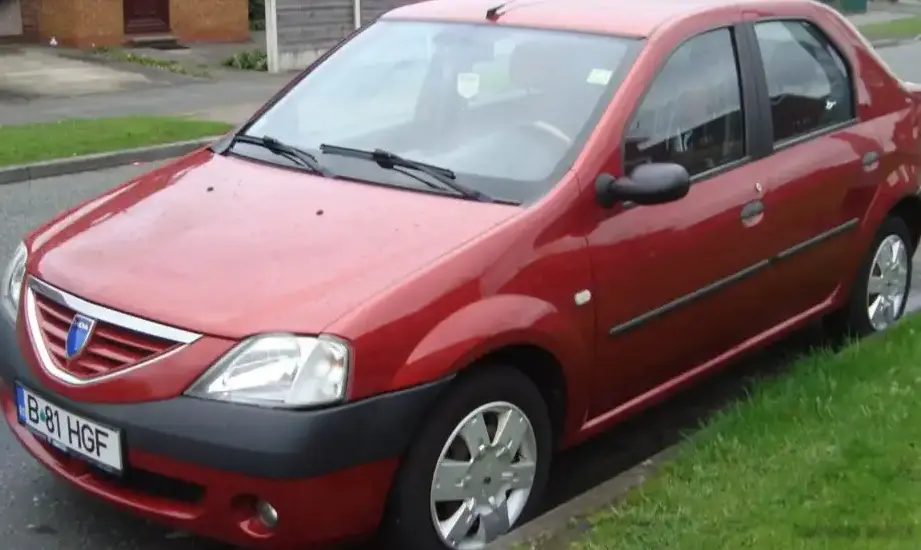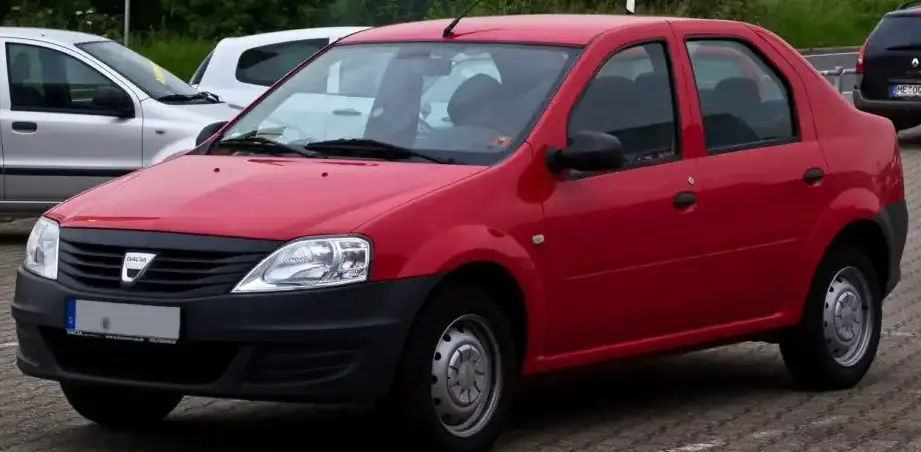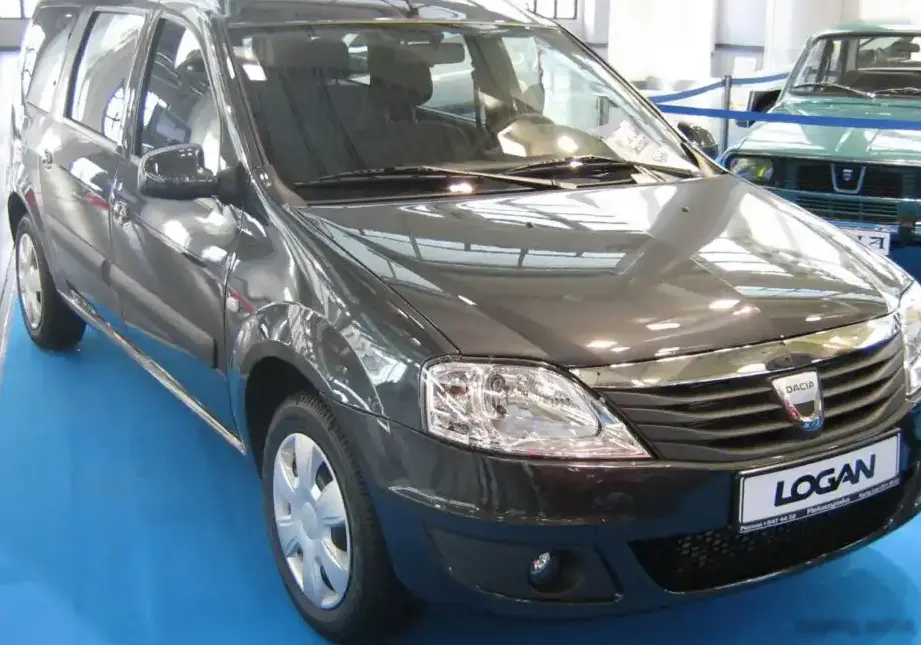
The Dacia Logan I MCV (facelift, 2008) 1.6 MPI 8V (84 hp) LPG 7-seat variant represents a practical and affordable option within the first generation Logan MCV (Multi-Capacity Vehicle) range. Introduced as part of the facelift in 2008 and continuing through 2010, this model aimed to provide budget-conscious families with a spacious and versatile vehicle capable of carrying up to seven passengers. It was built on the 1HX0/A3 platform, shared with the Renault Clio II and other Renault models, and positioned as a mid-range offering within the MCV lineup, bridging the gap between the base models and those with more premium features. The addition of LPG capability further enhanced its appeal in markets where alternative fuels were gaining traction.
Technical Specifications
| Brand | Dacia |
| Model | Logan |
| Generation | Logan I MCV (facelift 2008) |
| Type (Engine) | 1.6 MPI 8V (84 Hp) LPG 7 Seats |
| Start of production | 2008 |
| End of production | 2010 |
| Powertrain Architecture | Internal Combustion engine |
| Body type | Station wagon (estate) |
| Seats | 7 |
| Doors | 5 |
| Fuel consumption (economy) – urban (NEDC) | 10.3 l/100 km (22.8 US mpg, 27.4 UK mpg, 9.7 km/l) |
| Fuel consumption (economy) – urban (LPG) (NEDC) | 13.2 l/100 km |
| Fuel consumption (economy) – extra urban (NEDC) | 6.3 l/100 km (37.3 US mpg, 44.8 UK mpg, 15.9 km/l) |
| Fuel consumption (economy) – extra urban (LPG) (NEDC) | 8.2 l/100 km |
| Fuel consumption (economy) – combined (NEDC) | 7.8 l/100 km (30.2 US mpg, 36.2 UK mpg, 12.8 km/l) |
| Fuel consumption (economy) – combined (LPG) (NEDC) | 10.1 l/100 km |
| CO2 emissions (NEDC) | 185 g/km |
| CO2 emissions (LPG) (NEDC) | 164 g/km |
| Fuel Type | Petrol / LPG |
| Acceleration 0 – 100 km/h | 14 sec |
| Acceleration 0 – 62 mph | 14 sec |
| Acceleration 0 – 60 mph | 13.3 sec |
| Maximum speed | 165 km/h (102.53 mph) |
| Emission standard | Euro 4 |
| Weight-to-power ratio | 14.3 kg/Hp, 69.7 Hp/tonne |
| Weight-to-torque ratio | 9.4 kg/Nm, 106.2 Nm/tonne |
| Power | 84 Hp @ 5500 rpm |
| Power per litre | 52.6 Hp/l |
| Torque | 128 Nm @ 3000 rpm (94.41 lb.-ft. @ 3000 rpm) |
| Engine layout | Front, Transverse |
| Engine Model/Code | K7M 718 |
| Engine displacement | 1598 cm3 (97.52 cu. in.) |
| Number of cylinders | 4 |
| Engine configuration | Inline |
| Cylinder Bore | 79.5 mm (3.13 in.) |
| Piston Stroke | 80.5 mm (3.17 in.) |
| Compression ratio | 9.5:1 |
| Number of valves per cylinder | 2 |
| Fuel injection system | Multi-port manifold injection |
| Engine aspiration | Naturally aspirated engine |
| Valvetrain | SOHC |
| Engine oil capacity | 3.3 l (3.49 US qt | 2.9 UK qt) |
| Coolant | 4.5 l (4.76 US qt | 3.96 UK qt) |
| Kerb Weight | 1205 kg (2656.57 lbs.) |
| Max. weight | 1865 kg (4111.62 lbs.) |
| Max load | 660 kg (1455.05 lbs.) |
| Trunk (boot) space – minimum | 198 l (6.99 cu. ft.) |
| Trunk (boot) space – maximum | 2350 l (82.99 cu. ft.) |
| Fuel tank capacity | 50 l (13.21 US gal | 11 UK gal) |
| Fuel tank capacity (LPG) | 42 l |
| Max. roof load | 80 kg (176.37 lbs.) |
| Permitted trailer load with brakes (12%) | 1200 kg (2645.55 lbs.) |
| Permitted trailer load without brakes | 640 kg (1410.96 lbs.) |
| Permitted towbar download | 75 kg (165.35 lbs.) |
| Length | 4473 mm (176.1 in.) |
| Width | 1740 mm (68.5 in.) |
| Width including mirrors | 1993 mm (78.46 in.) |
| Height | 1640 mm (64.57 in.) |
| Wheelbase | 2905 mm (114.37 in.) |
| Front track | 1469 mm (57.83 in.) |
| Rear (Back) track | 1466 mm (57.72 in.) |
| Front overhang | 797 mm (31.38 in.) |
| Rear overhang | 771 mm (30.35 in.) |
| Ride height (ground clearance) | 160 mm (6.3 in.) |
| Drag coefficient (Cd) | 0.36 |
| Minimum turning circle (turning diameter) | 11.25 m (36.91 ft.) |
| Drivetrain Architecture | The Internal combustion engine (ICE) drives the front wheels of the vehicle. |
| Drive wheel | Front wheel drive |
| Number of gears and type of gearbox | 5 gears, manual transmission |
| Front suspension | Independent type McPherson, Transverse stabilizer |
| Rear suspension | Coil spring, Torsion |
| Front brakes | Ventilated discs, 259 mm |
| Rear brakes | Drum, 203 mm |
| Assisting systems | ABS (Anti-lock braking system) |
| Steering type | Steering rack and pinion |
| Power steering | Hydraulic Steering |
| Tires size | 185/65 R15 |
| Wheel rims size | 6J x 15 |
Powertrain & Engine Architecture
The heart of this Logan MCV variant is the K7M 718 1.6-liter inline-four cylinder engine. This engine, a staple in many Renault and Dacia models, is known for its simplicity and robustness. It features a single overhead camshaft (SOHC) design with two valves per cylinder. Fuel delivery is managed by a multi-point fuel injection system. The 84 horsepower output at 5500 rpm and 128 Nm (94.41 lb-ft) of torque at 3000 rpm are modest, but adequate for everyday driving. The engine is transversely mounted, driving the front wheels. Crucially, this version was often equipped for bi-fuel operation, capable of running on either petrol or liquefied petroleum gas (LPG). The LPG system typically involved a dedicated tank, a vaporiser, and an electronic control unit to switch between fuels. The transmission is a 5-speed manual gearbox, chosen for its cost-effectiveness and reliability.
Driving Characteristics
The 1.6L 84hp engine paired with the 5-speed manual transmission delivers a driving experience focused on practicality rather than performance. Acceleration is leisurely, taking approximately 14 seconds to reach 62 mph (100 km/h). The gear ratios are tuned for fuel efficiency and ease of driving, rather than spirited acceleration. The engine feels strained when climbing hills or carrying a full load of passengers and luggage. Compared to higher-output versions of the Logan MCV, such as those with diesel engines, this variant lacks the punch for quick overtaking maneuvers. However, the LPG capability provides a cost-effective alternative fuel source, reducing running costs in areas where LPG is readily available and competitively priced.
Equipment & Trim Levels
The 7-seat configuration was a key feature of this variant, making it appealing to larger families. Standard equipment typically included power steering, central locking, and an anti-lock braking system (ABS). Interior appointments were basic but functional, with durable cloth upholstery and a simple dashboard layout. Optional extras could include air conditioning, power windows, and a radio/CD player. The trim level generally fell into the mid-range of the Logan MCV offerings, providing a balance between affordability and essential features.
Chassis & Braking
The Logan MCV utilizes a McPherson strut front suspension and a torsion beam rear suspension. This setup provides a comfortable ride, although it’s not particularly sporty. The front brakes are ventilated discs, while the rear brakes are drums. This configuration was common for vehicles in this price segment. The steering is a hydraulic rack and pinion system, offering reasonable precision. The suspension is tuned to prioritize ride comfort over handling, making it well-suited for navigating rough roads.
Market Reception & Comparison
The Dacia Logan I MCV, in general, was well-received in Europe and other emerging markets as a no-frills, affordable family vehicle. The 1.6 MPI 8V LPG variant was particularly attractive to buyers seeking low running costs. Critics acknowledged its spaciousness and practicality but noted its lack of refinement and modest performance. Compared to the 1.5 dCi diesel versions, the 1.6 MPI offered less torque and fuel economy but was generally considered more reliable and less prone to expensive repairs. The LPG option provided a compelling alternative to diesel, especially in countries with favorable LPG taxation.
Legacy
The K7M engine, found in this Logan MCV, has a reputation for being a durable and relatively easy-to-maintain powerplant. While not known for its cutting-edge technology, its simplicity contributes to its longevity. Today, used examples of this variant are still relatively common, often prized for their affordability and practicality. The LPG system, if properly maintained, can extend the engine’s lifespan and reduce emissions. However, potential buyers should be aware of the need for regular LPG system servicing and the availability of qualified technicians. The Logan I MCV, and this variant in particular, played a significant role in establishing Dacia as a major player in the budget car market.