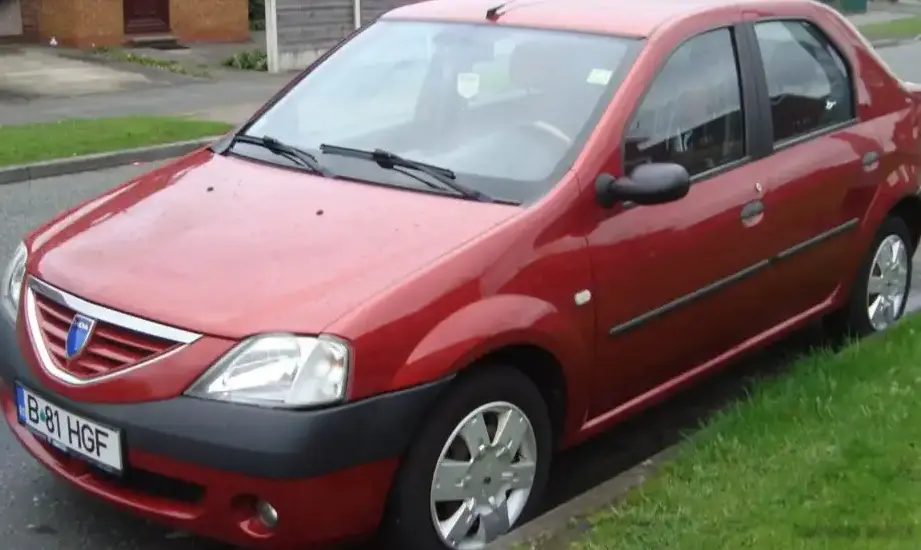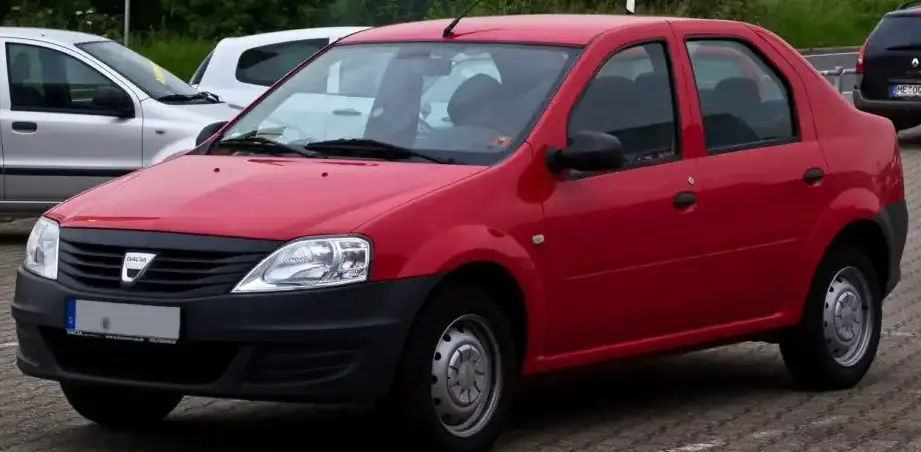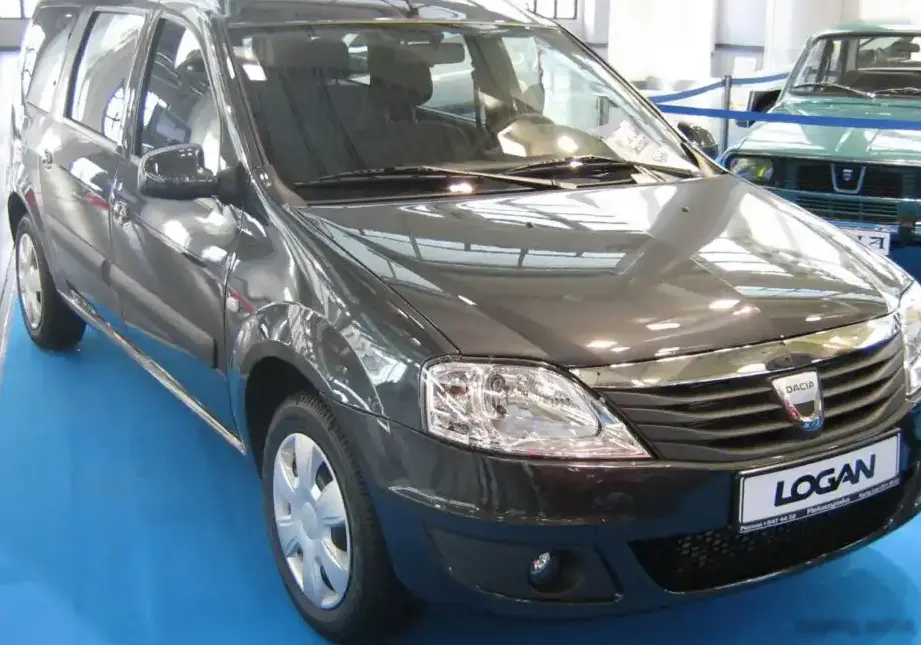
The Dacia Logan I MCV (facelift 2008) 1.6 MPI 8V (84/82 Hp) LPG 7 Seats represents a practical and affordable station wagon option produced between 2010 and 2013. Positioned within the first generation (Logan I) of the MCV – Multi-Capacity Vehicle – body style, this variant aimed to provide budget-conscious buyers with a spacious and versatile vehicle capable of carrying passengers and cargo. The facelift introduced in 2008 brought subtle styling updates and improvements to the interior, enhancing the Logan’s appeal. This particular configuration, combining a 1.6-liter petrol engine with LPG conversion and seven-seat capability, was a key offering in markets where fuel costs were high and family transport was a priority. It sat as a mid-range option, offering more practicality than the standard five-seat models but lacking the premium features of potential higher-trim levels.
Technical Specifications
| Brand | Dacia |
| Model | Logan |
| Generation | Logan I MCV (facelift 2008) |
| Type (Engine) | 1.6 MPI 8V (84/82 Hp) LPG 7 Seats |
| Start of production | 2010 |
| End of production | 2013 |
| Powertrain Architecture | Internal Combustion engine |
| Body type | Station wagon (estate) |
| Seats | 7 |
| Doors | 5 |
| Fuel consumption (economy) – urban (NEDC) | 9.8 l/100 km (24 US mpg, 28.8 UK mpg, 10.2 km/l) |
| Fuel consumption (economy) – urban (LPG) (NEDC) | 12.8 l/100 km |
| Fuel consumption (economy) – extra urban (NEDC) | 6.1 l/100 km (38.6 US mpg, 46.3 UK mpg, 16.4 km/l) |
| Fuel consumption (economy) – extra urban (LPG) | 7.7 l/100 km |
| Fuel consumption (economy) – combined (NEDC) | 7.3 l/100 km (32.2 US mpg, 38.7 UK mpg, 13.7 km/l) |
| Fuel consumption (economy) – combined (LPG) (NEDC) | 9.3 l/100 km |
| CO2 emissions (NEDC) | 169 g/km |
| CO2 emissions (LPG) (NEDC) | 149 g/km |
| Fuel Type | Petrol / LPG |
| Acceleration 0 – 100 km/h | 14.8 sec |
| Acceleration 0 – 62 mph | 14.8 sec |
| Acceleration 0 – 100 km/h (LPG) | 15.3 sec |
| Acceleration 0 – 60 mph (Calculated) | 14.1 sec |
| Maximum speed | 160 km/h (99.42 mph) |
| Emission standard | Euro 5 |
| Weight-to-power ratio | 14.8 kg/Hp, 67.7 Hp/tonne |
| Weight-to-torque ratio | 9.2 kg/Nm, 108.8 Nm/tonne |
| Power | 84 Hp @ 5250 rpm |
| Power per litre | 52.6 Hp/l |
| Power (LPG) | 82 Hp @ 5250 rpm |
| Power per litre (LPG) | 51.3 Hp/l |
| Torque | 135 Nm @ 3000 rpm (99.57 lb.-ft. @ 3000 rpm) |
| Torque (LPG) | 131 Nm @ 3000 rpm |
| Engine layout | Front, Transverse |
| Engine Model/Code | K7M 818 |
| Engine displacement | 1598 cm3 (97.52 cu. in.) |
| Number of cylinders | 4 |
| Engine configuration | Inline |
| Cylinder Bore | 79.5 mm (3.13 in.) |
| Piston Stroke | 80.5 mm (3.17 in.) |
| Compression ratio | 9.5:1 |
| Number of valves per cylinder | 2 |
| Fuel injection system | Multi-port manifold injection |
| Engine aspiration | Naturally aspirated |
| Valvetrain | SOHC |
| Engine oil capacity | 3.3 l (3.49 US qt, 2.9 UK qt) |
| Coolant capacity | 4.5 l (4.76 US qt, 3.96 UK qt) |
| Kerb Weight | 1241 kg (2735.94 lbs.) |
| Max. weight | 1840 kg (4056.51 lbs.) |
| Max load | 599 kg (1320.57 lbs.) |
| Trunk (boot) space – minimum | 198 l (6.99 cu. ft.) |
| Trunk (boot) space – maximum | 2350 l (82.99 cu. ft.) |
| Fuel tank capacity | 50 l (13.21 US gal, 11 UK gal) |
| Fuel tank capacity (LPG) | 42 l |
| Max. roof load | 80 kg (176.37 lbs.) |
| Permitted trailer load with brakes (12%) | 1250 kg (2755.78 lbs.) |
| Permitted trailer load without brakes | 655 kg (1444.03 lbs.) |
| Permitted towbar download | 75 kg (165.35 lbs.) |
| Length | 4473 mm (176.1 in.) |
| Width | 1740 mm (68.5 in.) |
| Width including mirrors | 1993 mm (78.46 in.) |
| Height | 1640 mm (64.57 in.) |
| Wheelbase | 2905 mm (114.37 in.) |
| Front track | 1469 mm (57.83 in.) |
| Rear track | 1466 mm (57.72 in.) |
| Front overhang | 797 mm (31.38 in.) |
| Rear overhang | 771 mm (30.35 in.) |
| Ride height (ground clearance) | 160 mm (6.3 in.) |
| Drag coefficient (Cd) | 0.36 |
| Minimum turning circle | 11.25 m (36.91 ft.) |
| Drivetrain Architecture | ICE, Front wheel drive |
| Number of gears and type of gearbox | 5 gears, manual transmission |
| Front suspension | Independent type McPherson, Transverse stabilizer |
| Rear suspension | Coil spring, Torsion |
| Front brakes | Ventilated discs, 259 mm |
| Rear brakes | Drum, 203 mm |
| Assisting systems | ABS (Anti-lock braking system) |
| Steering type | Steering rack and pinion |
| Power steering | Hydraulic |
| Tires size | 185/65 R15 |
| Wheel rims size | 6J x 15 |
INTRODUCTION
The Dacia Logan I MCV (facelift 2008) 1.6 MPI 8V (84/82 Hp) LPG 7 Seats is a station wagon variant of the original Logan, a car initially launched in 2004. Dacia, a Romanian manufacturer acquired by Renault in 1999, aimed to provide a no-frills, affordable vehicle for emerging markets. The MCV (Multi-Capacity Vehicle) version, introduced later, expanded the Logan’s practicality with increased cargo space. The 2008 facelift brought minor cosmetic changes and improvements to the interior. This specific 1.6-liter petrol engine, coupled with a factory-installed LPG conversion and the option of seven seats, was a popular choice in regions where fuel costs were a significant concern and larger families were common. It was primarily sold in Europe and other markets where Dacia had established a presence.
Powertrain & Engine Architecture
The heart of this Logan MCV is the K7M 818 engine, a 1.6-liter inline-four cylinder petrol engine. This engine is known for its simplicity and robustness, having been used in various Renault and Dacia models. It features a single overhead camshaft (SOHC) valvetrain with two valves per cylinder. Fuel delivery is managed by a multi-port fuel injection system. The LPG conversion is a factory-installed system, allowing the engine to run on either petrol or liquefied petroleum gas, offering potential cost savings depending on local fuel prices. The engine produces 84 horsepower at 5250 rpm and 135 Nm of torque at 3000 rpm when running on petrol, with a slight reduction in output when operating on LPG (82 hp). The engine is transversely mounted at the front of the vehicle. The transmission is a five-speed manual gearbox, chosen for its affordability and reliability. While an automatic transmission was available on some Logan models, it wasn’t offered with this specific engine and seven-seat configuration.
Driving Characteristics
The 1.6-liter engine, paired with the five-speed manual transmission, provides adequate but not exhilarating performance. Acceleration from 0 to 100 km/h takes around 14.8 seconds, making it a leisurely performer by modern standards. The gear ratios are tuned for fuel efficiency and everyday usability rather than sporty driving. The engine feels most comfortable in the mid-range, providing sufficient power for overtaking and highway cruising, although it requires downshifting for quicker acceleration. Compared to higher-output Logan variants, such as those with diesel engines, this 1.6L version feels noticeably slower. However, it offers a smoother and quieter driving experience than the diesel options. The LPG conversion doesn’t significantly impact performance, but it does alter the engine’s sound slightly. The suspension is tuned for comfort, providing a reasonably smooth ride, even on uneven surfaces.
Equipment & Trim Levels
The 1.6 MPI 8V LPG 7 Seats variant of the Logan MCV typically came with a basic level of equipment. Standard features included power steering, central locking, and an anti-lock braking system (ABS). The interior was functional and durable, with hard-wearing plastics and cloth upholstery. The seven-seat configuration involved a split-folding third-row bench, which could be folded flat to maximize cargo space. Optional extras included air conditioning, electric front windows, and a radio/CD player. The dashboard layout was simple and straightforward, prioritizing practicality over aesthetics. This trim level was aimed at buyers who prioritized space, affordability, and fuel efficiency over luxury features.
Chassis & Braking
The Logan MCV utilizes a McPherson strut independent suspension system at the front and a coil spring torsion beam suspension at the rear. This setup provides a good balance between ride comfort and handling. The front brakes are ventilated discs, offering adequate stopping power, while the rear brakes are drums. The braking system is assisted by ABS, enhancing safety during emergency braking situations. The steering is a hydraulic rack and pinion system, providing reasonable steering feel and precision. The tires are typically 185/65 R15, offering a good compromise between comfort and grip.
Market Reception & Comparison
The Dacia Logan I MCV 1.6 MPI 8V LPG 7 Seats was generally well-received by critics and buyers alike, particularly in markets where affordability was a key consideration. It was praised for its spacious interior, large cargo capacity, and low running costs, especially when utilizing the LPG system. However, it was also criticized for its basic interior, lack of refinement, and relatively slow performance. Compared to other Logan variants, the 1.6L petrol engine offered a smoother and quieter driving experience than the diesel options, but it lacked the diesel’s fuel efficiency and torque. The LPG conversion provided a cost-effective alternative to petrol, but it required access to LPG refueling stations.
Legacy
The K7M engine, used in this Logan MCV, is known for its reliability and durability. With proper maintenance, it can withstand high mileage. The LPG conversion, if well-maintained, can also contribute to the engine’s longevity. In the used car market, these Logan MCVs are still relatively common and affordable. They represent a practical and economical option for buyers seeking a spacious and versatile vehicle. However, potential buyers should be aware of the age of the vehicle and the condition of the LPG system, as maintenance and repairs may be required. The Logan I MCV, and this variant in particular, played a significant role in establishing Dacia as a major player in the European automotive market, demonstrating that a no-frills, affordable car could still meet the needs of many buyers.