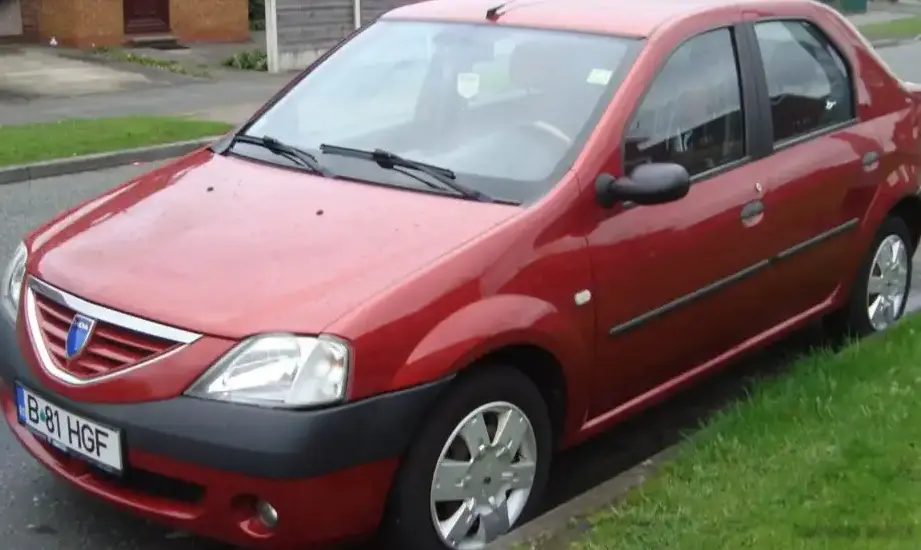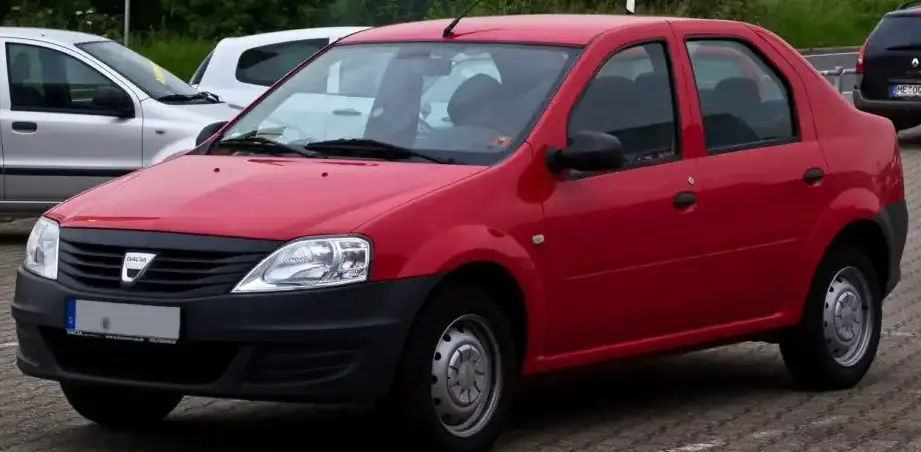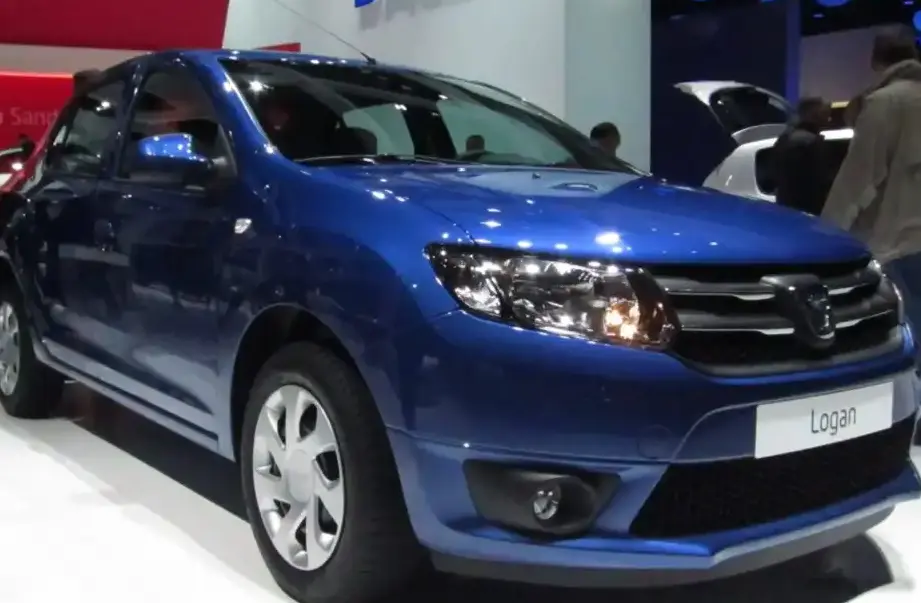
The Dacia Logan II 0.9 TCe (90 hp) Start&Stop, produced from 2015 to 2016, represented an entry-level offering within the second generation Logan lineup. Positioned as a fuel-efficient and affordable option, this variant utilized a downsized turbocharged engine paired with a five-speed manual transmission. It was primarily marketed in Europe, where Dacia, owned by Renault, had established a reputation for providing practical and budget-friendly vehicles. The Logan II, built on the 1HX0/A3 platform, aimed to offer sedan practicality at a competitive price point, and the 0.9 TCe model was key to achieving that goal for cost-conscious buyers.
Technical Specifications
| Brand | Dacia |
| Model | Logan |
| Generation | Logan II |
| Type (Engine) | 0.9 TCe (90 Hp) Start&Stop |
| Start of production | 2015 |
| End of production | 2016 |
| Powertrain Architecture | Internal Combustion engine |
| Body type | Sedan |
| Seats | 5 |
| Doors | 4 |
| Fuel consumption (economy) – urban (NEDC) | 5.8 l/100 km (40.6 US mpg, 48.7 UK mpg, 17.2 km/l) |
| Fuel consumption (economy) – extra urban (NEDC) | 4.3 l/100 km (54.7 US mpg, 65.7 UK mpg, 23.3 km/l) |
| Fuel consumption (economy) – combined (NEDC) | 4.9 l/100 km (48 US mpg, 57.6 UK mpg, 20.4 km/l) |
| CO2 emissions (NEDC) | 109 g/km |
| Fuel Type | Petrol (Gasoline) |
| Acceleration 0 – 100 km/h | 11.1 sec |
| Acceleration 0 – 62 mph | 11.1 sec |
| Acceleration 0 – 60 mph | 10.5 sec |
| Maximum speed | 175 km/h (108.74 mph) |
| Emission standard | Euro 6 |
| Weight-to-power ratio | 11.1 kg/Hp, 90.2 Hp/tonne |
| Weight-to-torque ratio | 7.1 kg/Nm, 140.3 Nm/tonne |
| Power | 90 Hp @ 5000 rpm |
| Power per litre | 100.2 Hp/l |
| Torque | 140 Nm @ 2250 rpm (103.26 lb.-ft. @ 2250 rpm) |
| Engine layout | Front, Transverse |
| Engine Model/Code | H4B 408 |
| Engine displacement | 898 cm3 (54.8 cu. in.) |
| Number of cylinders | 3 |
| Engine configuration | Inline |
| Cylinder Bore | 72.2 mm (2.84 in.) |
| Piston Stroke | 73.1 mm (2.88 in.) |
| Number of valves per cylinder | 4 |
| Fuel injection system | Multi-port manifold injection |
| Engine aspiration | Turbocharger, Intercooler |
| Engine oil capacity | 4.1 l (4.33 US qt | 3.61 UK qt) |
| Coolant | 4.5 l (4.76 US qt | 3.96 UK qt) |
| Kerb Weight | 998 kg (2200.21 lbs.) |
| Max. weight | 1520 kg (3351.03 lbs.) |
| Max load | 522 kg (1150.81 lbs.) |
| Trunk (boot) space – minimum | 510 l (18.01 cu. ft.) |
| Trunk (boot) space – maximum | 1250 l (44.14 cu. ft.) |
| Fuel tank capacity | 50 l (13.21 US gal | 11 UK gal) |
| Permitted trailer load with brakes (12%) | 1100 kg (2425.08 lbs.) |
| Permitted trailer load without brakes | 535 kg (1179.47 lbs.) |
| Length | 4346 mm (171.1 in.) |
| Width | 1733 mm (68.23 in.) |
| Height | 1517 mm (59.72 in.) |
| Wheelbase | 2634 mm (103.7 in.) |
| Ride height (ground clearance) | 155 mm (6.1 in.) |
| Minimum turning circle (turning diameter) | 10.82 m (35.5 ft.) |
| Drivetrain Architecture | The Internal combustion engine (ICE) drives the front wheels of the vehicle. |
| Drive wheel | Front wheel drive |
| Number of gears and type of gearbox | 5 gears, manual transmission |
| Front suspension | Independent type McPherson, Transverse stabilizer |
| Rear suspension | Coil spring, Torsion |
| Front brakes | Ventilated discs |
| Rear brakes | Drum |
| Assisting systems | ABS (Anti-lock braking system) |
| Steering type | Steering rack and pinion |
| Power steering | Electric Steering |
| Tires size | 185/65 R15 |
| Wheel rims size | 6J x 15 |
Powertrain & Engine Architecture
The heart of the Logan II 0.9 TCe was the H4B 408 engine, a three-cylinder, 898cc turbocharged petrol unit. This engine was part of Renault’s TCe (Turbo Control efficiency) family and represented a shift towards downsizing and turbocharging for improved fuel economy. It featured multi-point fuel injection and a single scroll turbocharger with an intercooler. The engine’s 4 valves per cylinder configuration and turbocharging helped it produce 90 horsepower at 5000 rpm and 140 Nm (103 lb-ft) of torque at 2250 rpm. The five-speed manual transmission was chosen for its affordability and efficiency, although it wasn’t known for particularly sporty gear changes. The Start&Stop system, standard on this variant, automatically shut off the engine when the vehicle came to a halt, further enhancing fuel savings.
Driving Characteristics
The 0.9 TCe engine, while adequate for everyday driving, wasn’t a performance powerhouse. Acceleration from 0-100 km/h (0-62 mph) took around 11.1 seconds. The engine felt somewhat strained when pushed hard, particularly when fully loaded or climbing hills. The turbocharger did provide a noticeable boost in power, but the engine lacked the responsiveness of larger displacement units. The five-speed gearbox was geared for economy, with relatively long ratios. Compared to the 1.6-liter petrol versions, the 0.9 TCe offered significantly less power but superior fuel economy. It was a more relaxed driving experience, prioritizing efficiency over outright performance.
Equipment & Trim Levels
The 0.9 TCe typically came with a basic level of equipment, reflecting its position as an entry-level model. Standard features generally included power steering, ABS, front airbags, and a basic audio system. Air conditioning was often an optional extra. Interior upholstery was typically cloth, and the dashboard featured a functional but utilitarian design. Higher trim levels offered upgrades such as alloy wheels, electric windows, and a more sophisticated audio system, but the base 0.9 TCe focused on providing essential features at the lowest possible price.
Chassis & Braking
The Logan II featured a MacPherson strut front suspension and a torsion beam rear suspension. This setup provided a comfortable ride, although it wasn’t particularly sporty. The front brakes were ventilated discs, while the rear brakes were drums, a cost-saving measure common in this segment. The electric power steering offered light and easy steering, making it well-suited for urban driving. The suspension was tuned for comfort and durability rather than handling precision.
Market Reception & Comparison
The Dacia Logan II 0.9 TCe was generally well-received by critics for its affordability and fuel efficiency. However, some reviewers criticized its lack of power and refinement. Compared to other small sedans in Europe, the Logan II offered a compelling value proposition, particularly for buyers on a tight budget. Its fuel economy of around 4.9 l/100 km (48 US mpg) was a significant selling point. The 1.6-liter petrol versions offered more power but at the expense of fuel economy, while diesel variants provided even better fuel efficiency but came with a higher purchase price.
Legacy
The H4B 408 engine, while not without its quirks, proved to be a relatively reliable unit when properly maintained. Common issues included turbocharger wear and occasional problems with the fuel injectors. The Logan II 0.9 TCe remains a popular choice in the used car market, particularly for buyers seeking an affordable and economical vehicle. Its simple design and readily available parts contribute to its relatively low running costs. While it may not offer the performance or refinement of more expensive cars, the Logan II 0.9 TCe continues to provide a practical and dependable transportation solution.