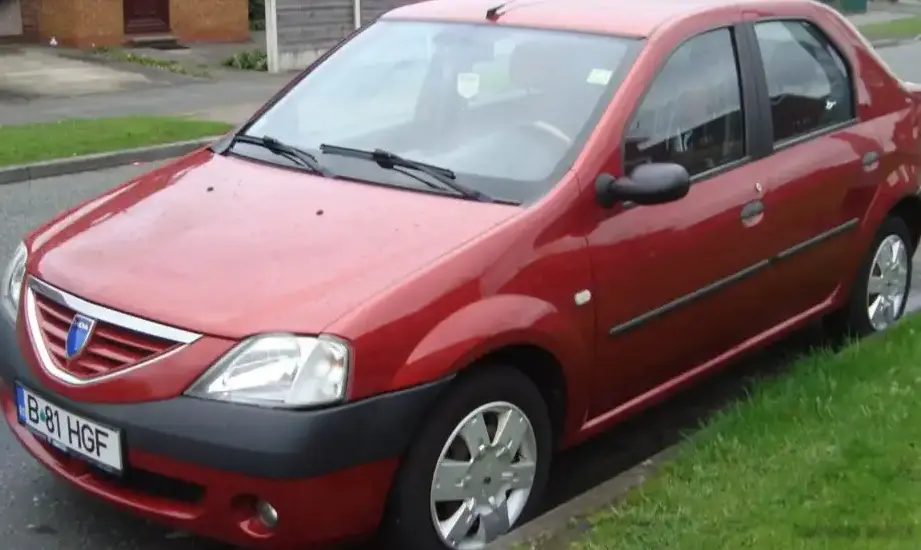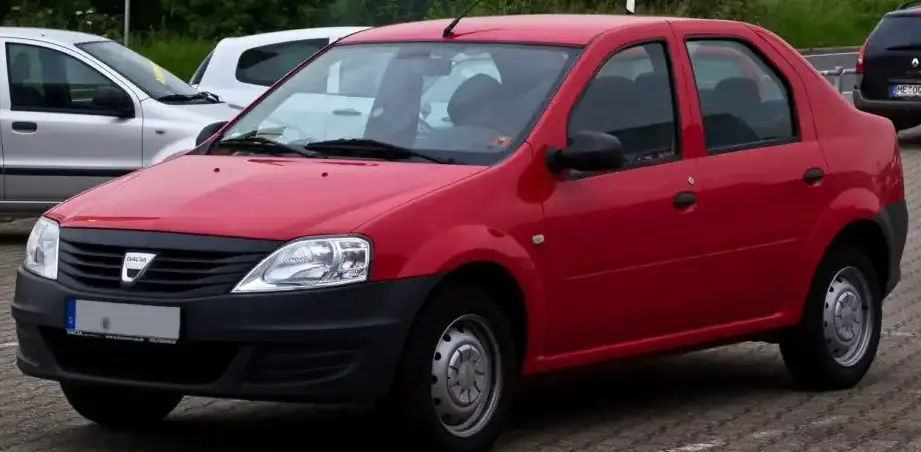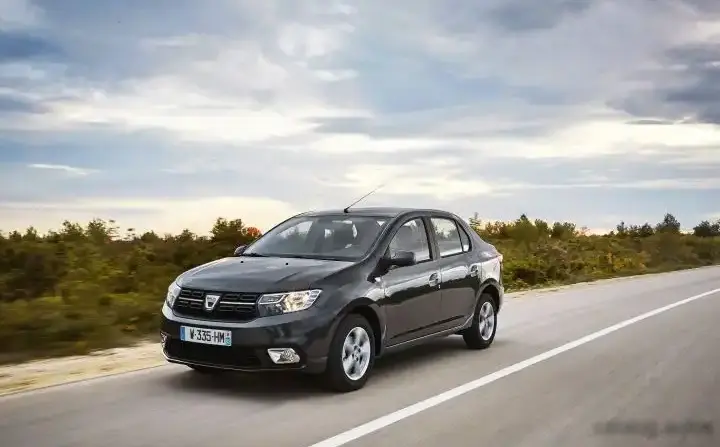
The Dacia Logan II (facelift 2016) 1.0 12V, producing 73 horsepower, represents an entry-level offering within the second generation Logan lineup. Introduced in 2016 and continuing through 2018, this variant was primarily aimed at budget-conscious buyers in European markets, where the Logan established itself as a popular choice for its practicality and affordability. It sat below the 0.9 TCe turbocharged engine and the diesel options in terms of performance and price, offering a simple, reliable, and economical transportation solution. The facelift brought updated styling and minor equipment revisions to the already successful Logan II platform.
Technical Specifications
| Brand | Dacia |
| Model | Logan |
| Generation | Logan II (facelift 2016) |
| Type (Engine) | 1.0 12V (73 Hp) |
| Start of production | 2016 |
| End of production | 2018 |
| Powertrain Architecture | Internal Combustion engine |
| Body type | Sedan |
| Seats | 5 |
| Doors | 4 |
| Fuel Type | Petrol (Gasoline) |
| Weight-to-power ratio | 14.4 kg/Hp, 69.7 Hp/tonne |
| Weight-to-torque ratio | 10.8 kg/Nm, 92.6 Nm/tonne |
| Power | 73 Hp @ 6300 rpm |
| Power per litre | 73.1 Hp/l |
| Torque | 97 Nm @ 3500 rpm (71.54 lb.-ft. @ 3500 rpm) |
| Engine layout | Front, Transverse |
| Engine Model/Code | B4D 411 |
| Engine displacement | 999 cm3 (60.96 cu. in.) |
| Number of cylinders | 3 |
| Engine configuration | Inline |
| Cylinder Bore | 71 mm (2.8 in.) |
| Piston Stroke | 84 mm (3.31 in.) |
| Compression ratio | 11:1 |
| Number of valves per cylinder | 4 |
| Fuel injection system | Multi-port manifold injection |
| Engine aspiration | Naturally aspirated engine |
| Engine oil capacity | 3 l (3.17 US qt | 2.64 UK qt) |
| Coolant | 4.5 l (4.76 US qt | 3.96 UK qt) |
| Kerb Weight | 1048 kg (2310.44 lbs.) |
| Max. weight | 1505 kg (3317.96 lbs.) |
| Max load | 457 kg (1007.51 lbs.) |
| Trunk (boot) space – minimum | 510 l (18.01 cu. ft.) |
| Trunk (boot) space – maximum | 1257 l (44.39 cu. ft.) |
| Fuel tank capacity | 50 l (13.21 US gal | 11 UK gal) |
| Permitted trailer load with brakes (8%) | 1090 kg (2403.04 lbs.) |
| Permitted trailer load without brakes | 520 kg (1146.4 lbs.) |
| Length | 4358 mm (171.57 in.) |
| Width | 1733 mm (68.23 in.) |
| Width including mirrors | 1994 mm (78.5 in.) |
| Height | 1517 mm (59.72 in.) |
| Wheelbase | 2635 mm (103.74 in.) |
| Front track | 1497 mm (58.94 in.) |
| Rear (Back) track | 1486 mm (58.5 in.) |
| Front overhang | 827 mm (32.56 in.) |
| Rear overhang | 896 mm (35.28 in.) |
| Ride height (ground clearance) | 145 mm (5.71 in.) |
| Drivetrain Architecture | The Internal combustion engine (ICE) drives the front wheels of the vehicle. |
| Drive wheel | Front wheel drive |
| Number of gears and type of gearbox | 5 gears, manual transmission |
| Assisting systems | ABS (Anti-lock braking system) |
| Steering type | Steering rack and pinion |
| Tires size | 185/65 R15; 195/55 R16 |
| Wheel rims size | 15; 16 |
Powertrain & Engine Architecture
The heart of this Logan variant is the Dacia-Renault B4D 411 engine, a 999cc inline three-cylinder petrol engine. This engine is a member of the SCe (Smart Combustion Engine) family, designed for efficiency and reduced emissions. It features a multi-point fuel injection system and a relatively simple 12-valve configuration (four valves per cylinder). The engine’s design prioritizes low-end torque over outright power, making it suitable for everyday driving conditions. The 5-speed manual transmission was the only gearbox option available with this engine, chosen for its cost-effectiveness and contribution to fuel economy. The transmission’s gear ratios are geared towards maximizing fuel efficiency rather than providing sporty acceleration.
Driving Characteristics
The 73 hp output and 97 Nm of torque translate to modest, but adequate, performance. Acceleration is leisurely, and overtaking requires careful planning. The engine feels most comfortable in the lower to mid-range of the rev band. The 5-speed manual transmission is notchy but precise. Compared to the more powerful 0.9 TCe engine, the 1.0 12V feels significantly less responsive, particularly at higher speeds. However, it offers a smoother and more predictable power delivery, which some drivers may prefer for city driving. The weight of the vehicle, around 1048 kg, contributes to the feeling of being underpowered, especially when fully loaded.
Equipment & Trim Levels
The 1.0 12V Logan typically came with a basic level of equipment, reflecting its position as the entry-level model. Standard features generally included power steering, central locking, electric front windows, and an ABS anti-lock braking system. Air conditioning was often an optional extra, as were features like a radio with USB connectivity. Interior upholstery was typically cloth, with a simple and durable design. Trim levels varied slightly depending on the market, but generally focused on providing essential features at the lowest possible cost. The dashboard layout was functional and straightforward, prioritizing ease of use over aesthetic appeal.
Chassis & Braking
The Logan II utilizes a relatively simple MacPherson strut front suspension and a torsion beam rear suspension. This setup provides a comfortable ride quality, although it’s not particularly sporty. The front brakes are typically disc brakes, while the rear brakes are drum brakes, a cost-saving measure common in this segment. The steering is a rack and pinion system, providing adequate precision for everyday driving. Stabilizer bars were often omitted on the base models to further reduce costs. The suspension tuning prioritizes comfort and stability over handling prowess.
Market Reception & Comparison
The Dacia Logan II 1.0 12V was well-received in markets where affordability was a primary concern. Critics praised its low price, spacious interior, and practical design. However, the engine’s lack of power was a common criticism. Compared to the 0.9 TCe turbocharged engine, the 1.0 12V offered significantly lower performance but better fuel economy in some driving conditions. The diesel variants provided even better fuel economy but came with a higher purchase price. The 1.0 12V appealed to buyers who prioritized economy and reliability over performance.
Legacy
The B4D 411 engine, while not known for its performance, has proven to be a relatively reliable unit. Common issues are typically related to wear and tear on components like the timing chain and water pump. The Logan II, in general, has a reputation for being a durable and low-maintenance vehicle. On the used car market, the 1.0 12V Logan represents a very affordable option for those seeking basic transportation. Its simplicity and robust construction make it a good choice for first-time car owners or those on a tight budget. While it may not offer the refinement or performance of more expensive vehicles, it provides a practical and economical solution for everyday driving needs.