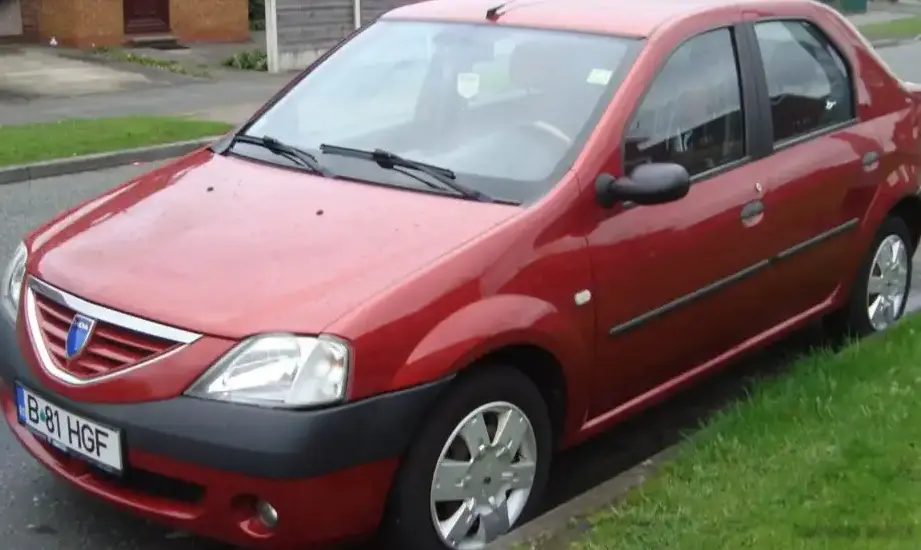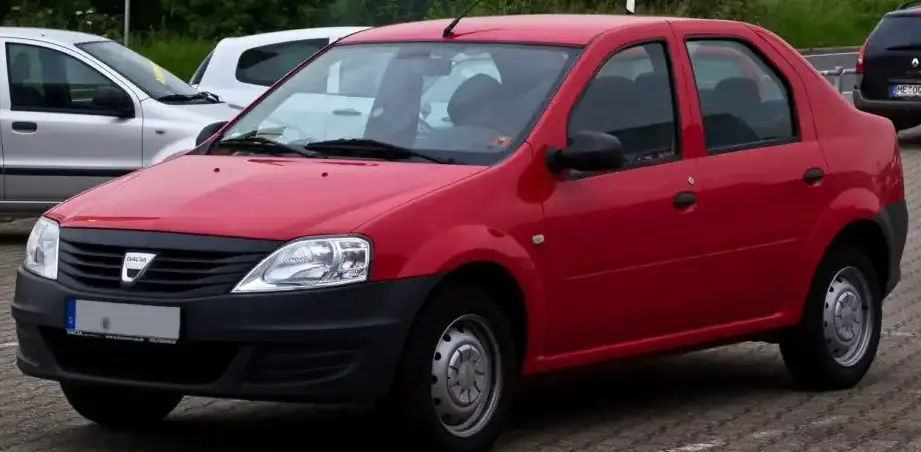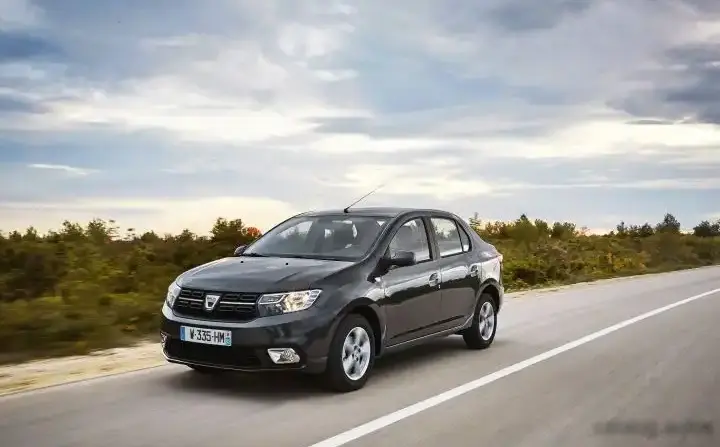
The Dacia Logan II (facelifted in 2016) 1.5 dCi 75 hp variant represents an entry-level offering within the second generation Logan lineup. Produced from 2016 to 2018, this model aimed to provide affordable and economical transportation, primarily targeting price-sensitive markets in Europe and developing countries. Positioned as the base engine option, it served as the gateway to Logan ownership, emphasizing fuel efficiency over outright performance. The facelift brought subtle styling updates and improvements to interior trim compared to the pre-2016 models, but the core mechanicals remained largely consistent.
Technical Specifications
| Brand | Dacia |
| Model | Logan |
| Generation | Logan II (facelift 2016) |
| Type (Engine) | 1.5 dCi (75 Hp) |
| Start of production | 2016 |
| End of production | 2018 |
| Powertrain Architecture | Internal Combustion engine |
| Body type | Sedan |
| Seats | 5 |
| Doors | 4 |
| Fuel consumption (urban) | 3.7 l/100 km (63.6 US mpg, 76.3 UK mpg, 27 km/l) |
| Fuel consumption (extra urban) | 3.6 l/100 km (65.3 US mpg, 78.5 UK mpg, 27.8 km/l) |
| Fuel consumption (combined) | 3.6 l/100 km (65.3 US mpg, 78.5 UK mpg, 27.8 km/l) |
| CO2 emissions | 93 g/km |
| Fuel Type | Diesel |
| Acceleration 0 – 100 km/h | 14.6 sec |
| Acceleration 0 – 62 mph | 14.6 sec |
| Acceleration 0 – 60 mph | 13.9 sec |
| Maximum speed | 164 km/h (101.9 mph) |
| Emission standard | Euro 6 |
| Weight-to-power ratio | 15.4 kg/Hp, 64.9 Hp/tonne |
| Power | 75 Hp @ 4000 rpm |
| Power per litre | 51.3 Hp/l |
| Engine layout | Front, Transverse |
| Engine Model/Code | K9K 626 |
| Engine displacement | 1461 cm3 (89.16 cu. in.) |
| Number of cylinders | 4 |
| Engine configuration | Inline |
| Cylinder Bore | 76 mm (2.99 in.) |
| Piston Stroke | 80.5 mm (3.17 in.) |
| Compression ratio | 15.5:1 |
| Number of valves per cylinder | 2 |
| Fuel injection system | Diesel Commonrail |
| Engine aspiration | Turbocharger, Intercooler |
| Engine oil capacity | 4.5 l (4.76 US qt | 3.96 UK qt) |
| Coolant capacity | 4.5 l (4.76 US qt | 3.96 UK qt) |
| Kerb Weight | 1155 kg (2546.34 lbs.) |
| Max. weight | 1590 kg (3505.35 lbs.) |
| Max load | 435 kg (959.01 lbs.) |
| Trunk (boot) space – minimum | 510 l (18.01 cu. ft.) |
| Trunk (boot) space – maximum | 1257 l (44.39 cu. ft.) |
| Fuel tank capacity | 50 l (13.21 US gal | 11 UK gal) |
| Permitted trailer load with brakes (8%) | 1090 kg (2403.04 lbs.) |
| Permitted trailer load without brakes | 575 kg (1267.66 lbs.) |
| Length | 4358 mm (171.57 in.) |
| Width | 1733 mm (68.23 in.) |
| Width including mirrors | 1994 mm (78.5 in.) |
| Height | 1517 mm (59.72 in.) |
| Wheelbase | 2635 mm (103.74 in.) |
| Front track | 1497 mm (58.94 in.) |
| Rear (Back) track | 1486 mm (58.5 in.) |
| Front overhang | 827 mm (32.56 in.) |
| Rear overhang | 896 mm (35.28 in.) |
| Ride height (ground clearance) | 145 mm (5.71 in.) |
| Drivetrain Architecture | The Internal combustion engine (ICE) drives the front wheels of the vehicle. |
| Drive wheel | Front wheel drive |
| Number of gears and type of gearbox | 5 gears, manual transmission |
| Front brakes | Ventilated discs |
| Rear brakes | Disc |
| Assisting systems | ABS (Anti-lock braking system) |
| Steering type | Steering rack and pinion |
| Power steering | Electric Steering |
| Tires size | 185/65 R15; 195/55 R16 |
| Wheel rims size | 15; 16 |
Powertrain & Engine Architecture
The heart of this Logan variant is the Renault-sourced K9K 626 1.5-liter inline-four diesel engine. This engine is a common sight in many Renault, Nissan, and Dacia vehicles. It features a single overhead camshaft (SOHC) operating two valves per cylinder. The K9K engine utilizes a diesel common rail direct injection system, delivering fuel at extremely high pressures for efficient combustion. A turbocharger with an intercooler is employed to boost power output and improve torque. The 75 horsepower rating is achieved at 4000 rpm, and the engine produces a modest amount of torque, suitable for everyday driving. The engine’s design prioritizes fuel economy and durability over high performance. The transmission is a five-speed manual gearbox, chosen for its simplicity and cost-effectiveness. While an automated manual transmission (AMT) was available on some Logan models, it was not typically paired with this specific engine and power output.
Driving Characteristics
The 1.5 dCi 75 hp Logan offers a utilitarian driving experience. Acceleration is leisurely, with a 0-60 mph time of around 13.9 seconds. The engine feels strained when pushed hard, particularly when fully loaded or climbing hills. The five-speed manual transmission is geared for economy, with relatively tall ratios. This contributes to good fuel economy but requires frequent downshifts when overtaking or navigating undulating terrain. The power delivery is linear, but the lack of significant low-end torque means the engine needs to be revved to access its full potential. Compared to the more powerful 90 hp or 110 hp versions of the 1.5 dCi, this variant feels noticeably slower. However, it provides a more relaxed and fuel-efficient driving experience, making it well-suited for urban commuting and long-distance journeys where outright speed is not a priority.
Equipment & Trim Levels
The 75 hp 1.5 dCi Logan typically came with a basic level of equipment. Standard features generally included power steering, central locking, electric front windows, and an ABS anti-lock braking system. Interior trim was functional and durable, with hard-wearing plastics dominating the cabin. Upholstery was typically cloth, and the dashboard layout was straightforward and easy to use. Optional extras included air conditioning, a radio/CD player, and alloy wheels. Higher trim levels, such as the Ambiance or Laureate, added features like body-colored bumpers, electric rear windows, and a more comprehensive infotainment system. However, the base 75 hp model was deliberately kept simple to maintain its affordability.
Chassis & Braking
The Logan II utilizes a relatively simple chassis design, prioritizing cost-effectiveness and robustness. The front suspension consists of MacPherson struts, while the rear suspension employs a torsion beam axle. This setup provides a comfortable ride quality, although it’s not particularly sporty. Braking is handled by ventilated discs at the front and solid discs at the rear. The ABS system provides additional safety by preventing wheel lockup during hard braking. The steering is a rack-and-pinion system with electric power assistance, offering light and easy steering feel. The suspension and braking systems were tuned to suit the lower power output and weight of this variant, providing adequate stopping power and handling for everyday driving conditions.
Market Reception & Comparison
The Dacia Logan II 1.5 dCi 75 hp was generally well-received by critics as a practical and affordable vehicle. Its exceptional fuel economy and low running costs were particularly praised. However, its lack of performance and basic interior were often cited as drawbacks. Compared to the 90 hp version of the same engine, the 75 hp model offered slightly better fuel economy but significantly slower acceleration. The 1.5 dCi 90 hp was a more popular choice for drivers who required more power for highway driving or carrying passengers and luggage. Against competitors like the Skoda Fabia or Volkswagen Polo, the Logan offered more space and practicality at a lower price point, but lacked the refinement and build quality of its rivals.
Legacy
The K9K engine, in its various iterations, has proven to be a remarkably durable and reliable powertrain. The 1.5 dCi 75 hp version is generally considered to be a robust engine, capable of covering high mileages with proper maintenance. Common issues include occasional turbocharger problems and potential issues with the diesel particulate filter (DPF), particularly on vehicles that primarily cover short distances. In the used car market, the Logan II 1.5 dCi 75 hp remains a popular choice for budget-conscious buyers seeking a reliable and economical vehicle. Its simplicity and low running costs continue to make it an attractive option, even as newer and more sophisticated vehicles become available.