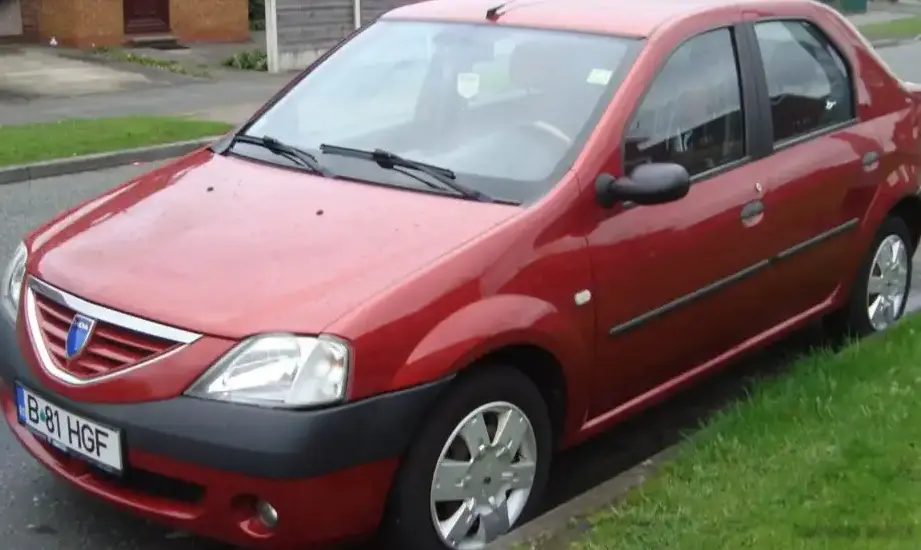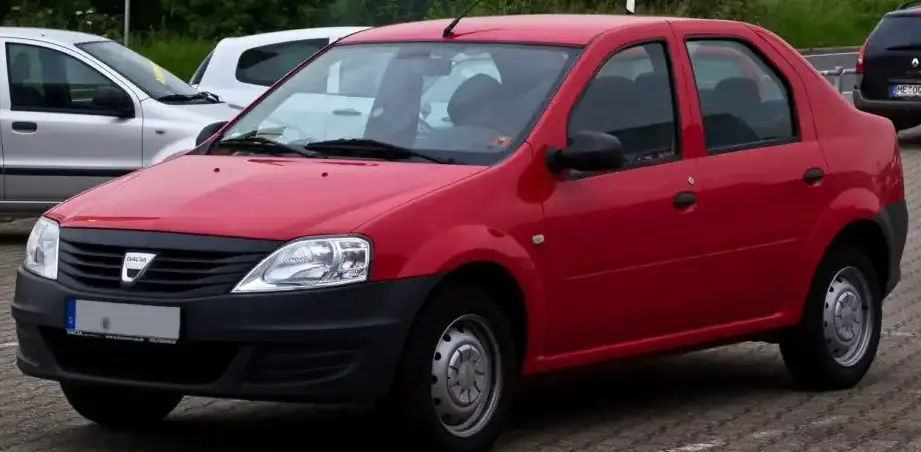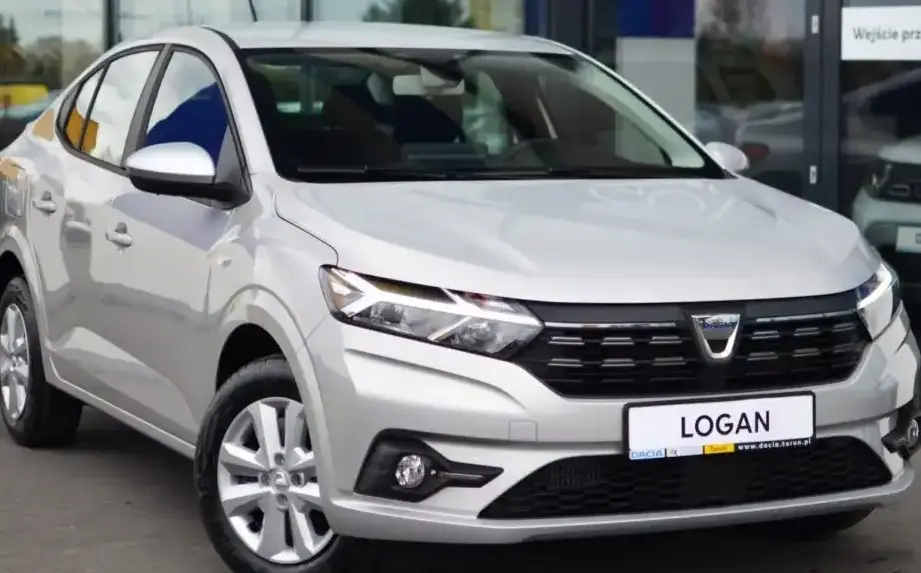
The Dacia Logan III 1.0 TCe (91 hp) represents an entry-level offering within the third generation of Dacia’s popular Logan sedan, produced from September 2020 through 2022. Positioned as a budget-friendly option, this variant aimed to provide affordable transportation with reasonable fuel efficiency. It’s a key model in Dacia’s strategy of offering practical, no-frills vehicles primarily targeted at price-sensitive markets, particularly in Europe and emerging economies. The Logan III, built on the updated and improved platform from its predecessor, sought to address criticisms of the earlier models while maintaining the core value proposition of affordability. This specific 1.0 TCe engine and transmission combination was designed to balance acceptable performance with low running costs.
Technical Specifications
| Brand | Dacia |
| Model | Logan |
| Generation | Logan III |
| Type (Engine) | 1.0 TCe (91 Hp) |
| Start of production | September, 2020 |
| End of production | 2022 |
| Powertrain Architecture | Internal Combustion engine |
| Body type | Sedan |
| Seats | 5 |
| Doors | 4 |
| Fuel consumption (urban) | 6.1-6.2 l/100 km (38.6 – 37.9 US mpg, 46.3 – 45.6 UK mpg, 16.4 – 16.1 km/l) |
| Fuel consumption (extra urban) | 4-4.1 l/100 km (58.8 – 57.4 US mpg, 70.6 – 68.9 UK mpg, 25 – 24.4 km/l) |
| Fuel consumption (combined) | 4.8-4.9 l/100 km (49 – 48 US mpg, 58.9 – 57.6 UK mpg, 20.8 – 20.4 km/l) |
| CO2 emissions | 109-111 g/km |
| Fuel Type | Petrol (Gasoline) |
| Maximum speed | 180 km/h (111.85 mph) |
| Emission standard | Euro 6 |
| Weight-to-power ratio | 11.7 kg/Hp, 85.1 Hp/tonne |
| Weight-to-torque ratio | 6.7 kg/Nm, 149.7 Nm/tonne |
| Power | 91 Hp |
| Power per litre | 91.1 Hp/l |
| Torque | 160 Nm (118.01 lb.-ft.) |
| Engine layout | Front, Transverse |
| Engine Model/Code | H4Dt |
| Engine displacement | 999 cm3 (60.96 cu. in.) |
| Number of cylinders | 3 |
| Engine configuration | Inline |
| Number of valves per cylinder | 4 |
| Fuel injection system | Multi-port manifold injection |
| Engine aspiration | Turbocharger, Intercooler |
| Engine oil capacity | 4.1 l (4.33 US qt | 3.61 UK qt) |
| Kerb Weight | 1069-1093 kg (2356.74 – 2409.65 lbs.) |
| Max. weight | 1565 kg (3450.23 lbs.) |
| Max load | 472-496 kg (1040.58 – 1093.49 lbs.) |
| Trunk (boot) space – minimum | 528 l (18.65 cu. ft.) |
| Trunk (boot) space – maximum | 1361 l (48.06 cu. ft.) |
| Fuel tank capacity | 50 l (13.21 US gal | 11 UK gal) |
| Permitted trailer load with brakes (12%) | 1100 kg (2425.08 lbs.) |
| Permitted trailer load without brakes | 580 kg (1278.68 lbs.) |
| Length | 4396 mm (173.07 in.) |
| Width | 1848 mm (72.76 in.) |
| Width including mirrors | 2007 mm (79.02 in.) |
| Height | 1501 mm (59.09 in.) |
| Wheelbase | 2649 mm (104.29 in.) |
| Front track | 1533 mm (60.35 in.) |
| Rear (Back) track | 1519 mm (59.8 in.) |
| Front overhang | 819 mm (32.24 in.) |
| Rear overhang | 928 mm (36.54 in.) |
| Ride height (ground clearance) | 161 mm (6.34 in.) |
| Drivetrain Architecture | The Internal combustion engine (ICE) drives the front wheels of the vehicle. |
| Drive wheel | Front wheel drive |
| Number of gears and type of gearbox | 6 gears, manual transmission |
| Front brakes | Disc |
| Rear brakes | Drum |
| Assisting systems | ABS (Anti-lock braking system) |
| Steering type | Steering rack and pinion |
| Tires size | 185/65 R15; 195/55 R16 |
Powertrain & Engine Architecture
The heart of this Logan variant is the Renault-sourced H4Dt 1.0 TCe three-cylinder engine. This engine is part of Renault’s ‘Energy’ family, designed for efficiency and reduced emissions. The 999cc displacement is achieved through a relatively oversquare design, promoting higher revs and improved combustion. It utilizes a single-scroll turbocharger with an intercooler to boost power output. Fuel is delivered via multi-point fuel injection, and the engine features four valves per cylinder for enhanced breathing. The engine is transversely mounted at the front of the vehicle. The 6-speed manual transmission was the only transmission option available with this engine, offering a balance between fuel economy and driver control. The gearbox ratios are tuned for maximizing fuel efficiency in everyday driving conditions, with a relatively long final drive.
Driving Characteristics
The 91 hp output of the 1.0 TCe engine translates to adequate, but not exhilarating, performance. Acceleration from 0 to 62 mph (0-100 km/h) takes around 11.9 seconds, and the top speed is 180 km/h (112 mph). The engine delivers its peak torque of 160 Nm (118 lb-ft) at 3,500 rpm, providing sufficient pull for everyday overtaking maneuvers. Compared to higher-output versions of the Logan III, such as those equipped with the 1.3 TCe engine, this variant feels noticeably less responsive. However, the lighter engine weight contributes to improved handling and a more nimble feel. The manual transmission allows for precise gear selection, but the shift quality can feel somewhat notchy. Overall, the driving experience is geared towards practicality and economy rather than sporty performance.
Equipment & Trim Levels
The 1.0 TCe (91 hp) Logan III typically served as the entry-level trim, often designated as ‘Access’ or ‘Essential’ depending on the market. Standard equipment generally included power steering, central locking, electric front windows, ABS brakes, and a basic audio system. Safety features such as airbags were also standard. Interior upholstery was typically cloth, and the dashboard featured a simple, functional design. Optional extras included air conditioning, alloy wheels, a more advanced audio system with Bluetooth connectivity, and parking sensors. Higher trim levels offered additional features such as cruise control, automatic headlights, and rain-sensing wipers.
Chassis & Braking
The Logan III utilizes a MacPherson strut front suspension and a torsion beam rear suspension. This setup provides a comfortable ride quality, prioritizing smoothness over outright handling precision. The front brakes are disc brakes, while the rear brakes are drum brakes – a cost-saving measure common in entry-level models. The steering is a rack-and-pinion system, providing adequate feedback. Stabilizer bars are fitted to both the front and rear axles to reduce body roll during cornering. The suspension tuning is geared towards absorbing bumps and providing a stable ride, even when the vehicle is fully loaded.
Market Reception & Comparison
The Dacia Logan III 1.0 TCe (91 hp) was generally well-received by critics as a value-for-money proposition. Its low price point and reasonable fuel economy were key selling points. However, some reviewers criticized its lack of power and refinement compared to competitors. Compared to other engines in the Logan III lineup, the 1.0 TCe offered the lowest running costs but also the slowest performance. The 1.3 TCe engine, for example, provided significantly more power and a more refined driving experience, but at a higher price. The 1.5 dCi diesel engine offered even better fuel economy, but with higher maintenance costs and potential emissions concerns.
Legacy
The 1.0 TCe engine has proven to be a relatively reliable unit, although some owners have reported issues with the turbocharger and fuel injectors. The Logan III, in general, has established a reputation for being a durable and practical vehicle. In the used car market, the 1.0 TCe variant remains an attractive option for budget-conscious buyers seeking affordable transportation. Its low running costs and simple mechanical design make it a relatively easy and inexpensive vehicle to maintain. While not a performance car, the Logan III 1.0 TCe provides a dependable and economical solution for everyday driving needs.