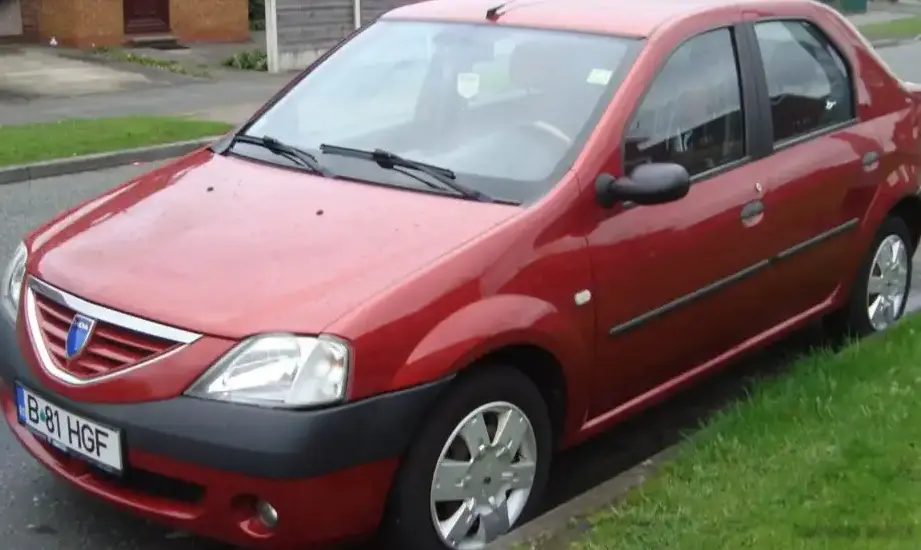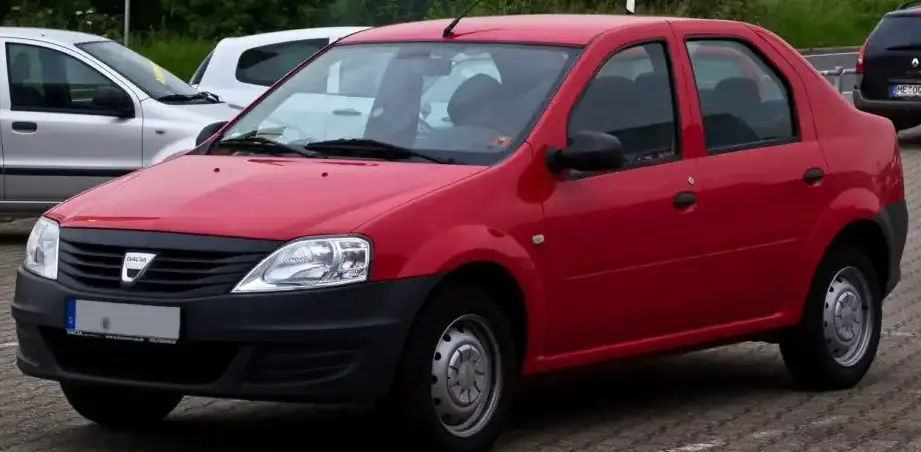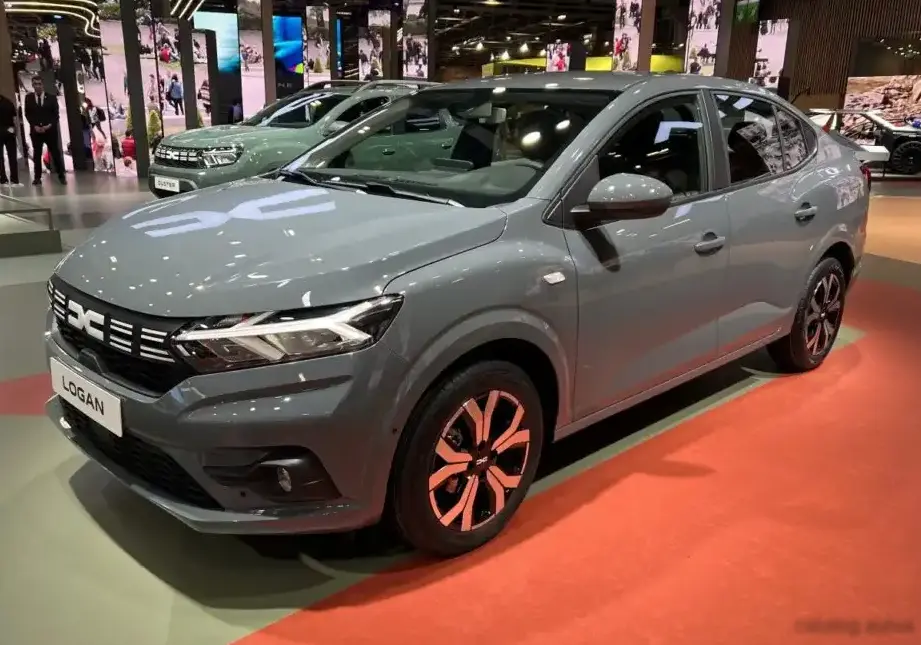
The Dacia Logan III (facelift 2022) 1.0 ECO-G 100, a 90/100 horsepower LPG-capable variant, represents a significant offering within the budget-conscious sedan segment. Introduced in September 2022, this model builds upon the third generation Logan (launched in 2019), incorporating styling updates and powertrain refinements. Positioned as a fuel-efficient and practical option, the 1.0 ECO-G 100 caters to buyers seeking low running costs without sacrificing essential comfort and space. It’s a key model for Dacia, a brand known for providing affordable transportation, particularly in European markets. The “ECO-G” designation signifies its bi-fuel capability, running on both gasoline and Liquefied Petroleum Gas (LPG).
Technical Specifications
| Brand | Dacia |
| Model | Logan |
| Generation | Logan III (facelift 2022) |
| Type (Engine) | 1.0 ECO-G 100 (90/100 Hp) LPG Manual 6-speed |
| Start of production | September, 2022 |
| Powertrain Architecture | Internal Combustion engine |
| Body type | Sedan |
| Seats | 5 |
| Doors | 4 |
| Combined fuel consumption (WLTP) | 5.3 l/100 km (44.4 US mpg, 53.3 UK mpg, 18.9 km/l) |
| Combined fuel consumption (WLTP) (LPG) | 6.9 l/100 km |
| CO2 emissions (WLTP) | 119-120 g/km |
| CO2 emissions (LPG) (WLTP) | 106-107 g/km |
| Fuel Type | Petrol / LPG |
| Acceleration 0 – 100 km/h | 11.6 sec |
| Acceleration 0 – 62 mph | 11.6 sec |
| Acceleration 0 – 60 mph | 11 sec |
| Maximum speed | 180 km/h (111.85 mph) |
| Emission standard | Euro 6 |
| Weight-to-power ratio | 12.7 kg/Hp, 78.5 Hp/tonne |
| Weight-to-torque ratio | 7.2 kg/Nm, 139.6 Nm/tonne |
| Power | 90 Hp @ 4800-5000 rpm |
| Power per litre | 90.1 Hp/l |
| Power (LPG) | 100 Hp @ 4600-5000 rpm |
| Power per litre (LPG) | 100.1 Hp/l |
| Torque | 160 Nm @ 2100-3750 rpm (118.01 lb.-ft. @ 2100-3750 rpm) |
| Torque (LPG) | 170 Nm @ 2000-3500 rpm |
| Engine layout | Front, Transverse |
| Engine Model/Code | H4D 480 |
| Engine displacement | 999 cm3 (60.96 cu. in.) |
| Number of cylinders | 3 |
| Engine configuration | Inline |
| Cylinder Bore | 72.2 mm (2.84 in.) |
| Piston Stroke | 81.38 mm (3.2 in.) |
| Number of valves per cylinder | 4 |
| Fuel injection system | Multi-port manifold injection |
| Engine aspiration | Turbocharger |
| Engine oil capacity | 4.1 l (4.33 US qt | 3.61 UK qt) |
| Kerb Weight | 1146 kg (2526.5 lbs.) |
| Max. weight | 1605 kg (3538.42 lbs.) |
| Max load | 459 kg (1011.92 lbs.) |
| Trunk (boot) space – minimum | 528 l (18.65 cu. ft.) |
| Trunk (boot) space – maximum | 1361 l (48.06 cu. ft.) |
| Fuel tank capacity | 50 l (13.21 US gal | 11 UK gal) |
| Fuel tank capacity (LPG) | 40 l |
| Permitted trailer load with brakes (12%) | 1100 kg (2425.08 lbs.) |
| Length | 4396 mm (173.07 in.) |
| Width | 1848 mm (72.76 in.) |
| Width including mirrors | 2007 mm (79.02 in.) |
| Height | 1501 mm (59.09 in.) |
| Wheelbase | 2649 mm (104.29 in.) |
| Front track | 1533 mm (60.35 in.) |
| Rear (Back) track | 1519 mm (59.8 in.) |
| Front overhang | 819 mm (32.24 in.) |
| Rear overhang | 928 mm (36.54 in.) |
| Ride height (ground clearance) | 161 mm (6.34 in.) |
| Drivetrain Architecture | The Internal combustion engine (ICE) drives the front wheels of the vehicle. |
| Drive wheel | Front wheel drive |
| Number of gears and type of gearbox | 6 gears, manual transmission |
| Front brakes | Disc |
| Rear brakes | Drum |
| Assisting systems | ABS (Anti-lock braking system) |
| Steering type | Steering rack and pinion |
| Tires size | 185/65 R15 |
Powertrain & Engine Architecture
The heart of the Logan III 1.0 ECO-G 100 is the H4D 480 engine, a 999cc, three-cylinder turbocharged petrol engine. This engine is part of Renault Group’s latest generation of small-displacement, forced-induction units. It utilizes multi-point fuel injection and features a single scroll turbocharger. The engine’s ability to run on LPG is achieved through a dedicated LPG fuel system installed alongside the petrol system, offering a switchable fuel source. When running on LPG, the engine produces a slightly higher 100 horsepower. The six-speed manual transmission is standard, chosen for its efficiency and cost-effectiveness. This transmission is known for its relatively long gearing, prioritizing fuel economy over outright acceleration.
Driving Characteristics
The 1.0 ECO-G 100 offers a practical, if not exhilarating, driving experience. With 90 horsepower and 160 Nm of torque, acceleration from 0-100 km/h takes around 11.6 seconds. The turbocharger provides a noticeable boost in power, but the engine can feel strained at higher speeds or when fully loaded. The long gearing of the six-speed manual transmission contributes to good fuel economy but requires frequent downshifts when overtaking or climbing hills. Compared to higher-output versions of the Logan III, such as those with diesel engines, this variant prioritizes fuel efficiency and affordability over performance. The LPG system provides a smoother, quieter operation and lower running costs, but slightly reduces overall power output.
Equipment & Trim Levels
The 1.0 ECO-G 100 typically comes with a reasonable level of standard equipment, reflecting its position as a mid-range trim. Standard features generally include air conditioning, power steering, electric front windows, a basic audio system with USB connectivity, and ABS brakes. Higher trim levels add features like alloy wheels, a touchscreen infotainment system with smartphone integration, rear parking sensors, and cruise control. Interior upholstery is typically cloth, with a functional and durable design. The dashboard layout is straightforward and user-friendly, prioritizing practicality over aesthetics.
Chassis & Braking
The Logan III utilizes a relatively simple chassis design, focusing on cost-effectiveness and durability. The front suspension consists of MacPherson struts, while the rear suspension employs a torsion beam axle. This setup provides a comfortable ride quality, although it’s not particularly sporty. The braking system features disc brakes on the front wheels and drum brakes on the rear wheels, adequate for the vehicle’s weight and performance. ABS (Anti-lock Braking System) is standard, enhancing safety during emergency braking situations.
Market Reception & Comparison
The Dacia Logan III 1.0 ECO-G 100 has been well-received in markets where affordability and fuel efficiency are key considerations. Critics have praised its low running costs, spacious interior, and practical design. However, some have noted its modest performance and basic interior trim. Compared to other trims in the Logan III lineup, the 1.0 ECO-G 100 offers a compelling balance between price and fuel economy. It’s a particularly attractive option for drivers who cover high mileage and want to minimize their fuel expenses. The LPG capability further enhances its appeal in countries where LPG is readily available and competitively priced.
Legacy
The H4D 480 engine, while relatively new, has demonstrated reasonable reliability in early reports. The simplicity of the powertrain and the robust construction of the Logan III contribute to its potential for long-term durability. On the used car market, the 1.0 ECO-G 100 is expected to hold its value reasonably well, particularly as demand for fuel-efficient vehicles continues to grow. The LPG system, if properly maintained, can add to the vehicle’s longevity and reduce overall running costs. The Logan III, in general, has established a reputation as a dependable and affordable vehicle, and the 1.0 ECO-G 100 variant is poised to continue that legacy.