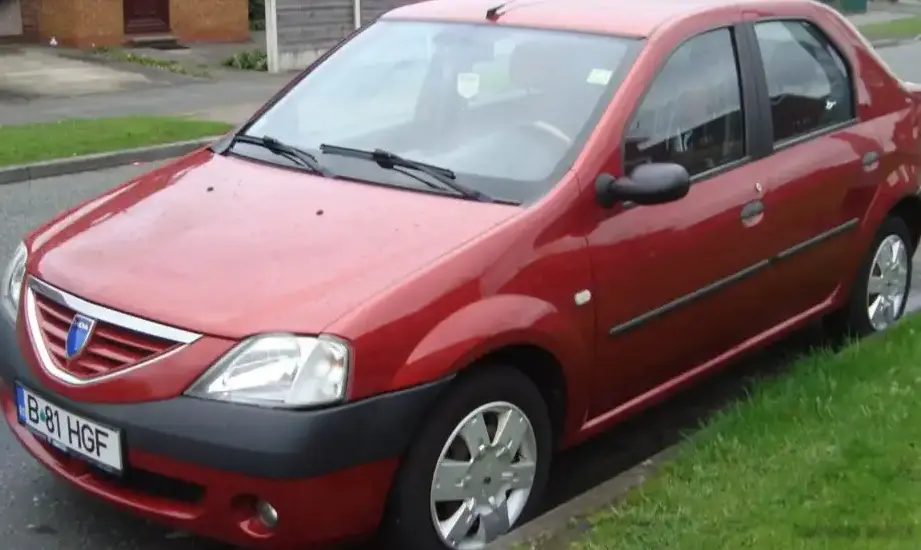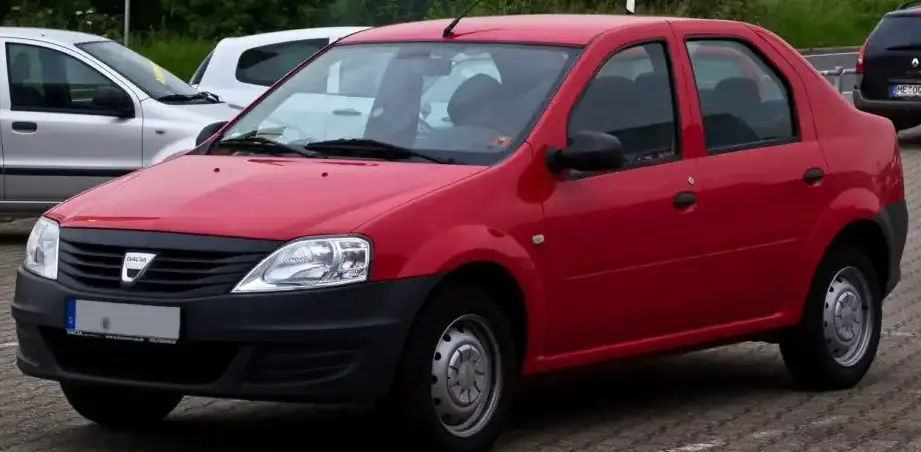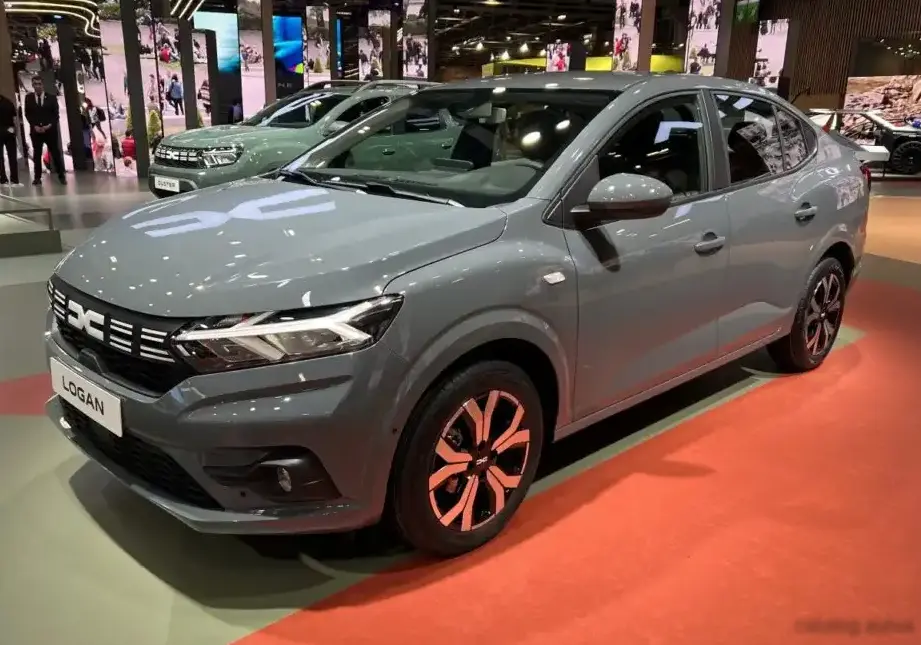
The Dacia Logan III (facelift 2022) 1.0 TCe (100 hp) CVT represents a significant iteration within the third generation of Dacia’s popular Logan sedan. Introduced in 2022 as part of a broader facelift for the Logan range, this variant combines a small-displacement turbocharged engine with a continuously variable transmission (CVT). Positioned as a mid-range offering, it aimed to provide a balance between fuel efficiency, affordability, and ease of driving, particularly appealing to buyers prioritizing comfort over outright performance. The Logan III, built on the shared CMF-B platform with Renault, is primarily marketed in Europe and other emerging markets where value-for-money is a key purchasing factor.
Technical Specifications
| Brand | Dacia |
| Model | Logan |
| Generation | Logan III (facelift 2022) |
| Type (Engine) | 1.0 TCe (100 Hp) CVT |
| Start of production | 2022 |
| Powertrain Architecture | Internal Combustion engine |
| Body type | Sedan |
| Seats | 5 |
| Doors | 4 |
| Fuel consumption (combined) | 6 l/100 km (39.2 US mpg, 47.1 UK mpg, 16.7 km/l) |
| CO2 emissions | 139 g/km |
| Fuel Type | Petrol (Gasoline) |
| Power | 100 Hp @ 5000 rpm |
| Power per litre | 100.1 Hp/l |
| Torque | 142 Nm @ 1750-4500 rpm (104.73 lb.-ft. @ 1750-4500 rpm) |
| Engine layout | Front, Transverse |
| Engine Model/Code | H4Dt |
| Engine displacement | 999 cm3 (60.96 cu. in.) |
| Number of cylinders | 3 |
| Engine configuration | Inline |
| Cylinder Bore | 72.2 mm (2.84 in.) |
| Piston Stroke | 81.35 mm (3.2 in.) |
| Number of valves per cylinder | 4 |
| Fuel injection system | Multi-port manifold injection |
| Engine aspiration | Turbocharger, Intercooler |
| Valvetrain | DOHC |
| Engine oil capacity | 4.1 l (4.33 US qt | 3.61 UK qt) |
| Trunk (boot) space – minimum | 528 l (18.65 cu. ft.) |
| Trunk (boot) space – maximum | 1361 l (48.06 cu. ft.) |
| Fuel tank capacity | 50 l (13.21 US gal | 11 UK gal) |
| Length | 4396 mm (173.07 in.) |
| Width | 1848 mm (72.76 in.) |
| Width including mirrors | 2007 mm (79.02 in.) |
| Height | 1501 mm (59.09 in.) |
| Wheelbase | 2649 mm (104.29 in.) |
| Front track | 1533 mm (60.35 in.) |
| Rear track | 1519 mm (59.8 in.) |
| Front overhang | 819 mm (32.24 in.) |
| Rear overhang | 928 mm (36.54 in.) |
| Ride height (ground clearance) | 161 mm (6.34 in.) |
| Drivetrain Architecture | Front wheel drive |
| Number of gears and type of gearbox | automatic transmission CVT |
| Front suspension | Independent, type McPherson with coil spring and anti-roll bar |
| Front brakes | Ventilated discs |
| Rear brakes | Drum |
| Tires size | 185/65 R15; 195/55 R16 |
| Wheel rims size | 15; 16 |
Powertrain & Engine Architecture
The heart of the Logan III 1.0 TCe CVT is the H4Dt engine, a 999cc inline three-cylinder petrol unit. This engine belongs to Dacia’s TCe family, utilizing a single-scroll turbocharger and intercooler to boost power and efficiency. The engine employs multi-point fuel injection and a double overhead camshaft (DOHC) valvetrain with four valves per cylinder. The key to its relatively sprightly performance is the turbocharger, which provides increased air intake, allowing for a higher compression ratio and improved combustion. The CVT transmission is a key component, offering seamless gear changes and contributing to fuel economy. Unlike traditional automatic transmissions with fixed gear ratios, a CVT uses a belt and pulley system to provide a virtually infinite number of gear ratios within its operating range. This allows the engine to operate at its most efficient point more often.
Driving Characteristics
The 100 hp output and 142 Nm of torque, available from 1750-4500 rpm, provide adequate, though not exhilarating, performance. The CVT transmission prioritizes smooth acceleration and fuel efficiency over sporty responsiveness. Compared to the 90 hp naturally aspirated 1.6-liter engine previously offered, the 1.0 TCe provides noticeably more torque at lower engine speeds, making it more comfortable for everyday driving. However, it lacks the immediate response of a manual transmission. The CVT’s programming is tuned for economy, meaning the engine can sometimes feel strained during hard acceleration. The Logan III 1.0 TCe CVT is best suited for urban and highway cruising, where its smooth operation and fuel efficiency are most appreciated. It’s not designed for spirited driving or frequent overtaking maneuvers.
Equipment & Trim Levels
The 1.0 TCe CVT trim typically includes standard features such as air conditioning, power steering, electric front windows, a basic audio system with USB connectivity, and ABS brakes. Higher trim levels add features like alloy wheels, a touchscreen infotainment system with smartphone integration (Apple CarPlay and Android Auto), rear parking sensors, and cruise control. Interior upholstery is generally cloth, with a focus on durability rather than luxury. Optional extras often include metallic paint, a parking camera, and upgraded audio systems.
Chassis & Braking
The Logan III utilizes a McPherson strut front suspension and a torsion beam rear suspension. This setup provides a comfortable ride quality, prioritizing smoothness over handling precision. The front brakes are ventilated discs, providing adequate stopping power, while the rear brakes are drums, a cost-saving measure common in this segment. The electric power steering is light and easy to use, making it ideal for city driving. Stabilizer bars are included to reduce body roll during cornering, but the Logan III is not designed for aggressive driving.
Market Reception & Comparison
The Dacia Logan III 1.0 TCe CVT was generally well-received by automotive critics as a practical and affordable family sedan. Its fuel economy of around 6 l/100 km (39.2 US mpg) was a significant selling point, particularly in Europe where fuel prices are high. Compared to the 1.6-liter engine, the 1.0 TCe offered improved fuel efficiency and comparable performance, albeit with a different driving experience. The CVT transmission was praised for its smoothness but criticized by some for its lack of engagement. Compared to competitors like the Skoda Rapid or Volkswagen Polo, the Logan III offered a lower price point but with a less refined interior and driving experience.
Legacy
The H4Dt 1.0 TCe engine, coupled with the CVT transmission, has proven to be a relatively reliable powertrain. While some early units experienced minor issues with the turbocharger or CVT, these were largely addressed through software updates and revised components. On the used car market, the Logan III 1.0 TCe CVT represents a good value proposition for buyers seeking an affordable and fuel-efficient sedan. Regular maintenance, including oil changes and CVT fluid replacements, is crucial to ensure long-term reliability. The Logan III continues to be a popular choice in markets where affordability and practicality are paramount, solidifying Dacia’s reputation as a provider of no-nonsense transportation.