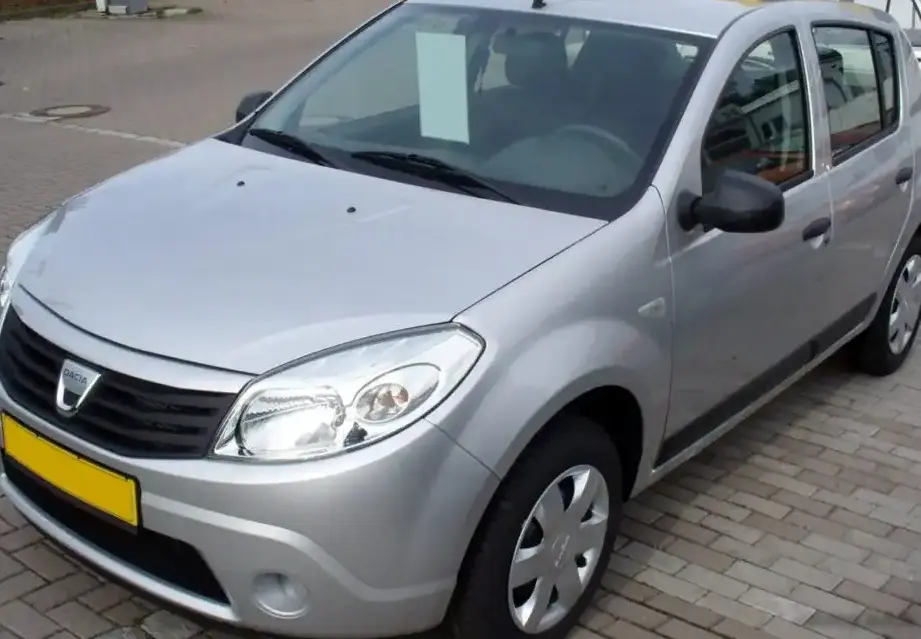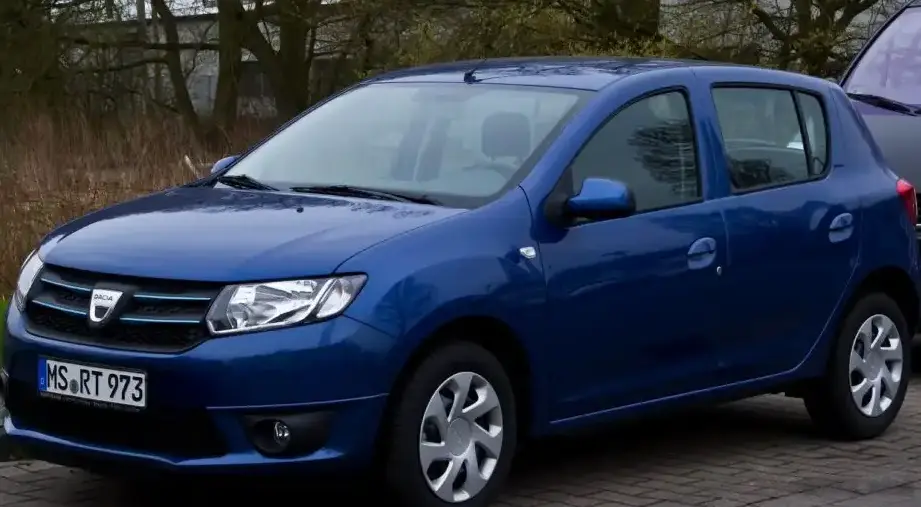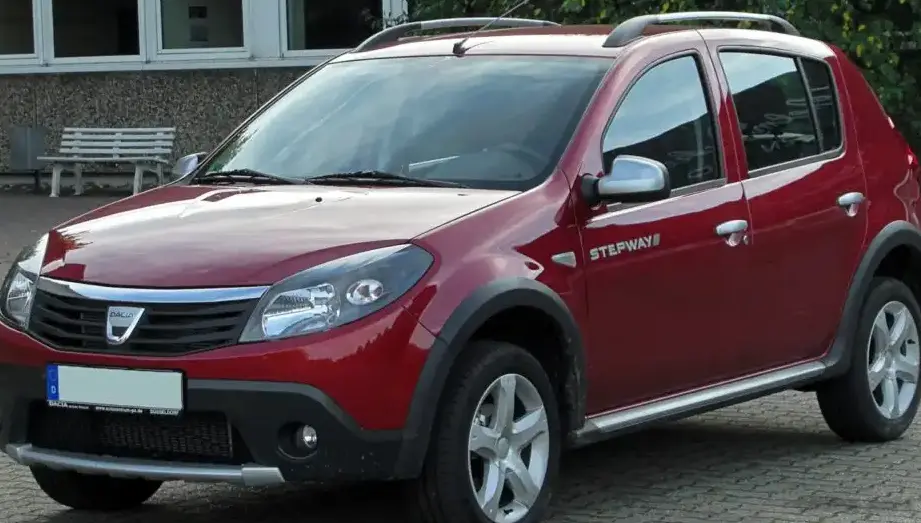
The Dacia Sandero I Stepway 1.6 8V (84/82 hp) LPG, produced between 2010 and 2012, represents a unique offering within the first generation Sandero lineup. Positioned as a budget-friendly crossover, the Stepway aimed to provide a more rugged aesthetic and slightly increased ground clearance compared to the standard Sandero hatchback. This particular variant, equipped with the 1.6-liter 8-valve engine and the option for LPG conversion, served as an entry-level choice for buyers seeking affordability and practicality, particularly in markets where LPG infrastructure was well-developed. It was built on the Dacia/Renault X90 platform, also known as the 1HX0/A3 platform, shared with the Renault Clio II and other models.
Technical Specifications
| Brand | Dacia |
| Model | Sandero |
| Generation | Sandero I Stepway |
| Type (Engine) | 1.6 8V (84/82 Hp) LPG |
| Start of production | 2010 |
| End of production | 2012 |
| Powertrain Architecture | Internal Combustion engine |
| Body type | Crossover |
| Seats | 5 |
| Doors | 5 |
| Fuel consumption (economy) – urban (NEDC) | 9.9 l/100 km (23.8 US mpg, 28.5 UK mpg, 10.1 km/l) |
| Fuel consumption (economy) – urban (LPG) (NEDC) | 13.1 l/100 km |
| Fuel consumption (economy) – extra urban (NEDC) | 6.2 l/100 km (37.9 US mpg, 45.6 UK mpg, 16.1 km/l) |
| Fuel consumption (economy) – extra urban (LPG) (NEDC) | 8 l/100 km |
| Fuel consumption (economy) – combined (NEDC) | 7.4 l/100 km (31.8 US mpg, 38.2 UK mpg, 13.5 km/l) |
| Fuel consumption (economy) – combined (LPG) (NEDC) | 9.6 l/100 km |
| CO2 emissions (NEDC) | 174 g/km |
| CO2 emissions (LPG) (NEDC) | 154 g/km |
| Fuel Type | Petrol / LPG |
| Acceleration 0 – 100 km/h | 14.1 sec |
| Acceleration 0 – 62 mph | 14.1 sec |
| Acceleration 0 – 60 mph | 13.4 sec |
| Maximum speed | 160 km/h (99.42 mph) |
| Emission standard | Euro 5 |
| Weight-to-power ratio | 13.5 kg/Hp, 74.2 Hp/tonne |
| Weight-to-torque ratio | 8.4 kg/Nm, 119.3 Nm/tonne |
| Power | 84 Hp @ 5250 rpm |
| Power per litre | 52.6 Hp/l |
| Power (LPG) | 82 Hp @ 5250 rpm |
| Power per litre (LPG) | 51.3 Hp/l |
| Torque | 135 Nm @ 3000 rpm (99.57 lb.-ft. @ 3000 rpm) |
| Torque (LPG) | 131 Nm @ 3000 rpm |
| Engine layout | Front, Transverse |
| Engine Model/Code | K7M 818 |
| Engine displacement | 1598 cm3 (97.52 cu. in.) |
| Number of cylinders | 4 |
| Engine configuration | Inline |
| Cylinder Bore | 79.5 mm (3.13 in.) |
| Piston Stroke | 80.5 mm (3.17 in.) |
| Compression ratio | 9.5:1 |
| Number of valves per cylinder | 2 |
| Fuel injection system | Multi-port manifold injection |
| Engine aspiration | Naturally aspirated engine |
| Valvetrain | SOHC |
| Engine oil capacity | 3.3 l (3.49 US qt | 2.9 UK qt) |
| Coolant | 4.5 l (4.76 US qt | 3.96 UK qt) |
| Kerb Weight | 1132 kg (2495.63 lbs.) |
| Max. weight | 1559 kg (3437.01 lbs.) |
| Max load | 427 kg (941.37 lbs.) |
| Trunk (boot) space – minimum | 320 l (11.3 cu. ft.) |
| Trunk (boot) space – maximum | 1200 l (42.38 cu. ft.) |
| Fuel tank capacity | 50 l (13.21 US gal | 11 UK gal) |
| Max. roof load | 80 kg (176.37 lbs.) |
| Permitted trailer load with brakes (12%) | 1050 kg (2314.85 lbs.) |
| Permitted trailer load without brakes | 600 kg (1322.77 lbs.) |
| Permitted towbar download | 60 kg (132.28 lbs.) |
| Length | 4024 mm (158.43 in.) |
| Width | 1753 mm (69.02 in.) |
| Width including mirrors | 1997 mm (78.62 in.) |
| Height | 1584 mm (62.36 in.) |
| Wheelbase | 2588 mm (101.89 in.) |
| Front track | 1494 mm (58.82 in.) |
| Rear (Back) track | 1483 mm (58.39 in.) |
| Front overhang | 785 mm (30.91 in.) |
| Rear overhang | 651 mm (25.63 in.) |
| Ride height (ground clearance) | 175 mm (6.89 in.) |
| Drag coefficient (Cd) | 0.36 |
| Minimum turning circle (turning diameter) | 10.5 m (34.45 ft.) |
| Drivetrain Architecture | The Internal combustion engine (ICE) drives the front wheels of the vehicle. |
| Drive wheel | Front wheel drive |
| Number of gears and type of gearbox | 5 gears, manual transmission |
| Front suspension | Independent type McPherson, Transverse stabilizer |
| Rear suspension | Coil spring, Torsion |
| Front brakes | Ventilated discs, 259×20.6 mm |
| Rear brakes | Drum, 203 mm |
| Assisting systems | ABS (Anti-lock braking system) |
| Steering type | Steering rack and pinion |
| Power steering | Hydraulic Steering |
| Tires size | 195/55 R16 |
| Wheel rims size | 6.5J x 16 |
INTRODUCTION
The Dacia Sandero I Stepway 1.6 8V (84/82 hp) LPG, produced from 2010 to 2012, was a key variant in Dacia’s expansion into Western European markets. Dacia, acquired by Renault in 1999, aimed to offer no-frills, affordable vehicles. The Sandero, launched in 2008, was the brand’s first model specifically designed for a broader European audience. The Stepway version, introduced shortly after, added a crossover-inspired look with plastic body cladding, raised suspension, and roof rails. The 1.6 8V engine, coupled with the option for LPG conversion, provided a cost-effective powertrain choice, making this variant particularly appealing to budget-conscious buyers and those seeking to reduce fuel costs.
Powertrain & Engine Architecture
The heart of the Stepway 1.6 8V is the K7M 818 engine, a 1.6-liter inline-four cylinder engine. This engine, a mainstay in Renault and Dacia vehicles for many years, is known for its simplicity and durability. It features a single overhead camshaft (SOHC) operating two valves per cylinder. Fuel delivery is managed by a multi-port fuel injection system. The 84 hp (82 hp on LPG) output is achieved at 5250 rpm, with a torque figure of 135 Nm (99.57 lb.-ft.) at 3000 rpm. When converted to run on LPG, a slight power reduction is typical. The engine’s relatively low compression ratio of 9.5:1 contributes to its ability to run reliably on both petrol and LPG. The Stepway utilized a 5-speed manual transmission as standard, optimized for fuel efficiency and everyday driving rather than outright performance.
Driving Characteristics
The 1.6 8V engine in the Stepway, paired with the 5-speed manual gearbox, delivers modest performance. Acceleration from 0 to 100 km/h (0-62 mph) takes around 14.1 seconds, and top speed is limited to 160 km/h (99.42 mph). The power delivery is linear but lacks significant punch, making it best suited for urban and suburban driving. The gear ratios are geared towards economy, meaning the engine needs to be revved to access its full potential. Compared to higher-output versions of the Sandero, such as those with the 1.4-liter engine, the 1.6 8V feels less responsive. However, the LPG conversion offers a viable alternative, reducing running costs, albeit with a slight decrease in power. The raised suspension of the Stepway provides a slightly more comfortable ride than the standard Sandero, absorbing bumps and imperfections in the road more effectively.
Equipment & Trim Levels
The Stepway 1.6 8V typically came with a basic but functional equipment list. Standard features included power steering, central locking, front airbags, and an ABS anti-lock braking system. The interior featured cloth upholstery and a simple dashboard layout. The Stepway trim added unique styling elements such as body-colored bumpers and side moldings, as well as roof rails. Optional extras included air conditioning, electric front windows, and a radio/CD player. The Stepway aimed to provide a more visually appealing and slightly more equipped package than the base Sandero, without significantly increasing the price.
Chassis & Braking
The Sandero Stepway utilizes a McPherson strut front suspension and a torsion beam rear suspension. This setup provides a good balance between ride comfort and handling. The front brakes are ventilated discs, offering adequate stopping power, while the rear brakes are drums, a cost-saving measure common in this segment. The Stepway’s slightly raised ride height (175 mm / 6.89 in.) provides increased ground clearance, making it more capable on rough roads. The hydraulic power steering offers light and easy steering, making it maneuverable in urban environments.
Market Reception & Comparison
The Dacia Sandero Stepway 1.6 8V LPG was generally well-received by critics as an affordable and practical vehicle. Its low price point and fuel efficiency were major selling points. However, its modest performance and basic interior were often noted. Compared to other trims in the Sandero lineup, the 1.6 8V offered a good balance between cost and usability. The LPG conversion further enhanced its appeal in markets with established LPG infrastructure. Fuel economy figures of around 7.4 l/100 km (31.8 US mpg) on petrol and 9.6 l/100 km on LPG were competitive for its class.
Legacy
The K7M engine, found in the Stepway 1.6 8V, has a reputation for being a robust and reliable unit. With proper maintenance, these engines can accumulate high mileage. Today, used examples of the Stepway 1.6 8V are readily available and remain affordable. The LPG conversion, if well-maintained, can significantly reduce running costs. While not a performance car, the Stepway 1.6 8V offers a practical and economical transportation solution, particularly for those seeking a budget-friendly crossover. Its simplicity and durability continue to make it a popular choice in the used car market.