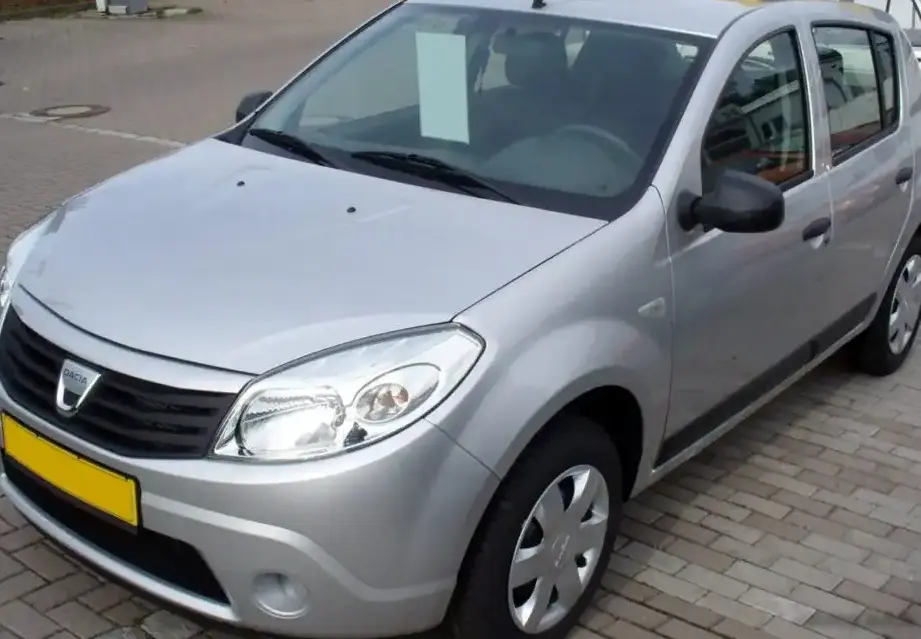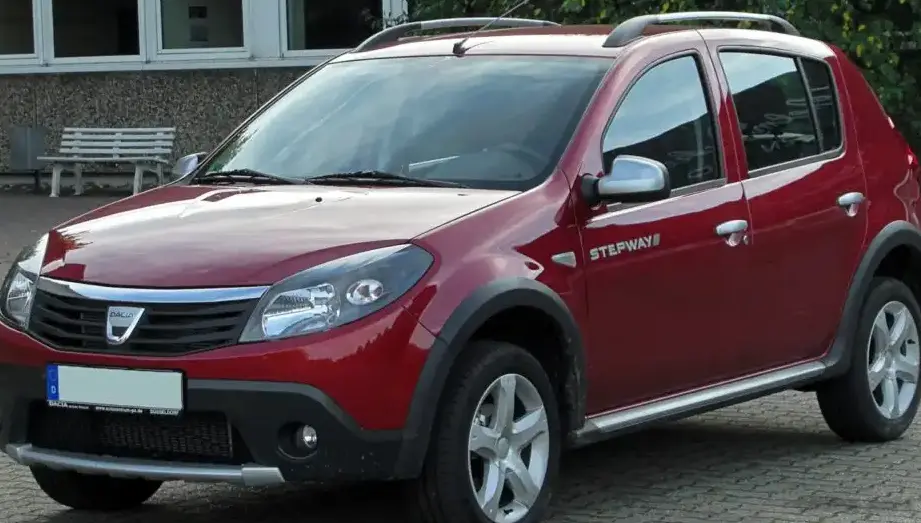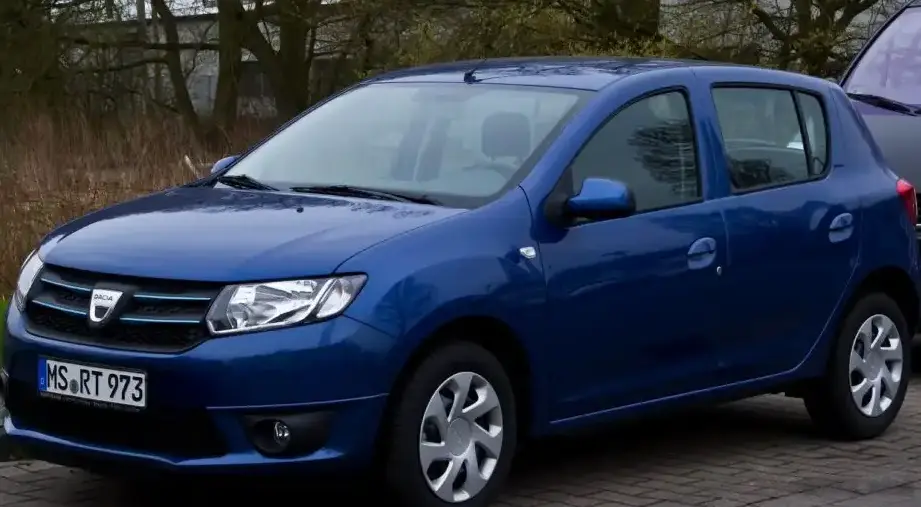
The Dacia Sandero II 0.9 TCe (90 hp) Start&Stop Easy-R, produced from 2015 to 2016, represents an entry-level offering within the second generation of the Sandero hatchback. Positioned as an affordable and fuel-efficient option, this variant aimed to broaden the Sandero’s appeal to budget-conscious buyers. It utilized a downsized, turbocharged three-cylinder engine paired with a single-clutch automated manual transmission, marketed as “Easy-R”. The Sandero II itself is based on the Renault-Nissan Alliance’s X90 platform, also known as the B0 platform, shared with models like the Renault Clio IV and Nissan Juke.
Technical Specifications
| Brand | Dacia |
| Model | Sandero |
| Generation | Sandero II |
| Type (Engine) | 0.9 TCe (90 Hp) Start&Stop Easy-R |
| Start of production | 2015 |
| End of production | 2016 |
| Powertrain Architecture | Internal Combustion engine |
| Body type | Hatchback |
| Seats | 5 |
| Doors | 5 |
| Fuel consumption (urban) | 5.7 l/100 km (41.3 US mpg, 49.6 UK mpg, 17.5 km/l) |
| Fuel consumption (extra urban) | 4.5 l/100 km (52.3 US mpg, 62.8 UK mpg, 22.2 km/l) |
| Fuel consumption (combined) | 4.9 l/100 km (48 US mpg, 57.6 UK mpg, 20.4 km/l) |
| CO2 emissions | 110 g/km |
| Fuel Type | Petrol (Gasoline) |
| Acceleration 0 – 100 km/h | 11 sec |
| Acceleration 0 – 62 mph | 11 sec |
| Acceleration 0 – 60 mph | 10.5 sec |
| Maximum speed | 175 km/h (108.74 mph) |
| Emission standard | Euro 6 |
| Weight-to-power ratio | 10.9 kg/Hp, 91.8 Hp/tonne |
| Weight-to-torque ratio | 7 kg/Nm, 142.9 Nm/tonne |
| Power | 90 Hp @ 5000 rpm |
| Power per litre | 100.2 Hp/l |
| Torque | 140 Nm @ 2250 rpm (103.26 lb.-ft. @ 2250 rpm) |
| Engine layout | Front, Transverse |
| Engine Model/Code | H4Bt 400 |
| Engine displacement | 898 cm3 (54.8 cu. in.) |
| Number of cylinders | 3 |
| Engine configuration | Inline |
| Cylinder Bore | 72.2 mm (2.84 in.) |
| Piston Stroke | 73.1 mm (2.88 in.) |
| Compression ratio | 9.5:1 |
| Number of valves per cylinder | 4 |
| Fuel injection system | Multi-port manifold injection |
| Engine aspiration | Turbocharger, Intercooler |
| Valvetrain | DOHC |
| Engine oil capacity | 4.1 l (4.33 US qt | 3.61 UK qt) |
| Coolant capacity | 4.5 l (4.76 US qt | 3.96 UK qt) |
| Kerb Weight | 980 kg (2160.53 lbs.) |
| Max. weight | 1520 kg (3351.03 lbs.) |
| Max load | 540 kg (1190.5 lbs.) |
| Trunk (boot) space – minimum | 320 l (11.3 cu. ft.) |
| Trunk (boot) space – maximum | 1200 l (42.38 cu. ft.) |
| Fuel tank capacity | 50 l (13.21 US gal | 11 UK gal) |
| Max. roof load | 80 kg (176.37 lbs.) |
| Permitted trailer load with brakes (12%) | 1090 kg (2403.04 lbs.) |
| Permitted trailer load without brakes | 525 kg (1157.43 lbs.) |
| Permitted towbar download | 75 kg (165.35 lbs.) |
| Length | 4057 mm (159.72 in.) |
| Width | 1733 mm (68.23 in.) |
| Width including mirrors | 1984 mm (78.11 in.) |
| Height | 1523 mm (59.96 in.) |
| Wheelbase | 2589 mm (101.93 in.) |
| Front track | 1497 mm (58.94 in.) |
| Rear track | 1486 mm (58.5 in.) |
| Front overhang | 818 mm (32.2 in.) |
| Rear overhang | 650 mm (25.59 in.) |
| Ride height (ground clearance) | 163 mm (6.42 in.) |
| Minimum turning circle | 10.68 m (35.04 ft.) |
| Drivetrain Architecture | Front wheel drive |
| Number of gears and type of gearbox | 5 gears, automatic transmission Easy-R |
| Front suspension | Independent type McPherson, Transverse stabilizer |
| Rear suspension | Coil spring, Torsion |
| Front brakes | Ventilated discs, 258×22 mm |
| Rear brakes | Drum, 203 mm |
| Assisting systems | ABS (Anti-lock braking system) |
| Steering type | Steering rack and pinion |
| Power steering | Electric Steering |
| Tires size | 185/65 R15 |
| Wheel rims size | 6J x 15 |
Powertrain & Engine Architecture
The heart of this Sandero variant is the H4Bt 400 engine, a 898cc inline three-cylinder petrol engine. This engine is part of Renault’s “Energy” family of downsized, turbocharged engines. It features multi-point fuel injection and a single scroll turbocharger with an intercooler. The engine’s 90 horsepower output at 5000 rpm and 140 Nm (103 lb-ft) of torque at 2250 rpm are respectable for its size. The “Easy-R” transmission is a five-speed automated manual gearbox. It’s essentially a conventional manual transmission with robotic actuators controlling the clutch and gear changes. This differs from a traditional automatic transmission with a torque converter. The Start&Stop system automatically shuts off the engine when the vehicle is stationary, improving fuel economy in urban driving.
Driving Characteristics
The 0.9 TCe engine, while offering decent fuel economy, provides modest performance. Acceleration from 0 to 62 mph takes around 11 seconds. The Easy-R transmission, while improving convenience over a manual, is known for its somewhat jerky and slow gear changes, particularly at lower speeds. This can result in a less refined driving experience compared to traditional automatic transmissions or even the manual versions of the Sandero. The gear ratios are tuned for fuel efficiency rather than outright performance. The engine feels relatively responsive in the mid-range, but can feel strained when pushed hard, especially when fully loaded.
Equipment & Trim Levels
The 0.9 TCe (90 hp) Start&Stop Easy-R typically came with a base level of equipment. Standard features generally included power steering, central locking, electric front windows, and an ABS anti-lock braking system. Air conditioning was often an optional extra. Interior upholstery was typically cloth, and the dashboard featured a simple, functional design. Higher trim levels, available with other engine options, offered features like alloy wheels, a more sophisticated infotainment system, and upgraded interior trim.
Chassis & Braking
The Sandero II utilizes a McPherson strut front suspension and a torsion beam rear suspension. This setup provides a comfortable ride, but isn’t particularly sporty. The front brakes are ventilated discs, while the rear brakes are drums. This configuration is typical for vehicles in this price segment. The steering is electrically assisted, providing light and easy steering feel. The suspension is tuned for comfort and practicality, prioritizing ride quality over handling precision.
Market Reception & Comparison
The Dacia Sandero II 0.9 TCe (90 hp) Start&Stop Easy-R was generally well-received as an affordable and economical city car. Critics praised its low running costs and practicality, but often criticized the Easy-R transmission for its sluggishness and lack of refinement. Compared to the 1.5 dCi diesel variants, the 0.9 TCe offered slightly less torque but a smoother, quieter engine. Compared to the more powerful 0.9 TCe 90 hp manual, the automatic version sacrificed some performance for convenience. Fuel economy was a strong point, with combined figures around 48 US mpg.
Legacy
The H4Bt engine, while generally reliable, has been known to exhibit occasional issues with the turbocharger and fuel injectors. The Easy-R transmission, due to its single-clutch design, requires more frequent maintenance than traditional automatic transmissions. On the used car market, the Sandero II 0.9 TCe Easy-R remains an attractive option for buyers seeking a cheap and economical runabout. However, potential buyers should be aware of the transmission’s quirks and ensure it has been properly maintained. The Sandero II, in general, has proven to be a durable and affordable vehicle, contributing to Dacia’s success in the European market.