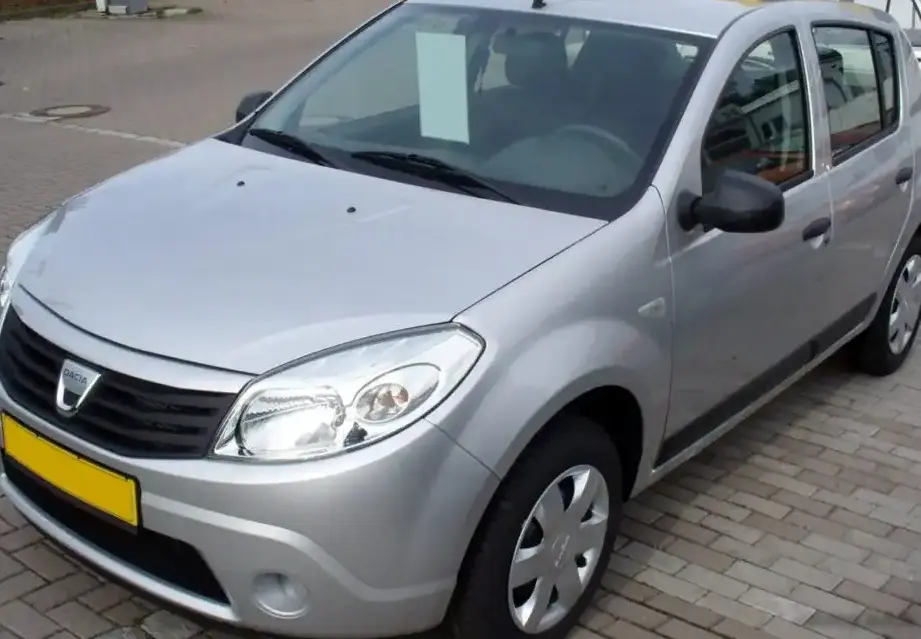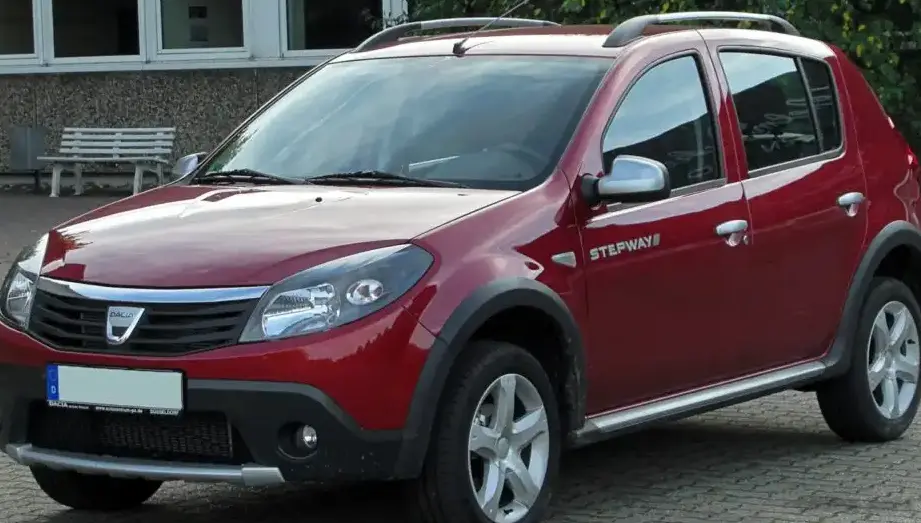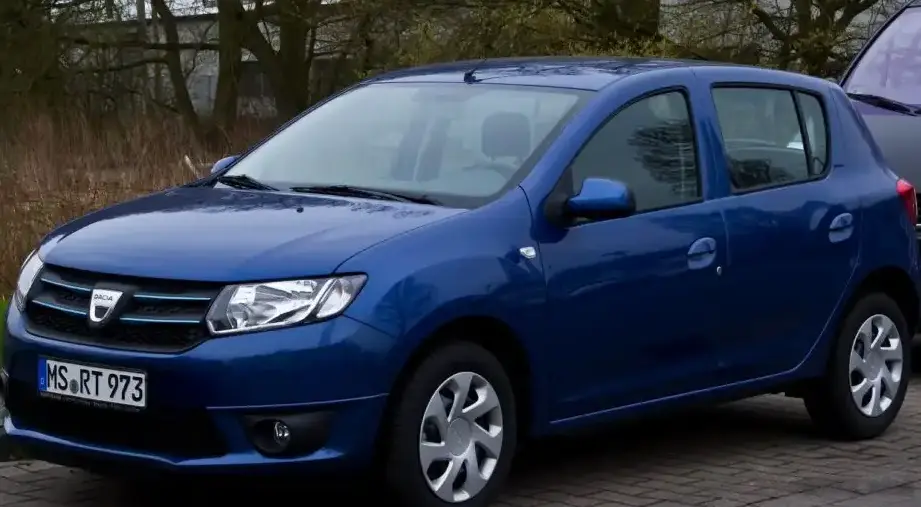
The Dacia Sandero II 1.5 dCi 75 hp Start&Stop FAP was a popular entry-level variant of the second-generation Sandero, produced between 2015 and 2016. Positioned as the most fuel-efficient and affordable option in the Sandero II lineup, it catered to buyers prioritizing economy and practicality. This model played a significant role in Dacia’s success within the European market, offering a budget-friendly alternative to mainstream hatchback competitors. The “FAP” designation indicates the inclusion of a Diesel Particulate Filter, meeting increasingly stringent European emission standards.
Technical Specifications
| Brand | Dacia |
| Model | Sandero |
| Generation | Sandero II |
| Type (Engine) | 1.5 dCi (75 Hp) Start&Stop FAP |
| Start of production | 2015 |
| End of production | 2016 |
| Powertrain Architecture | Internal Combustion engine |
| Body type | Hatchback |
| Seats | 5 |
| Doors | 5 |
| Fuel consumption (urban) | 3.7 l/100 km (63.6 US mpg, 76.3 UK mpg, 27 km/l) |
| Fuel consumption (extra urban) | 3.4 l/100 km (69.2 US mpg, 83.1 UK mpg, 29.4 km/l) |
| Fuel consumption (combined) | 3.5 l/100 km (67.2 US mpg, 80.7 UK mpg, 28.6 km/l) |
| CO2 emissions | 90 g/km |
| Fuel Type | Diesel |
| Acceleration 0 – 100 km/h | 14.6 sec |
| Acceleration 0 – 62 mph | 14.6 sec |
| Acceleration 0 – 60 mph | 13.9 sec |
| Maximum speed | 164 km/h (101.9 mph) |
| Emission standard | Euro 6 |
| Weight-to-power ratio | 13.8 kg/Hp |
| Weight-to-torque ratio | 5.2 kg/Nm |
| Power | 75 Hp @ 4000 rpm |
| Torque | 200 Nm @ 1750 rpm (147.51 lb.-ft. @ 1750 rpm) |
| Engine layout | Front, Transverse |
| Engine Model/Code | K9K 612 |
| Engine displacement | 1461 cm3 (89.16 cu. in.) |
| Number of cylinders | 4 |
| Engine configuration | Inline |
| Cylinder Bore | 76 mm (2.99 in.) |
| Piston Stroke | 80.5 mm (3.17 in.) |
| Compression ratio | 15.5:1 |
| Number of valves per cylinder | 2 |
| Fuel injection system | Diesel Commonrail |
| Engine aspiration | Turbocharger, Intercooler |
| Valvetrain | SOHC |
| Engine oil capacity | 4.5 l (4.76 US qt | 3.96 UK qt) |
| Coolant capacity | 4.5 l (4.76 US qt | 3.96 UK qt) |
| Kerb Weight | 1033 kg (2277.38 lbs.) |
| Max. weight | 1590 kg (3505.35 lbs.) |
| Max load | 557 kg (1227.97 lbs.) |
| Trunk (boot) space – minimum | 320 l (11.3 cu. ft.) |
| Trunk (boot) space – maximum | 1200 l (42.38 cu. ft.) |
| Fuel tank capacity | 50 l (13.21 US gal | 11 UK gal) |
| Max. roof load | 80 kg (176.37 lbs.) |
| Permitted trailer load with brakes (12%) | 1100 kg (2425.08 lbs.) |
| Permitted trailer load without brakes | 550 kg (1212.54 lbs.) |
| Permitted towbar download | 75 kg (165.35 lbs.) |
| Length | 4057 mm (159.72 in.) |
| Width | 1733 mm (68.23 in.) |
| Width including mirrors | 1984 mm (78.11 in.) |
| Height | 1523 mm (59.96 in.) |
| Wheelbase | 2589 mm (101.93 in.) |
| Front track | 1497 mm (58.94 in.) |
| Rear track | 1486 mm (58.5 in.) |
| Front overhang | 818 mm (32.2 in.) |
| Rear overhang | 650 mm (25.59 in.) |
| Ride height (ground clearance) | 163 mm (6.42 in.) |
| Minimum turning circle | 10.68 m (35.04 ft.) |
| Drivetrain Architecture | Front wheel drive |
| Number of gears | 5 |
| Gearbox type | Manual transmission |
| Front suspension | Independent type McPherson, Transverse stabilizer |
| Rear suspension | Coil spring, Torsion |
| Front brakes | Ventilated discs, 258×22 mm |
| Rear brakes | Drum, 203 mm |
| Assisting systems | ABS (Anti-lock braking system) |
| Steering type | Steering rack and pinion |
| Power steering | Electric Steering |
| Tires size | 185/65 R15 |
| Wheel rims size | 6J x 15 |
INTRODUCTION
The Dacia Sandero II 1.5 dCi 75 hp Start&Stop FAP, launched in 2015, represented a key offering within the updated second-generation Sandero range. Built on the 1HX0/A3 platform shared with Renault, this variant was specifically engineered for markets prioritizing fuel efficiency and low running costs. It served as the entry point into the Sandero II lineup, appealing to first-time buyers, city commuters, and those seeking an economical family vehicle. The inclusion of the Start&Stop system and Diesel Particulate Filter (FAP) demonstrated Dacia’s commitment to meeting evolving environmental regulations.
Powertrain & Engine Architecture
At the heart of this Sandero variant lies the Renault-sourced 1.5 dCi (K9K 612) engine. This four-cylinder diesel engine, displacing 1461 cc, utilizes a common rail direct injection system and a turbocharger with intercooler to deliver 75 horsepower at 4000 rpm and 200 Nm of torque at 1750 rpm. The engine features a single overhead camshaft (SOHC) valvetrain with two valves per cylinder. The K9K engine family is renowned for its robustness and fuel efficiency, though earlier iterations were sometimes criticized for noise and vibration. The FAP system effectively reduces particulate matter emissions, contributing to the engine’s Euro 6 compliance. This engine was paired with a five-speed manual transmission, optimized for fuel economy rather than outright performance. The transmission’s gear ratios are relatively long, prioritizing higher gears for efficient cruising.
Driving Characteristics
The 1.5 dCi 75 hp Sandero II offers a pragmatic driving experience. Acceleration is modest, taking approximately 14.6 seconds to reach 62 mph (100 km/h). The engine’s peak torque, available from 1750 rpm, provides adequate pulling power for everyday driving situations, but overtaking maneuvers require careful planning. Compared to higher-output versions of the Sandero II, such as those equipped with the 90 hp version of the same engine or the petrol variants, this model feels noticeably slower. However, the long gearing and efficient engine contribute to excellent fuel economy, making it ideal for urban commutes and long-distance journeys. The steering is light and precise, and the suspension provides a comfortable ride, although it can feel somewhat unsettled on rough surfaces.
Equipment & Trim Levels
The 1.5 dCi 75 hp Start&Stop FAP typically came equipped with a basic but functional specification. Standard features generally included power steering, central locking, electric front windows, and an ABS anti-lock braking system. Interior upholstery was typically cloth, and the dashboard featured a simple, straightforward design. Optional extras, depending on the market and specific package, could include air conditioning, a radio with USB connectivity, and alloy wheels. This trim level was designed to offer essential features at the lowest possible price point, making it an attractive option for budget-conscious buyers.
Chassis & Braking
The Sandero II’s chassis utilizes a McPherson strut front suspension and a torsion beam rear suspension. This setup provides a good balance between ride comfort and handling. The front brakes are ventilated discs, while the rear brakes are drums, a cost-saving measure common in this segment. The braking system is adequate for the vehicle’s weight and performance, but it lacks the stopping power of higher-spec models with larger brakes. The electric power steering provides light and easy steering, making it maneuverable in tight spaces.
Market Reception & Comparison
The Dacia Sandero II 1.5 dCi 75 hp Start&Stop FAP was well-received by critics and consumers alike, primarily for its exceptional fuel economy and low price. It consistently outperformed competitors in terms of value for money. Compared to the 90 hp version of the same engine, the 75 hp variant offered slightly lower performance but significantly better fuel efficiency. The petrol-powered Sandero models provided more spirited performance but at the cost of increased fuel consumption. Reliability was generally good, with the K9K engine proving to be a durable and dependable unit.
Legacy
The 1.5 dCi 75 hp engine, in various iterations, has proven to be a long-lasting and reliable powertrain. While the Sandero II is no longer in production, examples of this variant remain common on the used car market. They continue to appeal to buyers seeking an affordable and economical vehicle. Potential buyers should be aware of the maintenance requirements of diesel engines, including regular servicing and the potential for issues with the FAP system. However, with proper care, this Sandero variant can provide years of reliable and economical transportation.