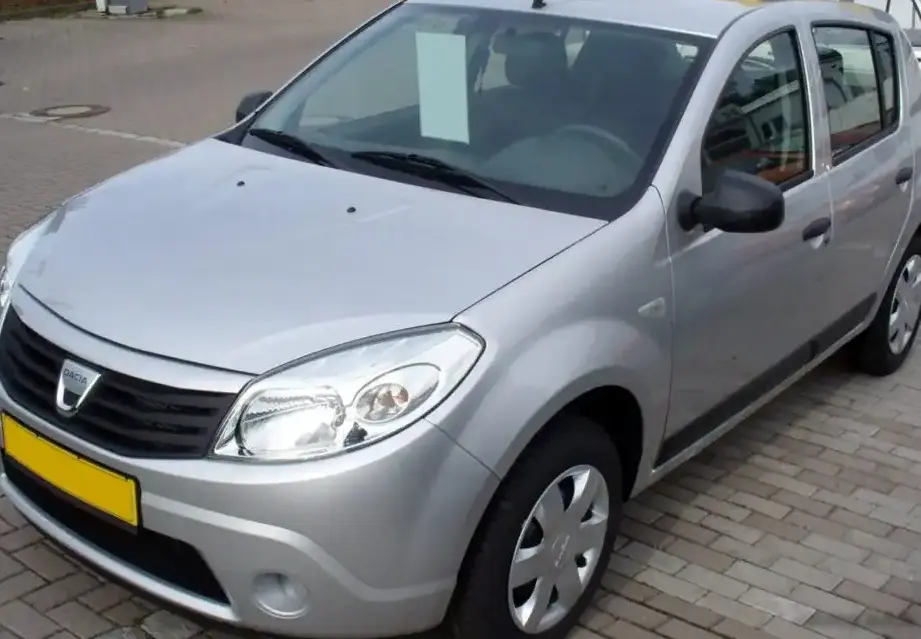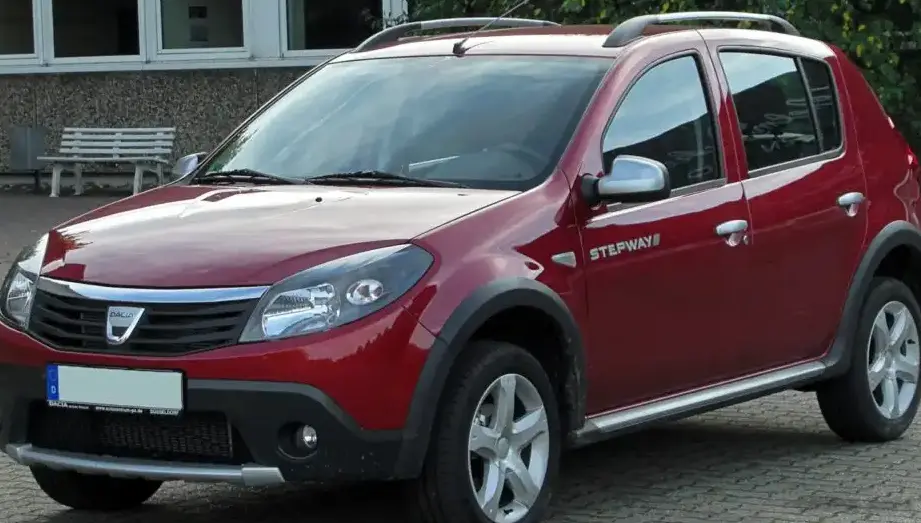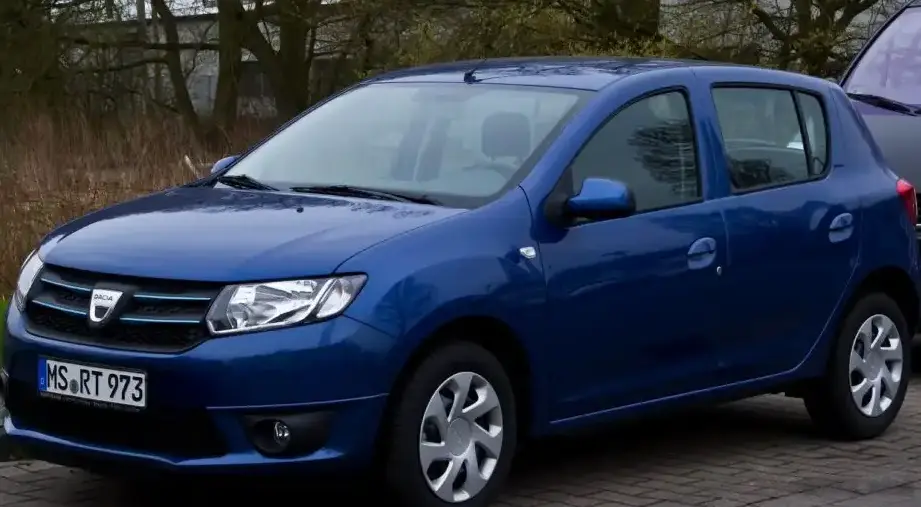
The Dacia Sandero II 1.5 dCi (90 hp) FAP was a popular variant of the second-generation Sandero, produced between 2012 and 2015. Positioned as an entry-level diesel option, it offered fuel efficiency and affordability within the Sandero II range, which was based on the Dacia/Renault 1HX0/A3 platform. This model played a significant role in Dacia’s success in European markets, appealing to buyers seeking a practical and economical hatchback.
Technical Specifications
| Brand | Dacia |
| Model | Sandero |
| Generation | Sandero II |
| Type (Engine) | 1.5 dCi (90 Hp) FAP |
| Start of production | 2012 |
| End of production | 2015 |
| Powertrain Architecture | Internal Combustion engine |
| Body type | Hatchback |
| Seats | 5 |
| Doors | 5 |
| Fuel consumption (urban) | 4.3 l/100 km (54.7 US mpg, 65.7 UK mpg, 23.3 km/l) |
| Fuel consumption (extra urban) | 3.5 l/100 km (67.2 US mpg, 80.7 UK mpg, 28.6 km/l) |
| Fuel consumption (combined) | 3.8 l/100 km (61.9 US mpg, 74.3 UK mpg, 26.3 km/l) |
| CO2 emissions | 99 g/km |
| Fuel Type | Diesel |
| Acceleration 0 – 100 km/h | 12.1 sec |
| Acceleration 0 – 62 mph | 12.1 sec |
| Acceleration 0 – 60 mph | 11.5 sec |
| Maximum speed | 173 km/h (107.5 mph) |
| Emission standard | Euro 5 |
| Weight-to-power ratio | 11.5 kg/Hp, 87.1 Hp/tonne |
| Weight-to-torque ratio | 4.7 kg/Nm, 213 Nm/tonne |
| Power | 90 Hp @ 3750 rpm |
| Power per litre | 61.6 Hp/l |
| Torque | 220 Nm @ 1750 rpm (162.26 lb.-ft. @ 1750 rpm) |
| Engine layout | Front, Transverse |
| Engine Model/Code | K9K 612 |
| Engine displacement | 1461 cm3 (89.16 cu. in.) |
| Number of cylinders | 4 |
| Engine configuration | Inline |
| Cylinder Bore | 76 mm (2.99 in.) |
| Piston Stroke | 80.5 mm (3.17 in.) |
| Compression ratio | 15.5:1 |
| Number of valves per cylinder | 2 |
| Fuel injection system | Diesel Commonrail |
| Engine aspiration | Turbocharger, Intercooler |
| Valvetrain | SOHC |
| Engine oil capacity | 4.5 l (4.76 US qt | 3.96 UK qt) |
| Coolant capacity | 4.5 l (4.76 US qt | 3.96 UK qt) |
| Kerb Weight | 1033 kg (2277.38 lbs.) |
| Max. weight | 1590 kg (3505.35 lbs.) |
| Max load | 557 kg (1227.97 lbs.) |
| Trunk (boot) space – minimum | 320 l (11.3 cu. ft.) |
| Trunk (boot) space – maximum | 1200 l (42.38 cu. ft.) |
| Fuel tank capacity | 50 l (13.21 US gal | 11 UK gal) |
| Max. roof load | 80 kg (176.37 lbs.) |
| Permitted trailer load with brakes (12%) | 1100 kg (2425.08 lbs.) |
| Permitted trailer load without brakes | 550 kg (1212.54 lbs.) |
| Permitted towbar download | 75 kg (165.35 lbs.) |
| Length | 4057 mm (159.72 in.) |
| Width | 1733 mm (68.23 in.) |
| Width including mirrors | 1984 mm (78.11 in.) |
| Height | 1523 mm (59.96 in.) |
| Wheelbase | 2589 mm (101.93 in.) |
| Front track | 1497 mm (58.94 in.) |
| Rear track | 1486 mm (58.5 in.) |
| Front overhang | 818 mm (32.2 in.) |
| Rear overhang | 650 mm (25.59 in.) |
| Ride height (ground clearance) | 163 mm (6.42 in.) |
| Minimum turning circle | 10.68 m (35.04 ft.) |
| Drivetrain Architecture | Front wheel drive |
| Number of gears and type of gearbox | 5 gears, manual transmission |
| Front suspension | Independent type McPherson, Transverse stabilizer |
| Rear suspension | Coil spring, Torsion |
| Front brakes | Ventilated discs, 258×22 mm |
| Rear brakes | Drum, 203 mm |
| Assisting systems | ABS (Anti-lock braking system) |
| Steering type | Steering rack and pinion |
| Power steering | Electric Steering |
| Tires size | 185/65 R15 |
| Wheel rims size | 6J x 15 |
INTRODUCTION
The Dacia Sandero II 1.5 dCi (90 hp) FAP, launched in 2012, represented a key offering in Dacia’s expanded lineup. Building upon the success of the original Sandero, the second generation brought improved styling, a more refined interior, and updated technology. The 1.5 dCi 90 hp variant, equipped with a diesel particulate filter (FAP), was specifically targeted at European markets with increasingly stringent emissions regulations. It served as a fuel-efficient and affordable option for buyers prioritizing economy over outright performance. This trim level sat in the lower-mid range of the Sandero II offerings, positioned above the base petrol models but below the higher-powered diesel and more generously equipped trims.
Powertrain & Engine Architecture
The heart of this Sandero variant is the Renault-sourced K9K 612 1.5-liter four-cylinder diesel engine. This engine is a common sight in many Renault and Dacia models, known for its robustness and fuel efficiency. The K9K 612 utilizes a common rail direct injection system, delivering fuel at high pressure for optimized combustion. It features a single overhead camshaft (SOHC) valvetrain operating two valves per cylinder. A turbocharger with an intercooler is employed to boost power and torque. The 90 hp output is achieved at 3750 rpm, while peak torque of 220 Nm (162 lb-ft) is available from 1750 rpm. The engine’s compression ratio is relatively high at 15.5:1, contributing to its efficiency. The FAP (diesel particulate filter) is a crucial component, reducing harmful particulate matter emissions to meet Euro 5 standards. This engine was typically paired with a five-speed manual transmission, although an automated manual transmission (AMT) was also available in some markets.
Driving Characteristics
The Sandero II 1.5 dCi (90 hp) offered a practical and economical driving experience. While not particularly quick – 0-60 mph took around 11.5-12.1 seconds – it provided sufficient power for everyday driving and highway cruising. The engine’s torque delivery was its strong suit, offering good responsiveness at lower revs, making it easy to navigate city traffic and tackle inclines. The five-speed manual transmission was well-matched to the engine’s characteristics, with gear ratios optimized for fuel efficiency. Compared to the higher-output 1.5 dCi variants (typically 90hp or 110hp), this version felt less strained during acceleration, but lacked the same punch. Compared to the petrol engines, the diesel offered significantly better fuel economy and torque, but at the cost of some refinement and a slightly higher initial purchase price.
Equipment & Trim Levels
The 1.5 dCi (90 hp) FAP trim typically included standard features such as power steering, central locking, electric front windows, and an audio system with USB connectivity. Safety equipment included ABS brakes, driver and passenger airbags, and seatbelt pretensioners. Higher trim levels, such as the Ambiance and Lauréate, added features like air conditioning, alloy wheels, rear electric windows, and a trip computer. Interior upholstery was typically cloth, with a functional and durable design. Optional extras included metallic paint, parking sensors, and a navigation system.
Chassis & Braking
The Sandero II utilized a McPherson strut front suspension and a torsion beam rear suspension. This setup provided a comfortable ride quality, suitable for everyday use. The front brakes were ventilated discs, offering good stopping power, while the rear brakes were drums. This configuration was typical for vehicles in this price segment and weight class. The steering was electrically assisted, providing light and easy steering feel. Stabilizer bars were fitted to both the front and rear axles to reduce body roll during cornering.
Market Reception & Comparison
The Dacia Sandero II 1.5 dCi (90 hp) FAP was well-received by critics and consumers alike. It was praised for its affordability, fuel efficiency, and practicality. Compared to other diesel hatchbacks in its class, such as the Peugeot 208 or Volkswagen Polo, the Sandero offered a significantly lower price point. However, it lacked the same level of refinement and build quality. Fuel economy was a key selling point, consistently achieving around 60-75 mpg in real-world driving conditions. Reliability was generally good, with the K9K engine proving to be durable and long-lasting.
Legacy
The Dacia Sandero II 1.5 dCi (90 hp) FAP remains a popular choice in the used car market today. Its affordability, fuel efficiency, and relatively simple mechanicals make it an attractive option for budget-conscious buyers. The K9K engine is known for its longevity, but regular maintenance, including oil changes and FAP servicing, is crucial to ensure continued reliability. While not a performance car, the Sandero II 1.5 dCi (90 hp) FAP provides a practical and economical solution for everyday transportation, and its enduring popularity is a testament to its value proposition.