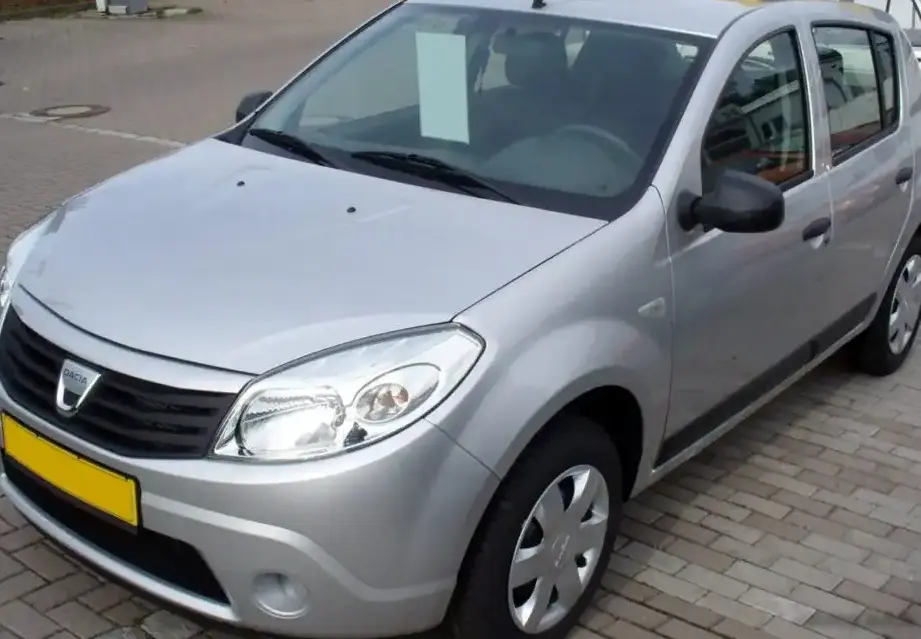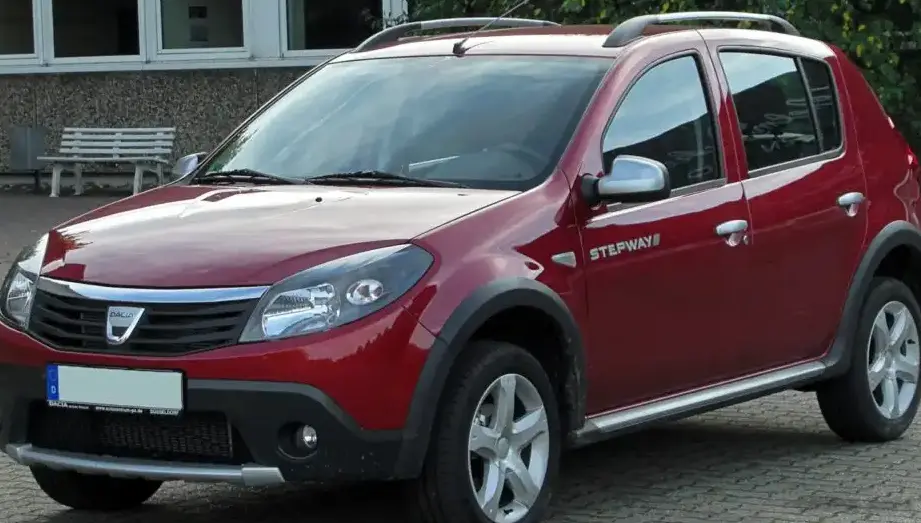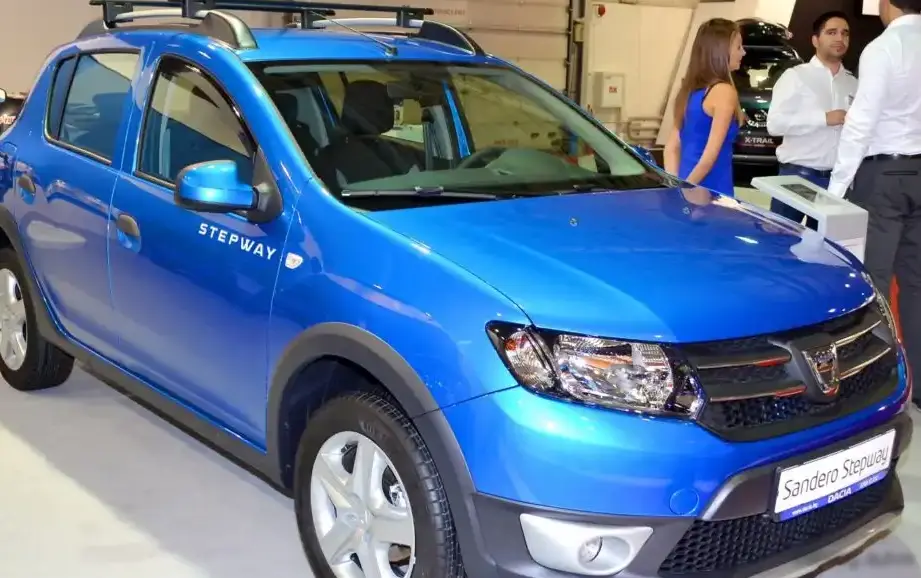
The Dacia Sandero II Stepway 0.9 TCe (90 hp) was a crossover model produced between 2012 and 2015, representing a key variant within the second generation of the Sandero lineup. Positioned as an affordable and practical option, the Stepway offered increased ground clearance and rugged styling compared to the standard Sandero, appealing to buyers seeking a vehicle capable of handling varied road conditions. This particular engine and transmission combination – the 0.9 TCe engine paired with a five-speed manual transmission – served as a popular entry point into the Stepway range, balancing fuel efficiency with acceptable performance for everyday driving. It was primarily marketed in Europe, where Dacia, owned by Renault, established itself as a budget-friendly brand.
Technical Specifications
| Brand | Dacia |
| Model | Sandero |
| Generation | Sandero II Stepway |
| Type (Engine) | 0.9 TCe (90 Hp) |
| Start of production | 2012 |
| End of production | 2015 |
| Powertrain Architecture | Internal Combustion engine |
| Body type | Crossover |
| Seats | 5 |
| Doors | 5 |
| Fuel consumption (urban) | 6.7 l/100 km (35.1 US mpg, 42.2 UK mpg, 14.9 km/l) |
| Fuel consumption (extra urban) | 4.6 l/100 km (51.1 US mpg, 61.4 UK mpg, 21.7 km/l) |
| Fuel consumption (combined) | 5.4 l/100 km (43.6 US mpg, 52.3 UK mpg, 18.5 km/l) |
| CO2 emissions | 124 g/km |
| Fuel Type | Petrol (Gasoline) |
| Acceleration 0 – 100 km/h | 11.1 sec |
| Acceleration 0 – 62 mph | 11.1 sec |
| Acceleration 0 – 60 mph | 10.5 sec |
| Maximum speed | 168 km/h (104.39 mph) |
| Emission standard | Euro 5 |
| Weight-to-power ratio | 11.4 kg/Hp |
| Weight-to-torque ratio | 7.6 kg/Nm |
| Power | 90 Hp @ 5250 rpm |
| Torque | 135 Nm @ 2500 rpm (99.57 lb.-ft. @ 2500 rpm) |
| Engine layout | Front, Transverse |
| Engine Model/Code | H4Bt 400 |
| Engine displacement | 898 cm3 (54.8 cu. in.) |
| Number of cylinders | 3 |
| Engine configuration | Inline |
| Cylinder Bore | 72.2 mm (2.84 in.) |
| Piston Stroke | 73.1 mm (2.88 in.) |
| Compression ratio | 9.5:1 |
| Number of valves per cylinder | 4 |
| Fuel injection system | Multi-port manifold injection |
| Engine aspiration | Turbocharger, Intercooler |
| Valvetrain | DOHC |
| Engine oil capacity | 4.1 l (4.33 US qt | 3.61 UK qt) |
| Coolant capacity | 4.5 l (4.76 US qt | 3.96 UK qt) |
| Kerb Weight | 1023 kg (2255.33 lbs.) |
| Max. weight | 1550 kg (3417.17 lbs.) |
| Max load | 527 kg (1161.84 lbs.) |
| Trunk (boot) space – minimum | 320 l (11.3 cu. ft.) |
| Trunk (boot) space – maximum | 1200 l (42.38 cu. ft.) |
| Fuel tank capacity | 50 l (13.21 US gal | 11 UK gal) |
| Max. roof load | 80 kg (176.37 lbs.) |
| Permitted trailer load with brakes (12%) | 1100 kg (2425.08 lbs.) |
| Permitted trailer load without brakes | 545 kg (1201.52 lbs.) |
| Permitted towbar download | 75 kg (165.35 lbs.) |
| Length | 4080 mm (160.63 in.) |
| Width | 1757 mm (69.17 in.) |
| Width including mirrors | 1984 mm (78.11 in.) |
| Height | 1618 mm (63.7 in.) |
| Wheelbase | 2589 mm (101.93 in.) |
| Front track | 1497 mm (58.94 in.) |
| Rear track | 1486 mm (58.5 in.) |
| Front overhang | 835 mm (32.87 in.) |
| Rear overhang | 656 mm (25.83 in.) |
| Ride height (ground clearance) | 207 mm (8.15 in.) |
| Minimum turning circle | 10.5 m (34.45 ft.) |
| Drivetrain Architecture | Front wheel drive |
| Number of gears | 5 |
| Gearbox type | Manual transmission |
| Front suspension | Independent, McPherson with coil spring and anti-roll bar |
| Rear suspension | Coil spring, Torsion |
| Front brakes | Ventilated discs, 258×22 mm |
| Rear brakes | Drum, 203 mm |
| Assisting systems | ABS (Anti-lock braking system) |
| Steering type | Steering rack and pinion |
| Power steering | Electric |
| Tires size | 205/55 R16 |
| Wheel rims size | 6J x 16 |
Powertrain & Engine Architecture
The heart of the Sandero II Stepway 0.9 TCe (90 hp) is the H4Bt 400 engine, a three-cylinder, 898cc turbocharged petrol engine. This engine is part of Renault’s ‘Energy’ family, designed for efficiency and reduced emissions. It features multi-point fuel injection and a double overhead camshaft (DOHC) valvetrain with four valves per cylinder. The turbocharger, coupled with an intercooler, helps to boost power output despite the small displacement. The engine’s relatively high compression ratio of 9.5:1 contributes to its thermal efficiency. The five-speed manual transmission was the standard offering for this variant, providing a balance between fuel economy and driver control. The transmission’s gear ratios were tuned for everyday usability, prioritizing acceleration in lower gears and comfortable cruising at highway speeds.
Driving Characteristics
The 90 hp output of the 0.9 TCe engine, while not exceptionally powerful, provided adequate performance for the Sandero II Stepway in most driving situations. Acceleration from 0-60 mph took around 10.5 seconds, and the top speed was approximately 104 mph. The turbocharger provided a noticeable boost in power at higher engine speeds, but the engine could feel somewhat strained when fully loaded or climbing steep hills. Compared to higher-powered versions of the Sandero, such as those equipped with the 1.5 dCi diesel engine, the 0.9 TCe offered a more responsive and refined driving experience, albeit with less outright performance. The manual transmission allowed for greater driver engagement and control compared to the optional automated manual transmission (AMT) available on some Sandero models.
Equipment & Trim Levels
The Stepway trim level, even in its base 0.9 TCe configuration, offered a more generous level of equipment than the standard Sandero. Standard features typically included air conditioning, power steering, electric front windows, a CD player with MP3 compatibility, and ABS brakes. The Stepway also featured distinctive exterior styling cues, such as raised suspension, roof rails, and protective body cladding. Optional extras included alloy wheels, rear parking sensors, and a more advanced audio system. Interior upholstery was typically cloth, with a functional and durable design. The dashboard layout was straightforward and user-friendly, with clearly labeled controls.
Chassis & Braking
The Sandero II Stepway featured a McPherson strut front suspension and a torsion beam rear suspension. This setup provided a comfortable ride quality, particularly on smoother roads. The raised ride height of the Stepway, at 207mm, allowed it to navigate rougher terrain and potholes with greater ease. The braking system consisted of ventilated discs on the front wheels and drum brakes on the rear wheels. ABS (Anti-lock Braking System) was standard, enhancing safety during emergency braking situations. The steering was electrically assisted, providing light and precise control.
Market Reception & Comparison
The Dacia Sandero II Stepway 0.9 TCe (90 hp) was generally well-received by automotive critics for its affordability, practicality, and fuel efficiency. It was praised as a sensible choice for budget-conscious buyers seeking a versatile and reliable vehicle. Compared to other trims in the Sandero lineup, the 0.9 TCe offered a good balance between performance and economy. The diesel-powered models provided superior fuel economy, but were typically more expensive to purchase. The higher-powered petrol engines offered more performance, but at the cost of increased fuel consumption. The Stepway’s slightly raised suspension and rugged styling also appealed to buyers seeking a vehicle with a more adventurous image.
Legacy
The 0.9 TCe engine proved to be a relatively reliable unit, although some owners have reported issues with the turbocharger and fuel injectors. Regular maintenance, including oil changes and filter replacements, is crucial for ensuring the long-term health of the engine. In the used car market, the Sandero II Stepway 0.9 TCe (90 hp) remains a popular choice for buyers seeking an affordable and practical crossover. Its low running costs and relatively simple mechanical design make it an attractive option for those on a tight budget. While not a performance car, it provides a comfortable and reliable driving experience for everyday use.