
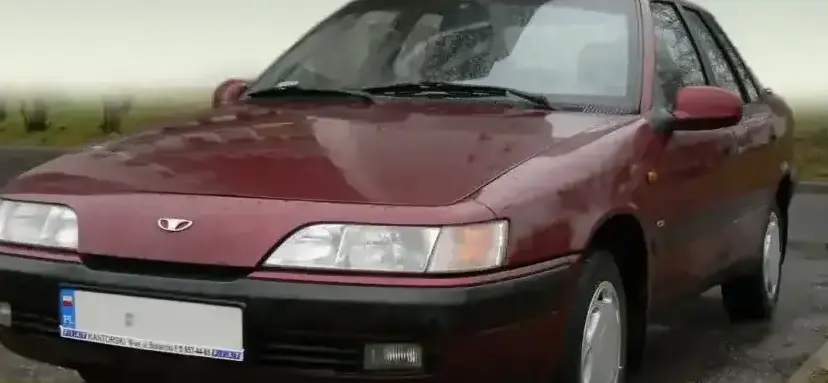
The Daewoo Espero, specifically the 2.0i variant produced between 1995 and 1999, represented a significant step forward for the South Korean automaker in the mid-size sedan segment. Positioned as a more upscale offering within the Daewoo lineup, the 2.0i (KLEJ) aimed to compete with established Japanese and European models. It was a key model for Daewoo as they attempted to gain a foothold in international markets, particularly in Europe and Latin America. The Espero was built upon the J-platform, a chassis shared with other Daewoo models of the era, and offered a blend of comfort, space, and relatively modern features for its price point.
Technical Specifications
| Brand | Daewoo |
| Model | Espero |
| Generation | Espero (KLEJ) |
| Type (Engine) | 2.0 i (105 Hp) |
| Start of production | 1995 |
| End of production | 1999 |
| Powertrain Architecture | Internal Combustion engine |
| Body type | Sedan |
| Seats | 5 |
| Doors | 4 |
| Fuel consumption (urban) | 11.6 l/100 km (20.3 US mpg) |
| Fuel consumption (extra urban) | 5.3 l/100 km (44.4 US mpg) |
| Fuel consumption (combined) | 6.8 l/100 km (34.6 US mpg) |
| Fuel Type | Petrol (Gasoline) |
| Acceleration 0 – 100 km/h | 12.8 sec |
| Acceleration 0 – 62 mph | 12.8 sec |
| Acceleration 0 – 60 mph | 12.2 sec |
| Maximum speed | 185 km/h (114.95 mph) |
| Weight-to-power ratio | 10.8 kg/Hp |
| Weight-to-torque ratio | 6.7 kg/Nm |
| Power | 105 Hp @ 5000 rpm |
| Torque | 169 Nm @ 2800 rpm (124.65 lb.-ft. @ 2800 rpm) |
| Engine layout | Front, Transverse |
| Engine Model/Code | C20LE |
| Engine displacement | 1998 cm3 (121.93 cu. in.) |
| Number of cylinders | 4 |
| Engine configuration | Inline |
| Cylinder Bore | 86 mm (3.39 in.) |
| Piston Stroke | 86 mm (3.39 in.) |
| Compression ratio | 8.8:1 |
| Number of valves per cylinder | 2 |
| Fuel injection system | Multi-port manifold injection |
| Engine aspiration | Naturally aspirated engine |
| Valvetrain | OHC |
| Engine oil capacity | 4.25 l (4.49 US qt | 3.74 UK qt) |
| Coolant capacity | 8 l (8.45 US qt | 7.04 UK qt) |
| Kerb Weight | 1130 kg (2491.22 lbs.) |
| Max. weight | 1630 kg (3593.53 lbs.) |
| Max load | 500 kg (1102.31 lbs.) |
| Trunk (boot) space – minimum | 560 l (19.78 cu. ft.) |
| Fuel tank capacity | 50 l (13.21 US gal | 11 UK gal) |
| Length | 4615 mm (181.69 in.) |
| Width | 1718 mm (67.64 in.) |
| Height | 1388 mm (54.65 in.) |
| Wheelbase | 2620 mm (103.15 in.) |
| Front track | 1426 mm (56.14 in.) |
| Rear track | 1423 mm (56.02 in.) |
| Drivetrain Architecture | Front wheel drive |
| Number of gears | 5 gears, manual transmission |
| Front suspension | Spring Strut |
| Rear suspension | Coil spring |
| Front brakes | Ventilated discs |
| Rear brakes | Drum |
| Assisting systems | ABS (Anti-lock braking system) |
| Steering type | Steering rack and pinion |
| Power steering | Hydraulic Steering |
| Tires size | 185/65 R14 |
| Wheel rims size | 5.5J x 14 |
INTRODUCTION
The Daewoo Espero 2.0i, launched in 1995, was a significant upgrade over the earlier 1.5 and 1.6-liter models. It represented Daewoo’s ambition to offer a competitive, well-equipped sedan in the global market. The “KLEJ” designation refers to the specific body code and engine configuration. The Espero aimed to provide a comfortable and spacious interior, coupled with a reasonably powerful engine, at an attractive price point. It was marketed towards families and individuals seeking a practical and reliable vehicle.
Powertrain & Engine Architecture
The heart of the Espero 2.0i is the C20LE inline-four cylinder engine. This 1998cc (121.93 cubic inches) engine utilizes a naturally aspirated configuration with a single overhead camshaft (OHC) valvetrain and two valves per cylinder. The engine employs multi-port fuel injection, a relatively modern feature for its time, contributing to improved fuel efficiency and smoother power delivery. The C20LE produces 105 horsepower at 5000 rpm and 169 Nm (124.65 lb-ft) of torque at 2800 rpm. The engine’s 8.8:1 compression ratio was a compromise between performance and the quality of fuel available in various markets. The five-speed manual transmission was the standard offering, designed to efficiently transfer power to the front wheels. The transmission’s gear ratios were tuned for a balance of acceleration and fuel economy, prioritizing comfortable cruising over outright performance.
Driving Characteristics
The Espero 2.0i offered a comfortable, if not particularly sporty, driving experience. The 105 hp engine provided adequate power for everyday driving, allowing for confident acceleration in most situations. However, it wasn’t a particularly quick car; 0-60 mph took around 12.2 seconds. Compared to the 1.5L and 1.6L models, the 2.0i offered a noticeable improvement in acceleration and highway passing power. The five-speed manual transmission allowed drivers to maintain control over the engine’s revs, maximizing efficiency or extracting the most performance when needed. The suspension was tuned for comfort, absorbing bumps and providing a relatively smooth ride. Steering was light and easy, making it suitable for urban driving, but lacked the precision and feedback desired by more enthusiastic drivers.
Equipment & Trim Levels
The Espero 2.0i typically came equipped with a reasonable level of standard features. These included power steering, central locking, electric windows, and an AM/FM radio. Higher trim levels, often denoted by additional options packages, could include features such as air conditioning, alloy wheels, and a more sophisticated audio system. Interior upholstery was typically cloth, with options for upgraded materials available. The dashboard layout was functional and straightforward, prioritizing ease of use over aesthetic flair. Optional extras often included a sunroof and upgraded sound systems.
Chassis & Braking
The Espero utilized a front-engine, front-wheel-drive layout. The front suspension employed a MacPherson strut design, while the rear suspension featured a coil spring setup. This configuration provided a good balance of ride comfort and handling. Braking duties were handled by ventilated discs at the front and drum brakes at the rear. An Anti-lock Braking System (ABS) was often included as standard equipment, enhancing safety by preventing wheel lockup during hard braking. The tires were typically 185/65 R14, providing adequate grip for everyday driving conditions.
Market Reception & Comparison
The Daewoo Espero 2.0i received mixed reviews from automotive critics. It was generally praised for its spacious interior, comfortable ride, and competitive price. However, it was often criticized for its somewhat bland styling and lack of dynamic driving characteristics. Compared to the smaller-engined Espero models, the 2.0i offered a significant performance boost, making it a more appealing option for drivers who frequently traveled on highways or carried passengers. Fuel economy was reasonable for its class, although not class-leading. Reliability was generally considered to be average, with some reports of minor electrical issues.
Legacy
The Daewoo Espero, while not a groundbreaking vehicle, played an important role in establishing Daewoo as a global automotive brand. The 2.0i variant, with its improved performance, was a key model in attracting customers. Today, the Espero is a relatively rare sight on the roads, but it has gained a following among enthusiasts who appreciate its affordability and practicality. The C20LE engine, while not known for its exceptional durability, is generally considered to be reasonably reliable with proper maintenance. Used Espero 2.0i models are often available at very low prices, making them an attractive option for budget-conscious buyers seeking a simple and dependable sedan.
