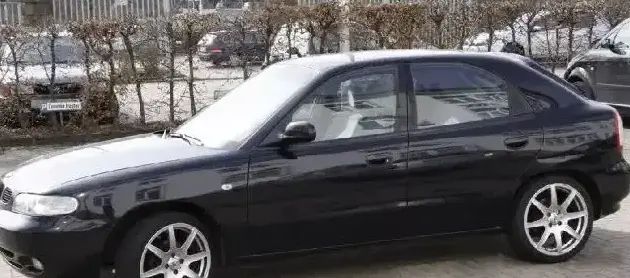
The Daewoo Nubira Wagon II 2.0 i 16V CDX, produced between 2002 and 2004, represented the top-tier trim level of the second-generation Nubira wagon. Positioned as a practical and relatively affordable family vehicle, it aimed to offer a spacious interior and a decent level of equipment. The Nubira Wagon II, built upon the J100 platform, was primarily marketed in Europe and select other international markets following Daewoo’s acquisition by General Motors. This particular 2.0-liter variant served as the flagship engine option for the wagon body style, offering a step up in performance compared to the lower-displacement models.
Technical Specifications
| Brand | Daewoo |
| Model | Nubira |
| Generation | Nubira Wagon II |
| Type | 2.0 i 16V CDX (126 Hp) |
| Start of production | 2002 |
| End of production | 2004 |
| Powertrain Architecture | Internal Combustion engine |
| Body type | Station wagon (estate) |
| Seats | 5 |
| Doors | 5 |
| Fuel consumption (urban) | 11.7 l/100 km (20.1 US mpg) |
| Fuel consumption (extra urban) | 6.7 l/100 km (35.1 US mpg) |
| Fuel Type | Petrol (Gasoline) |
| Acceleration 0 – 100 km/h | 9.5 sec |
| Acceleration 0 – 62 mph | 9.5 sec |
| Acceleration 0 – 60 mph | 9 sec |
| Maximum speed | 192 km/h (119.3 mph) |
| Weight-to-power ratio | 10.1 kg/Hp |
| Weight-to-torque ratio | 7.1 kg/Nm |
| Power | 126 Hp @ 5400 rpm |
| Torque | 180 Nm @ 4400 rpm (132.76 lb.-ft. @ 4400 rpm) |
| Engine layout | Front, Transverse |
| Engine Model/Code | T20SED |
| Engine displacement | 1998 cm3 (121.93 cu. in.) |
| Number of cylinders | 4 |
| Engine configuration | Inline |
| Cylinder Bore | 86 mm (3.39 in.) |
| Piston Stroke | 86 mm (3.39 in.) |
| Compression ratio | 9.6:1 |
| Number of valves per cylinder | 4 |
| Fuel injection system | Multi-port manifold injection |
| Engine aspiration | Naturally aspirated engine |
| Kerb Weight | 1275 kg (2810.89 lbs.) |
| Max. weight | 1860 kg (4100.6 lbs.) |
| Max load | 585 kg (1289.7 lbs.) |
| Trunk (boot) space – minimum | 550 l (19.42 cu. ft.) |
| Trunk (boot) space – maximum | 1840 l (64.98 cu. ft.) |
| Fuel tank capacity | 62 l (16.38 US gal) |
| Length | 4550 mm (179.13 in.) |
| Width | 1700 mm (66.93 in.) |
| Height | 1430 mm (56.3 in.) |
| Wheelbase | 2570 mm (101.18 in.) |
| Front track | 1464 mm (57.64 in.) |
| Rear track | 1454 mm (57.24 in.) |
| Drivetrain Architecture | Front wheel drive |
| Number of gears | 5 |
| Gearbox type | Manual transmission |
| Front suspension | Wishbone |
| Rear suspension | Wishbone |
| Front brakes | Ventilated discs |
| Rear brakes | Disc |
| Assisting systems | ABS (Anti-lock braking system) |
| Steering type | Steering rack and pinion |
| Power steering | Hydraulic Steering |
| Tires size | 185/65 R14 |
Powertrain & Engine Architecture
The Nubira Wagon II 2.0 i 16V CDX was powered by the T20SED engine, a 1.998-liter inline-four cylinder gasoline engine. This engine featured a multi-port fuel injection system and a 9.6:1 compression ratio. The 16-valve cylinder head, with four valves per cylinder, contributed to improved breathing and overall engine efficiency. The engine produced 126 horsepower at 5400 rpm and 180 Nm (132.76 lb-ft) of torque at 4400 rpm. The five-speed manual transmission was the standard offering, providing a balance between fuel economy and performance. The engine’s design was relatively conventional for the early 2000s, prioritizing reliability and affordability over cutting-edge technology.
Driving Characteristics
The 2.0-liter engine provided adequate, though not exhilarating, performance for the Nubira Wagon II. Acceleration from 0 to 60 mph took approximately 9 seconds, and the car had a top speed of around 119 mph. The five-speed manual transmission allowed drivers to keep the engine in its optimal power band, but the engine lacked the low-end torque found in some of its competitors. Compared to the smaller 1.6-liter engine option, the 2.0-liter offered a noticeable improvement in responsiveness, particularly when fully loaded with passengers and cargo. The gear ratios were spaced to prioritize fuel economy during highway cruising, but required frequent downshifts when tackling hilly terrain or overtaking.
Equipment & Trim Levels
The CDX trim level represented the highest specification available for the Nubira Wagon II. Standard features included air conditioning, power windows, central locking, and an upgraded audio system. Interior upholstery was typically cloth, with options for leather available at an extra cost. The dashboard featured a straightforward layout with easy-to-read gauges. Optional extras included alloy wheels, a sunroof, and metallic paint finishes. The CDX trim aimed to provide a comfortable and well-equipped experience for families and those requiring a versatile vehicle.
Chassis & Braking
The Nubira Wagon II utilized a front-wheel-drive layout with independent wishbone suspension at both the front and rear. This suspension setup provided a reasonably comfortable ride, although it wasn’t particularly sporty. The front brakes were ventilated discs, offering good stopping power, while the rear brakes were solid discs. Anti-lock Braking System (ABS) was standard, enhancing safety during emergency braking situations. The steering was rack and pinion with hydraulic power assistance, providing a light and responsive feel. The car rode on 185/65 R14 tires, which were a compromise between comfort and handling.
Market Reception & Comparison
The Daewoo Nubira Wagon II 2.0 i 16V CDX was generally well-received as a practical and affordable family vehicle. Critics praised its spacious interior, generous cargo capacity, and reasonable price point. However, it was often criticized for its somewhat bland styling and lack of refinement compared to some of its European competitors. Fuel economy was considered average for its class. Compared to other trims in the Nubira lineup, the 2.0-liter CDX offered a noticeable performance advantage, but at a higher purchase price. The 1.6-liter models were more fuel-efficient and affordable, while appealing to buyers prioritizing economy over outright power.
Legacy
The Daewoo Nubira Wagon II, while not a groundbreaking vehicle, established a reputation for reliability and practicality. The T20SED engine proved to be a durable and relatively trouble-free unit, and many examples remain on the road today. In the used car market, the 2.0-liter CDX trim is often sought after for its combination of performance and equipment. Maintenance costs are generally reasonable, and parts availability is still adequate. While it may not possess the prestige of some other brands, the Nubira Wagon II remains a viable option for those seeking an affordable and spacious family vehicle.