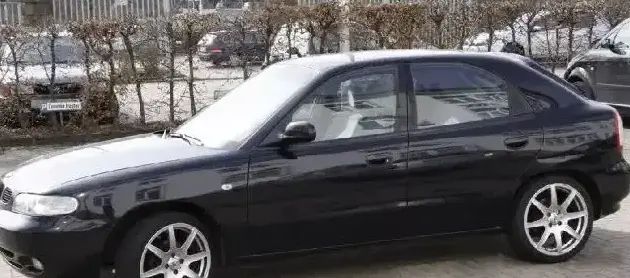
The Daewoo Nubira Wagon II 2.0 i 16V CDX Automatic, produced between 2002 and 2004, represented the top trim level of the second-generation Nubira wagon. Positioned as a practical and relatively affordable family vehicle, it aimed to offer a spacious interior and a comfortable driving experience. The Nubira Wagon II, built upon the J100 platform, was Daewoo’s entry into the compact estate car segment, primarily targeted at European and Asian markets. Following General Motors’ acquisition of Daewoo Motors, the Nubira was later rebranded as a Chevrolet in many regions.
Technical Specifications
| Brand | Daewoo |
| Model | Nubira |
| Generation | Nubira Wagon II |
| Type | 2.0 i 16V CDX (126 Hp) Automatic |
| Start of production | 2002 |
| End of production | 2004 |
| Powertrain Architecture | Internal Combustion engine |
| Body type | Station wagon (estate) |
| Seats | 5 |
| Doors | 5 |
| Fuel consumption (urban) | 14.5 l/100 km (16.2 US mpg, 19.5 UK mpg) |
| Fuel consumption (extra urban) | 7.5 l/100 km (31.4 US mpg, 37.7 UK mpg) |
| Fuel Type | Petrol (Gasoline) |
| Acceleration 0 – 100 km/h | 11.5 sec |
| Acceleration 0 – 62 mph | 11.5 sec |
| Acceleration 0 – 60 mph | 10.9 sec |
| Maximum speed | 183 km/h (113.71 mph) |
| Weight-to-power ratio | 10.1 kg/Hp |
| Weight-to-torque ratio | 7.1 kg/Nm |
| Power | 126 Hp @ 5400 rpm |
| Power per litre | 63.1 Hp/l |
| Torque | 180 Nm @ 4400 rpm (132.76 lb.-ft. @ 4400 rpm) |
| Engine layout | Front, Transverse |
| Engine Model/Code | T20SED |
| Engine displacement | 1998 cm3 (121.93 cu. in.) |
| Number of cylinders | 4 |
| Engine configuration | Inline |
| Cylinder Bore | 86 mm (3.39 in.) |
| Piston Stroke | 86 mm (3.39 in.) |
| Compression ratio | 9.6:1 |
| Number of valves per cylinder | 4 |
| Fuel injection system | Multi-port manifold injection |
| Engine aspiration | Naturally aspirated engine |
| Kerb Weight | 1275 kg (2810.89 lbs.) |
| Max. weight | 1860 kg (4100.6 lbs.) |
| Max load | 585 kg (1289.7 lbs.) |
| Trunk (boot) space – minimum | 550 l (19.42 cu. ft.) |
| Trunk (boot) space – maximum | 1840 l (64.98 cu. ft.) |
| Fuel tank capacity | 62 l (16.38 US gal, 13.64 UK gal) |
| Length | 4550 mm (179.13 in.) |
| Width | 1700 mm (66.93 in.) |
| Height | 1430 mm (56.3 in.) |
| Wheelbase | 2570 mm (101.18 in.) |
| Front track | 1464 mm (57.64 in.) |
| Rear track | 1454 mm (57.24 in.) |
| Drivetrain Architecture | Front wheel drive |
| Number of gears | 4 |
| Gearbox type | Automatic transmission |
| Front suspension | Wishbone |
| Rear suspension | Wishbone |
| Front brakes | Ventilated discs |
| Rear brakes | Disc |
| Assisting systems | ABS (Anti-lock braking system) |
| Steering type | Steering rack and pinion |
| Power steering | Hydraulic |
| Tires size | 185/65 R14 |
| Wheel rims size | 5.5J x 14 |
Powertrain & Engine Architecture
The Nubira Wagon II 2.0 i CDX utilized the T20SED engine, a 1.998-liter inline-four cylinder gasoline engine. This engine featured a multi-port fuel injection system and a single overhead camshaft (SOHC) design with four valves per cylinder. The engine produced 126 horsepower at 5400 rpm and 180 Nm (132.76 lb-ft) of torque at 4400 rpm. The engine’s compression ratio was 9.6:1. The four-speed automatic transmission was a conventional hydraulic unit, offering smooth but not particularly quick shifts. This transmission was chosen to provide ease of use for a broader range of drivers, prioritizing comfort over performance.
Driving Characteristics
The 2.0-liter engine paired with the four-speed automatic transmission delivered adequate, but not exhilarating, performance. Acceleration from 0 to 60 mph took approximately 10.9 seconds, and the top speed was around 113.71 mph. The automatic transmission’s gear ratios were geared towards fuel efficiency and comfortable cruising rather than sporty acceleration. Compared to the manual transmission versions of the Nubira, the automatic suffered a slight performance penalty. The automatic also felt less responsive during overtaking maneuvers. However, the automatic provided a more relaxed driving experience, particularly in urban traffic.
Equipment & Trim Levels
The CDX trim level, being the top-of-the-line for the Nubira Wagon II, included a number of standard features. These typically included air conditioning, power windows and locks, central locking, and an upgraded audio system. Interior upholstery was usually cloth, with options for leather available. The dashboard featured a conventional layout with analog gauges. Optional extras could include alloy wheels, a sunroof, and upgraded sound systems. Safety features included ABS brakes and driver and passenger airbags.
Chassis & Braking
The Nubira Wagon II featured a front-wheel-drive layout with independent wishbone suspension at both the front and rear. This suspension setup provided a reasonably comfortable ride, although it wasn’t particularly sporty. The front brakes were ventilated discs, while the rear brakes were solid discs. The ABS system helped to improve braking performance and stability, especially in adverse conditions. The steering was rack and pinion with hydraulic power assistance, providing light and easy steering feel.
Market Reception & Comparison
The Nubira Wagon II 2.0 i CDX Automatic was generally well-received as a practical and affordable family car. Critics praised its spacious interior and generous boot space. However, the engine and transmission combination were often criticized for being somewhat underpowered and lacking refinement compared to competitors from European and Japanese manufacturers. Fuel economy was average for its class. Compared to other Nubira variants, such as those with the manual transmission or smaller engines, the 2.0 i CDX Automatic offered more convenience and comfort but at the expense of performance and fuel efficiency. The 1.6L engine offered better fuel economy, while the manual transmission provided a more engaging driving experience.
Legacy
The Daewoo Nubira Wagon II, while not a groundbreaking vehicle, provided a solid and reliable option for families seeking an affordable estate car. The T20SED engine, when properly maintained, proved to be reasonably durable. Today, the Nubira Wagon II is becoming increasingly rare, and well-maintained examples are sought after by enthusiasts and collectors. The automatic transmission, while not known for its longevity as some other units, can provide years of service with regular fluid changes. The car represents a snapshot of a transitional period for Daewoo/Chevrolet, and its simplicity and practicality continue to appeal to some drivers.