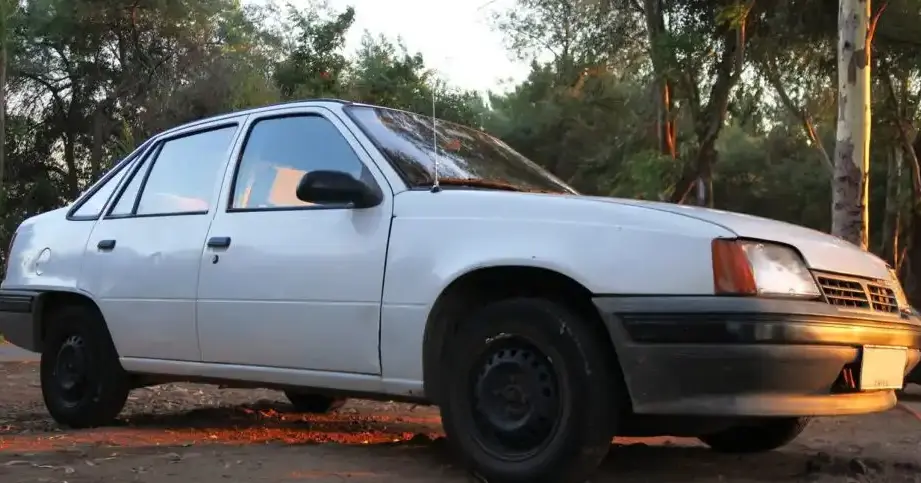
The Daewoo Racer, specifically the 1.5-liter hatchback variant producing 89 horsepower, was a significant model for the South Korean automaker during its initial expansion into international markets. Produced from 1986 to 1995, the Racer represented Daewoo’s attempt to offer affordable and practical transportation, particularly in Europe and developing nations. This model was based on the GM T-Car platform, a collaboration between General Motors, Isuzu, and Suzuki, and served as a crucial stepping stone for Daewoo as it established its automotive identity. The 1.5L version occupied an entry-level position within the Racer lineup, offering a balance of economy and usability.
Technical Specifications
| Brand | Daewoo |
| Model | Racer |
| Generation | Racer Hatchback |
| Type (Engine) | 1.5 (89 Hp) |
| Start of production | 1986 |
| End of production | 1995 |
| Powertrain Architecture | Internal Combustion engine |
| Body type | Hatchback |
| Seats | 5 |
| Doors | 3 |
| Fuel Type | Petrol (Gasoline) |
| Maximum speed | 170 km/h (105.63 mph) |
| Weight-to-power ratio | 10.9 kg/Hp, 91.8 Hp/tonne |
| Weight-to-torque ratio | 7.6 kg/Nm, 130.9 Nm/tonne |
| Power | 89 Hp @ 5500 rpm |
| Power per litre | 59.4 Hp/l |
| Torque | 127 Nm @ 3000 rpm (93.67 lb.-ft. @ 3000 rpm) |
| Engine layout | Front, Transverse |
| Engine displacement | 1498 cm3 (91.41 cu. in.) |
| Number of cylinders | 4 |
| Engine configuration | Inline |
| Cylinder Bore | 76.5 mm (3.01 in.) |
| Piston Stroke | 81.5 mm (3.21 in.) |
| Compression ratio | 9:1 |
| Number of valves per cylinder | 2 |
| Fuel injection system | Carburettor |
| Engine aspiration | Naturally aspirated engine |
| Valvetrain | OHC |
| Kerb Weight | 970 kg (2138.48 lbs.) |
| Fuel tank capacity | 50 l (13.21 US gal | 11 UK gal) |
| Length | 4158 mm (163.7 in.) |
| Width | 1663 mm (65.47 in.) |
| Height | 1360 mm (53.54 in.) |
| Wheelbase | 2520 mm (99.21 in.) |
| Front track | 1400 mm (55.12 in.) |
| Rear (Back) track | 1406 mm (55.35 in.) |
| Drivetrain Architecture | The Internal combustion engine (ICE) drives the front wheels of the vehicle. |
| Drive wheel | Front wheel drive |
| Number of gears and type of gearbox | 4 gears, manual transmission |
| Front suspension | Wishbone |
| Rear suspension | Coil spring |
| Front brakes | Disc |
| Rear brakes | Drum |
| Assisting systems | ABS (Anti-lock braking system) |
| Steering type | Steering rack and pinion |
| Tires size | 175/70 R 13 |
| Wheel rims size | 13 |
Powertrain & Engine Architecture
The heart of the Racer 1.5 was a 1.5-liter inline-four cylinder engine, designated with various internal codes depending on the specific market. This engine, while relatively simple in design, was known for its durability and ease of maintenance. It featured a single overhead camshaft (OHC) valvetrain with two valves per cylinder. The fuel delivery system utilized a carburetor, a common feature for vehicles of this era, rather than fuel injection. This carburetor setup contributed to the engine’s simplicity but also impacted its overall efficiency and emissions compared to later fuel-injected designs. The engine produced 89 horsepower at 5500 rpm and 127 Nm (93.67 lb-ft) of torque at 3000 rpm. The engine was transversely mounted, driving the front wheels. The standard transmission was a four-speed manual gearbox, designed for durability and ease of use. An automatic transmission was offered in some markets, but it was less common and generally considered less responsive than the manual.
Driving Characteristics
The Racer 1.5 with the manual transmission offered adequate, though not exhilarating, performance. Acceleration was modest, with a 0-60 mph time estimated around 12-14 seconds. The four-speed gearbox provided reasonable spacing, but the engine lacked the low-end torque found in larger displacement engines. The automatic transmission further diminished performance, resulting in slower acceleration and a less engaging driving experience. The car’s relatively light weight (970 kg or 2138 lbs) helped to mitigate the engine’s power deficit. Handling was generally considered safe and predictable, but not particularly sporty. The suspension, consisting of a wishbone front setup and coil springs in the rear, provided a comfortable ride on most road surfaces.
Equipment & Trim Levels
The Racer 1.5 was typically offered in a fairly basic trim level, reflecting its position as an entry-level model. Standard features generally included cloth upholstery, a basic instrument cluster, and manual windows and door locks. Air conditioning and a radio were often optional extras. Interior plastics were durable but lacked the refinement found in more expensive vehicles. The hatchback body style provided a reasonable amount of cargo space, making the Racer a practical choice for small families or individuals needing to transport goods. Higher trim levels, available in some markets, might have included features such as upgraded upholstery, a more comprehensive instrument panel, and power steering.
Chassis & Braking
The Racer’s chassis was a relatively conventional design for the time, utilizing a front-wheel-drive layout with a MacPherson strut front suspension and a coil-sprung rear axle. The braking system consisted of disc brakes on the front wheels and drum brakes on the rear. Anti-lock braking system (ABS) was available as an option, enhancing safety in emergency braking situations. Steering was provided by a rack and pinion system, offering reasonable precision and feedback. The tires were typically 175/70 R13, providing a balance of grip and ride comfort.
Market Reception & Comparison
The Daewoo Racer 1.5 was generally well-received as an affordable and reliable vehicle, particularly in markets where fuel economy was a priority. Critics often praised its practicality and ease of maintenance. However, the engine’s lack of power and the carburetor fuel system were often cited as drawbacks. Compared to other vehicles in its class, such as the Ford Fiesta or the Renault 5, the Racer offered a competitive price point but lacked the refinement and performance of some of its rivals. The automatic transmission version was often criticized for its sluggishness and reduced fuel economy. The manual transmission version offered a better driving experience and superior fuel efficiency.
Legacy
The Daewoo Racer, including the 1.5-liter variant, played a crucial role in establishing Daewoo as a global automotive brand. While the brand ultimately faced challenges and was later absorbed by General Motors, the Racer remains a fondly remembered vehicle by many owners. The 1.5-liter engine proved to be remarkably durable, and many examples are still on the road today. In the used car market, the Racer 1.5 is valued for its simplicity, affordability, and ease of repair. Parts availability can be a challenge in some regions, but the engine’s robust design and the availability of aftermarket components ensure that it remains a viable option for budget-conscious buyers. The Racer’s legacy lies in its contribution to Daewoo’s early success and its reputation as a dependable and practical vehicle.