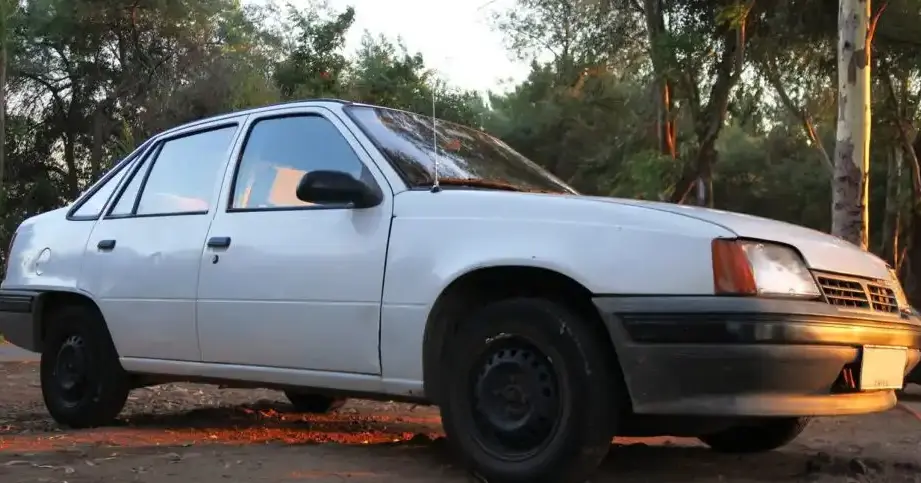
The Daewoo Racer, specifically the 1.6i hatchback variant producing 75 horsepower, represents a significant entry in the compact car market of the late 1980s and early 1990s. Produced from 1986 to 1995, the Racer was Daewoo’s initial foray into independently designed vehicles, moving away from simply rebadging General Motors products. This 3-door hatchback, built on the T100 platform, aimed to provide affordable and practical transportation, primarily targeting first-time buyers and those seeking an economical city car. The 1.6i trim occupied a middle ground in the Racer lineup, offering a balance between performance and fuel efficiency compared to the base models.
Technical Specifications
| Brand | Daewoo |
| Model | Racer |
| Generation | Racer Hatchback |
| Type (Engine) | 1.6i (75 Hp) |
| Start of production | 1986 |
| End of production | 1995 |
| Powertrain Architecture | Internal Combustion engine |
| Body type | Hatchback |
| Seats | 5 |
| Doors | 3 |
| Fuel Type | Petrol (Gasoline) |
| Weight-to-power ratio | 13.2 kg/Hp, 75.8 Hp/tonne |
| Weight-to-torque ratio | 8.1 kg/Nm, 123.2 Nm/tonne |
| Power | 75 Hp @ 5600 rpm |
| Power per litre | 46.9 Hp/l |
| Torque | 122 Nm @ 2800 rpm (89.98 lb.-ft. @ 2800 rpm) |
| Engine layout | Front, Transverse |
| Engine displacement | 1598 cm3 (97.52 cu. in.) |
| Number of cylinders | 4 |
| Engine configuration | Inline |
| Cylinder Bore | 79 mm (3.11 in.) |
| Piston Stroke | 81.5 mm (3.21 in.) |
| Compression ratio | 8.6:1 |
| Number of valves per cylinder | 2 |
| Fuel injection system | Single-point injection |
| Engine aspiration | Naturally aspirated engine |
| Valvetrain | OHC |
| Kerb Weight | 990 kg (2182.58 lbs.) |
| Fuel tank capacity | 50 l (13.21 US gal | 11 UK gal) |
| Length | 4158 mm (163.7 in.) |
| Width | 1663 mm (65.47 in.) |
| Height | 1360 mm (53.54 in.) |
| Wheelbase | 2520 mm (99.21 in.) |
| Front track | 1400 mm (55.12 in.) |
| Rear track | 1406 mm (55.35 in.) |
| Drivetrain Architecture | The Internal combustion engine (ICE) drives the front wheels of the vehicle. |
| Drive wheel | Front wheel drive |
| Number of gears and type of gearbox | 4 gears, manual transmission |
| Front suspension | Wishbone |
| Rear suspension | Coil spring |
| Front brakes | Disc |
| Rear brakes | Drum |
| Assisting systems | ABS (Anti-lock braking system) |
| Steering type | Steering rack and pinion |
| Tires size | 175/70 R13 |
| Wheel rims size | 13 |
Powertrain & Engine Architecture
The heart of the Racer 1.6i is its 1.6-liter inline four-cylinder engine, designated with various internal codes depending on the specific market. This engine utilizes a single-point fuel injection system, a relatively common technology for the time, providing a balance between cost and efficiency. The overhead camshaft (OHC) valvetrain operates two valves per cylinder, contributing to reasonable power output for its displacement. The engine’s 8.6:1 compression ratio was a compromise aimed at allowing the engine to run on the available fuel qualities in various markets. The 75 horsepower peak is achieved at 5600 rpm, while the 122 Nm (89.98 lb-ft) of torque is delivered at 2800 rpm. This configuration prioritized low-end and mid-range usability over high-revving performance.
Driving Characteristics
The Racer 1.6i, with its 75 horsepower and relatively lightweight construction (990 kg or 2182.58 lbs), offered adequate performance for everyday driving. Acceleration was not its strong suit, but it was sufficient for navigating city streets and merging onto highways. The four-speed manual transmission, standard on this model, provided a direct connection to the engine, allowing drivers to make the most of the available power. Compared to potential higher-output variants (which were not widely available), the 1.6i prioritized fuel economy and ease of driving. The gear ratios were tuned for maximizing fuel efficiency, resulting in a slightly less engaging driving experience than a sportier configuration. The front-wheel-drive layout provided predictable handling, although it lacked the sophistication of more advanced suspension systems found in contemporary European or Japanese vehicles.
Equipment & Trim Levels
The Racer 1.6i hatchback typically came equipped with basic but functional features. Standard equipment included cloth upholstery, a simple dashboard layout with analog gauges, and manual windows and door locks. Air conditioning and a radio/cassette player were often optional extras. The interior was designed with practicality in mind, offering sufficient space for five passengers, although rear legroom was somewhat limited. The trim level of the 1.6i generally positioned it as a mid-range offering, bridging the gap between the bare-bones base models and any potential higher-specification versions. Exterior features typically included steel wheels with hubcaps, black plastic trim, and relatively simple body styling.
Chassis & Braking
The Racer’s chassis employed a front wishbone suspension and a rear coil spring setup. This configuration provided a reasonable level of ride comfort, although it wasn’t particularly sporty. The front brakes were discs, offering better stopping power than the drum brakes found on the rear wheels. An Anti-lock Braking System (ABS) was available as an option, enhancing safety by preventing wheel lockup during hard braking. The steering utilized a rack and pinion system, providing responsive and accurate steering feel. The 175/70 R13 tires, mounted on 13-inch steel wheels, offered adequate grip for typical driving conditions.
Market Reception & Comparison
The Daewoo Racer 1.6i was generally well-received as an affordable and reliable compact car. Critics praised its practicality, fuel efficiency, and relatively low price point. However, it was often criticized for its somewhat bland styling and basic interior. Compared to competitors like the Ford Escort or Volkswagen Golf, the Racer offered a more budget-friendly option, but it lacked the refinement and brand recognition of those established European models. In terms of fuel economy, the 1.6i performed competitively with other cars in its class, offering around 35-40 mpg in mixed driving conditions. Reliability was generally good, although some owners reported minor issues with the fuel injection system and electrical components.
Legacy
The Daewoo Racer, and specifically the 1.6i variant, played a crucial role in establishing Daewoo as a viable automotive manufacturer. While Daewoo eventually exited the European market, the Racer remains a fondly remembered car for many owners. The 1.6-liter engine proved to be relatively durable and is still found in running condition in many used examples today. The Racer’s simple design and readily available parts make it a relatively easy car to maintain and repair. In the used car market, the Racer 1.6i is often sought after by enthusiasts looking for an affordable and reliable classic car, or as a project car for restoration or modification. Its legacy lies in providing affordable transportation and paving the way for Daewoo’s future automotive endeavors.