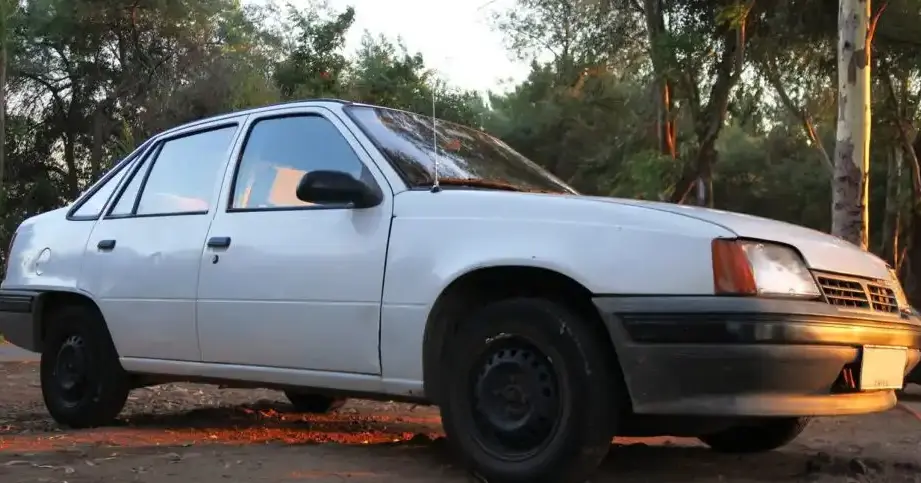
The Daewoo Racer, specifically the 2.0i variant with a 97 horsepower engine and automatic transmission, represents a significant entry in the compact hatchback market of the late 1980s and early 1990s. Produced from 1986 to 1995, the Racer was Daewoo’s attempt to establish a foothold in the competitive European and Asian automotive landscapes. This particular configuration, while not the sportiest in the Racer lineup, offered a balance of affordability, practicality, and relative comfort, targeting a broad demographic of family car buyers. The Racer was based on the GM T-Car platform, a design shared with models like the Opel Kadett and Isuzu Gemini, reflecting Daewoo’s early partnerships and technology licensing agreements.
Technical Specifications
| Brand | Daewoo |
| Model | Racer |
| Generation | Racer Hatchback |
| Type (Engine) | 2.0i (97 Hp) Automatic |
| Start of production | 1986 |
| End of production | 1995 |
| Powertrain Architecture | Internal Combustion engine |
| Body type | Hatchback |
| Seats | 5 |
| Doors | 3 |
| Fuel Type | Petrol (Gasoline) |
| Weight-to-power ratio | 10.8 kg/Hp, 92.8 Hp/tonne |
| Weight-to-torque ratio | 6.5 kg/Nm, 153.1 Nm/tonne |
| Power | 97 Hp @ 4800 rpm |
| Power per litre | 48.5 Hp/l |
| Torque | 160 Nm @ 3600 rpm (118.01 lb.-ft. @ 3600 rpm) |
| Engine layout | Front, Transverse |
| Engine displacement | 1998 cm3 (121.93 cu. in.) |
| Number of cylinders | 4 |
| Engine configuration | Inline |
| Cylinder Bore | 86 mm (3.39 in.) |
| Piston Stroke | 86 mm (3.39 in.) |
| Compression ratio | 8.8:1 |
| Number of valves per cylinder | 2 |
| Fuel injection system | Single-point injection |
| Engine aspiration | Naturally aspirated engine |
| Valvetrain | OHC |
| Kerb Weight | 1045 kg (2303.83 lbs.) |
| Fuel tank capacity | 50 l (13.21 US gal | 11 UK gal) |
| Length | 4158 mm (163.7 in.) |
| Width | 1663 mm (65.47 in.) |
| Height | 1360 mm (53.54 in.) |
| Wheelbase | 2520 mm (99.21 in.) |
| Front track | 1400 mm (55.12 in.) |
| Rear (Back) track | 1406 mm (55.35 in.) |
| Drivetrain Architecture | The Internal combustion engine (ICE) drives the front wheels of the vehicle. |
| Drive wheel | Front wheel drive |
| Number of gears and type of gearbox | 3 gears, automatic transmission |
| Front suspension | Wishbone |
| Rear suspension | Coil spring |
| Front brakes | Ventilated discs |
| Rear brakes | Drum |
| Assisting systems | ABS (Anti-lock braking system) |
| Steering type | Steering rack and pinion |
| Tires size | 175/70 R13 |
Powertrain & Engine Architecture
The heart of the Racer 2.0i Automatic is a 1998cc inline-four cylinder engine. This engine, often referred to by its internal code, utilized a single-point fuel injection system – a relatively common technology for the time, but less sophisticated than multi-point injection. The single injector delivered fuel into the intake manifold, rather than directly into each cylinder. The engine featured an overhead camshaft (OHC) valvetrain with two valves per cylinder. This configuration prioritized simplicity and reliability over outright performance. The three-speed automatic transmission was a crucial component of this variant, designed to provide ease of use for everyday driving. It wasn’t known for rapid shifts, but it offered a smooth, if somewhat leisurely, driving experience. The engine produced 97 horsepower at 4800 rpm and 160 Nm (118 lb-ft) of torque at 3600 rpm.
Driving Characteristics
The 2.0i Automatic Racer offered a comfortable, but not particularly exciting, driving experience. The three-speed automatic transmission, while convenient, resulted in noticeable gaps between gears. Acceleration was adequate for merging onto highways and navigating city streets, but it lacked the responsiveness of the manual transmission versions or the higher-output engines available in other Racer models. The gear ratios were optimized for fuel economy and smooth cruising rather than spirited driving. The relatively low horsepower and torque figures meant that overtaking maneuvers required careful planning. Compared to the 1.5L versions, the 2.0i offered a more relaxed driving experience, particularly on longer journeys, due to its increased torque and reduced need for frequent downshifts.
Equipment & Trim Levels
The Racer 2.0i Automatic typically came with a fairly basic level of equipment, reflecting its position as a mainstream, affordable hatchback. Standard features generally included cloth upholstery, a basic AM/FM radio, and manual windows and door locks. Air conditioning was often an optional extra, as were power steering and upgraded audio systems. Interior trim was functional and durable, prioritizing practicality over luxury. The dashboard layout was straightforward and easy to use, with clearly labeled controls. The 3-door hatchback body style offered reasonable cargo space, although it wasn’t as versatile as a 5-door configuration.
Chassis & Braking
The Racer’s chassis featured a front wishbone suspension and a rear coil spring setup. This suspension configuration provided a reasonably comfortable ride, absorbing bumps and imperfections in the road surface effectively. However, it wasn’t particularly sporty, with noticeable body roll during cornering. The braking system consisted of ventilated discs on the front wheels and drum brakes on the rear. While adequate for normal driving conditions, the drum brakes on the rear limited the overall braking performance. An Anti-lock Braking System (ABS) was available as an option, enhancing safety by preventing wheel lockup during hard braking.
Market Reception & Comparison
The Daewoo Racer 2.0i Automatic received mixed reviews from automotive critics. It was generally praised for its affordability, practicality, and comfortable ride. However, it was often criticized for its lack of performance, dated technology, and somewhat uninspired styling. Compared to other hatchbacks in its class, such as the Ford Escort or Volkswagen Golf, the Racer offered a lower price point but lacked the refinement and driving dynamics of its European competitors. Fuel economy was reasonable for the time, but not exceptional. Reliability was generally considered to be good, although parts availability could be an issue in some markets.
Legacy
The Daewoo Racer, while not a groundbreaking vehicle, played a role in establishing Daewoo as a player in the global automotive market. The 2.0i Automatic variant, in particular, offered a practical and affordable transportation solution for families and commuters. Today, the Racer is a relatively rare sight on the roads, but it has gained a following among classic car enthusiasts and collectors. The powertrain, while not known for its longevity, is generally reliable if properly maintained. Parts availability can be challenging, but a dedicated community of owners and enthusiasts continues to support the preservation of these vehicles. The Racer serves as a reminder of a period of rapid growth and innovation in the automotive industry, and a testament to Daewoo’s ambition to compete on the world stage.