
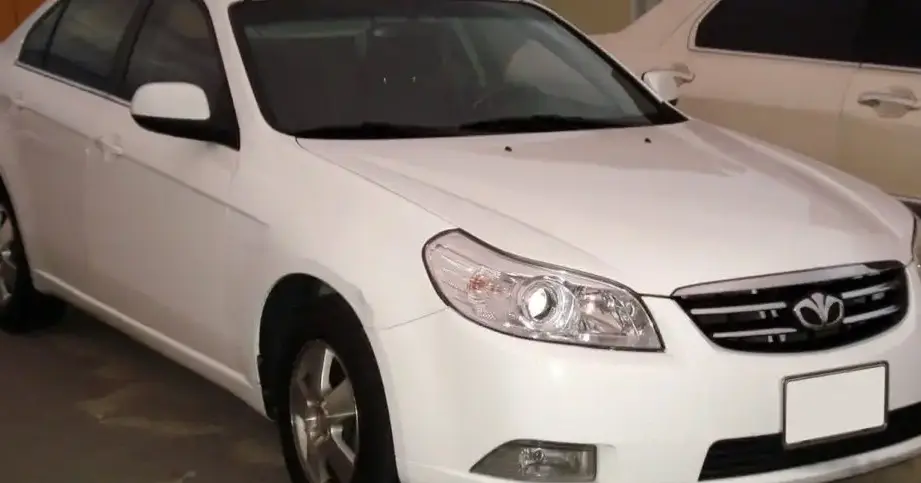
The Daewoo Tosca 2.0i R6 24V Automatic, produced between 2006 and 2011, represented a mid-range offering within the Tosca lineup. The Tosca itself was a rebadged version of the Opel/Vauxhall Vectra C, a product of General Motors’ global platform sharing strategy. Introduced as Daewoo’s replacement for the Nubira, the Tosca aimed to provide a more modern and refined experience in the compact sedan segment. This 2.0-liter, six-cylinder variant with an automatic transmission was positioned as a balance between performance and convenience, appealing to buyers seeking a comfortable and reasonably powerful family car. It was primarily marketed in South Korea and select export markets.
Technical Specifications
| Brand | Daewoo |
| Model | Tosca |
| Type | 2.0i R6 24V (142 Hp) Automatic |
| Start of production | 2006 |
| End of production | 2011 |
| Powertrain Architecture | Internal Combustion engine |
| Body type | Sedan |
| Seats | 5 |
| Doors | 4 |
| Fuel Type | Petrol (Gasoline) |
| Power | 142 Hp @ 5800 rpm |
| Power per litre | 71.3 Hp/l |
| Torque | 187 Nm @ 3800 rpm / 137.92 lb.-ft. @ 3800 rpm |
| Engine layout | Front, Transverse |
| Engine displacement | 1992 cm3 / 121.56 cu. in. |
| Number of cylinders | 6 |
| Engine configuration | Inline |
| Compression ratio | 10:1 |
| Number of valves per cylinder | 4 |
| Fuel injection system | Multi-port manifold injection |
| Engine aspiration | Naturally aspirated engine |
| Engine oil capacity | 6.4 l / 6.76 US qt | 5.63 UK qt |
| Trunk (boot) space – minimum | 480 l / 16.95 cu. ft. |
| Fuel tank capacity | 65 l / 17.17 US gal | 14.3 UK gal |
| Length | 4805 mm / 189.17 in. |
| Width | 1810 mm / 71.26 in. |
| Height | 1450 mm / 57.09 in. |
| Wheelbase | 2700 mm / 106.3 in. |
| Front track | 1550 mm / 61.02 in. |
| Rear (Back) track | 1545 mm / 60.83 in. |
| Drivetrain Architecture | The Internal combustion engine (ICE) drives the front wheels of the vehicle. |
| Drive wheel | Front wheel drive |
| Number of gears and type of gearbox | 5 gears, automatic transmission |
| Front suspension | Spring Strut |
| Rear suspension | Coil spring |
| Front brakes | Ventilated discs |
| Rear brakes | Disc |
| Assisting systems | ABS (Anti-lock braking system) |
| Steering type | Steering rack and pinion |
| Power steering | Hydraulic Steering |
| Tires size | 205/65 R15 |
| Wheel rims size | 6J x 15 |
Powertrain & Engine Architecture
The heart of the Tosca 2.0i was the L61 engine, a 1,992 cc (121.56 cu in) inline-six cylinder powerplant. This engine, derived from Opel designs, featured a cast iron block and an aluminum cylinder head with four valves per cylinder (24V). It utilized a multi-port fuel injection system, delivering fuel directly into the intake ports. The engine’s 10:1 compression ratio contributed to its respectable power output of 142 horsepower at 5,800 rpm and 187 Nm (137.92 lb-ft) of torque at 3,800 rpm. The engine was transversely mounted in the front of the vehicle. Paired with this engine was a five-speed automatic transmission, providing smooth gear changes and ease of driving. This transmission was a conventional hydraulic automatic, lacking the more advanced features found in some contemporary transmissions.
Driving Characteristics
The 2.0-liter automatic Tosca offered a comfortable and predictable driving experience. While not particularly sporty, the engine provided adequate power for everyday driving and highway cruising. The automatic transmission, while smooth, wasn’t known for its quick responsiveness. Compared to the available manual transmission, the automatic resulted in a slight performance decrease and a marginal increase in fuel consumption. The gear ratios were tuned for fuel efficiency and comfort rather than outright acceleration. The inline-six engine delivered a relatively smooth power delivery, lacking the pronounced torque peaks of turbocharged engines. It wasn’t as nimble as the smaller engine options, but offered a more relaxed driving experience.
Equipment & Trim Levels
The 2.0i Automatic trim level typically included features such as air conditioning, power windows, power door locks, and a basic audio system. Higher trim levels, often denoted with additional packages, added features like alloy wheels, a sunroof, upgraded upholstery, and a more sophisticated audio system with CD player. Interior upholstery was generally cloth, with leather options available as an upgrade. The dashboard layout was functional and straightforward, reflecting the car’s overall focus on practicality. Safety features included ABS (Anti-lock Braking System) as standard equipment, with airbags available depending on the specific market and trim level.
Chassis & Braking
The Tosca utilized a front-wheel-drive layout with a MacPherson strut suspension in the front and a coil spring suspension in the rear. The front brakes were ventilated discs, providing good stopping power, while the rear brakes were solid discs. The suspension setup was tuned for comfort, prioritizing ride quality over sharp handling. The steering was rack and pinion with hydraulic power assistance, offering reasonable steering feel. Tire size was typically 205/65 R15, mounted on 6J x 15 inch steel or alloy wheels. Stabilizer bars were included both front and rear, helping to reduce body roll during cornering.
Market Reception & Comparison
The Daewoo Tosca 2.0i Automatic received mixed reviews. Critics generally praised its comfortable ride and spacious interior, but noted its unremarkable performance and somewhat dated design. Compared to other vehicles in its class, such as the Ford Focus or the Hyundai Elantra, the Tosca offered a more refined engine but lacked the same level of technological sophistication. Fuel economy was average for its class, and reliability was generally considered acceptable, though not exceptional. The 2.0-liter automatic variant was often seen as a compromise, offering more power than the base 1.6-liter engine but lacking the sportiness of the manual transmission options.
Legacy
The Daewoo Tosca, and specifically the 2.0i Automatic variant, has become a relatively affordable and accessible used car. The inline-six engine, while not known for being particularly fuel-efficient, has proven to be reasonably durable with proper maintenance. Common issues include wear and tear on suspension components and potential problems with the automatic transmission over extended periods. Today, the Tosca is often sought after by those looking for a comfortable and reliable family sedan at a budget price. Its relatively simple mechanical design makes it easier to maintain and repair compared to more modern vehicles. While not a collector’s item, the Tosca 2.0i Automatic represents a unique chapter in Daewoo’s history and a testament to GM’s global platform strategy.
