
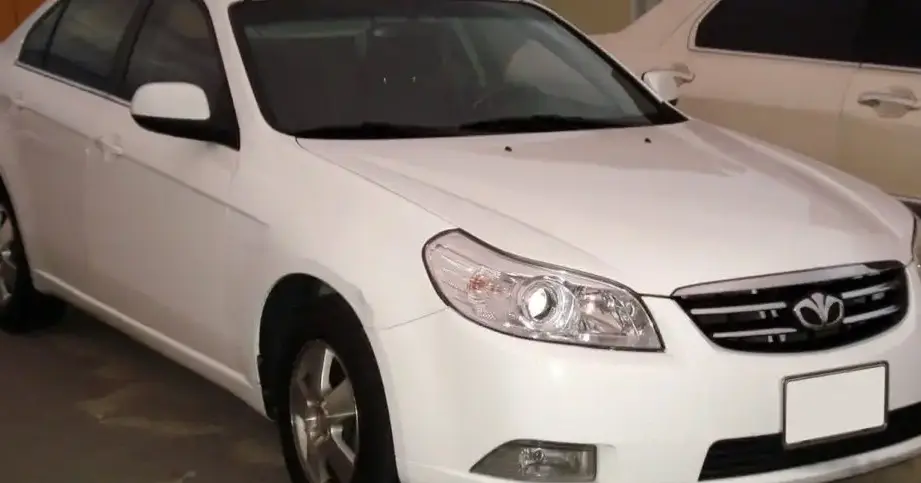
The Daewoo Tosca 2.5i R6 24V Automatic, produced between 2006 and 2011, represented a significant step upmarket for the Korean automaker. Positioned as a mid-range offering within the Tosca lineup – which itself was a rebadged version of the Opel/Vauxhall Vectra C – the 2.5i variant aimed to provide a more refined and powerful alternative to the base 2.0-liter models. The Tosca, intended to replace the aging Nubira, was primarily marketed in South Korea and select export markets, including parts of Europe, the Middle East, and South America. This particular configuration, pairing the 2.5-liter inline-six engine with a five-speed automatic transmission, was designed to appeal to buyers seeking a comfortable and capable family sedan.
Technical Specifications
| Brand | Daewoo |
| Model | Tosca |
| Type | 2.5i R6 24V (152 Hp) Automatic |
| Start of production | 2006 |
| End of production | 2011 |
| Powertrain Architecture | Internal Combustion engine |
| Body type | Sedan |
| Seats | 5 |
| Doors | 4 |
| Fuel Type | Petrol (Gasoline) |
| Power | 152 Hp @ 5800 rpm |
| Power per litre | 61 Hp/l |
| Torque | 240 Nm @ 3800 rpm / 177.01 lb.-ft. @ 3800 rpm |
| Engine layout | Front, Transverse |
| Engine displacement | 2492 cm3 / 152.07 cu. in. |
| Number of cylinders | 6 |
| Engine configuration | Inline |
| Cylinder Bore | 77 mm / 3.03 in. |
| Piston Stroke | 89.2 mm / 3.51 in. |
| Compression ratio | 10:1 |
| Number of valves per cylinder | 4 |
| Fuel injection system | Multi-port manifold injection |
| Engine aspiration | Naturally aspirated engine |
| Engine oil capacity | 6.4 l / 6.76 US qt | 5.63 UK qt |
| Trunk (boot) space – minimum | 480 l / 16.95 cu. ft. |
| Fuel tank capacity | 65 l / 17.17 US gal | 14.3 UK gal |
| Length | 4805 mm / 189.17 in. |
| Width | 1810 mm / 71.26 in. |
| Height | 1450 mm / 57.09 in. |
| Wheelbase | 2700 mm / 106.3 in. |
| Front track | 1550 mm / 61.02 in. |
| Rear (Back) track | 1545 mm / 60.83 in. |
| Drivetrain Architecture | The Internal combustion engine (ICE) drives the front wheels of the vehicle. |
| Drive wheel | Front wheel drive |
| Number of gears and type of gearbox | 5 gears, automatic transmission |
| Front suspension | Spring Strut |
| Rear suspension | Coil spring |
| Front brakes | Ventilated discs |
| Rear brakes | Disc |
| Assisting systems | ABS (Anti-lock braking system) |
| Steering type | Steering rack and pinion |
| Power steering | Hydraulic Steering |
| Tires size | 205/65 R15 |
| Wheel rims size | 6J x 15 |
Powertrain & Engine Architecture
The heart of the Tosca 2.5i was the X25 engine, a 2.5-liter inline-six cylinder powerplant. This engine, derived from Opel designs, featured a double overhead camshaft (DOHC) valvetrain with four valves per cylinder, contributing to its relatively high output for its displacement. The engine utilized a multi-port fuel injection system, delivering fuel directly to each intake port for optimized combustion. The 10:1 compression ratio was a compromise between performance and fuel efficiency. Paired with this engine was a five-speed automatic transmission, providing smooth shifts but lacking the responsiveness of a manual gearbox. The transmission was tuned for comfort rather than outright performance, with relatively conservative gear ratios.
Driving Characteristics
The 152 horsepower and 177 lb-ft of torque offered by the 2.5i engine provided adequate, though not exhilarating, performance. Acceleration from 0 to 60 mph was estimated to be around 9-10 seconds. The automatic transmission, while smooth, did contribute to some power loss. Compared to the available 2.0-liter four-cylinder engine, the 2.5i offered noticeably more power and refinement, particularly during highway cruising and overtaking maneuvers. However, it wasn’t as sporty or engaging as a manual transmission equipped model, if one were available in certain markets. The focus was clearly on providing a comfortable and effortless driving experience.
Equipment & Trim Levels
The 2.5i Tosca typically came equipped with a reasonable level of standard features. These generally included air conditioning, power windows and locks, a CD player with AM/FM radio, and basic safety equipment like dual front airbags and ABS. Higher trim levels, often denoted by specific packages, could add features such as leather upholstery, a sunroof, alloy wheels, and upgraded audio systems. Interior materials were generally of good quality for the price point, though not quite on par with established European or Japanese competitors. The dashboard layout was functional and straightforward, prioritizing ease of use.
Chassis & Braking
The Tosca utilized a front-wheel-drive layout with a MacPherson strut suspension in the front and a coil spring suspension in the rear. The suspension was tuned for comfort, providing a relatively soft ride quality. Braking duties were handled by ventilated discs in the front and solid discs in the rear. ABS was standard, enhancing braking performance and stability. Steering was provided by a hydraulic rack-and-pinion system, offering reasonable precision and feedback. The chassis, while competent, wasn’t particularly sporty, reflecting the car’s focus on comfort and practicality.
Market Reception & Comparison
The Daewoo Tosca 2.5i received mixed reviews. Critics generally praised its spacious interior, comfortable ride, and relatively powerful engine. However, it was often criticized for its bland styling, uninspired handling, and the Daewoo brand’s relatively low reputation at the time. Compared to competitors like the Honda Accord, Toyota Camry, and Ford Mondeo, the Tosca offered a lower price point but lacked the same level of refinement and brand recognition. Fuel economy was average for its class, typically around 22-26 mpg combined. The 2.0-liter Tosca offered better fuel economy, while the potential for a V6 model (available in some markets) provided more performance at the expense of efficiency.
Legacy
The Daewoo Tosca, and the 2.5i variant specifically, has become a relatively affordable and reliable used car option. The inline-six engine, while not known for being exceptionally high-tech, has proven to be durable and relatively easy to maintain. Common issues include wear and tear on suspension components and potential for oil leaks as the engine ages. Parts availability can be a challenge in some regions, as Daewoo’s presence in many markets was limited. However, the Tosca’s relatively simple mechanical design and the availability of parts from Opel/Vauxhall (due to its shared platform) help to mitigate this issue. Today, the Tosca 2.5i represents a budget-friendly option for those seeking a comfortable and spacious sedan with a reasonably powerful engine.
