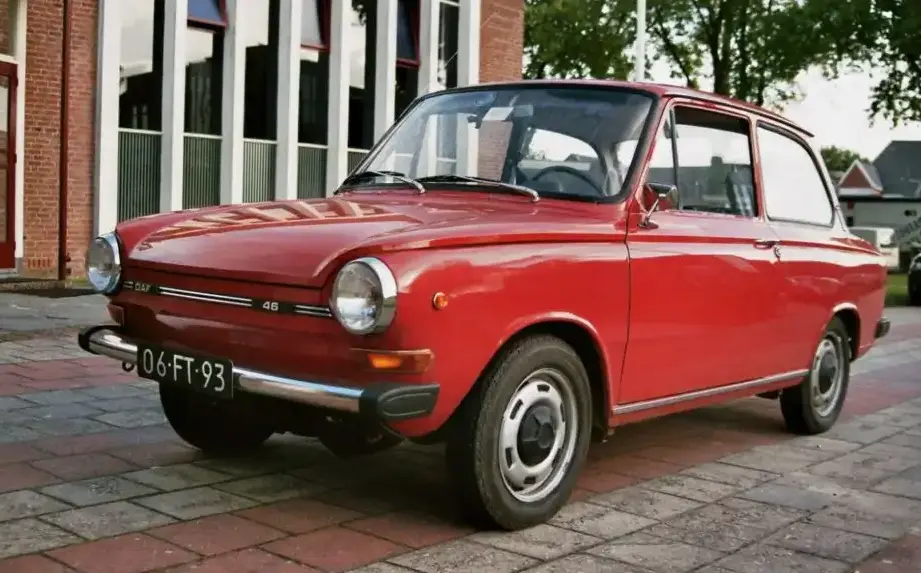
The DAF 46 Combi 0.8 Super Lux, produced between 1974 and 1975, represents a unique chapter in the history of Dutch automotive manufacturing. As a station wagon variant of the DAF 46, it was positioned as a practical and economical family vehicle within the broader DAF lineup. The Combi, meaning ‘estate’ or ‘station wagon’ in many European markets, aimed to provide increased cargo capacity compared to the standard saloon. This particular 0.8 Super Lux trim level represented a relatively well-equipped version of the compact DAF, though still focused on affordability and fuel efficiency. The DAF 46 itself was the final model developed under independent DAF ownership before the company was absorbed into Volvo in 1975.
Technical Specifications
| Brand | DAF |
| Model | 46 Combi |
| Generation | 46 Combi |
| Type (Engine) | 0.8 SUPER LUX (34 Hp) |
| Start of production | 1974 |
| End of production | 1975 |
| Powertrain Architecture | Internal Combustion engine |
| Body type | Station wagon (estate) |
| Fuel Type | Petrol (Gasoline) |
| Power | 34 Hp |
| Engine aspiration | Naturally aspirated engine |
Powertrain & Engine Architecture
The DAF 46 Combi 0.8 Super Lux was powered by a 851cc, inline-four cylinder petrol engine. This engine, designated as a variant within the DAF’s small displacement engine family, produced 34 horsepower at approximately 5,000 rpm. The engine featured a single overhead camshaft (SOHC) valvetrain, operating two valves per cylinder. Fuel delivery was managed by a Solex carburetor, a common setup for vehicles of this era and price point. The engine’s design prioritized fuel economy and ease of maintenance over outright performance.
A key characteristic of the DAF 46 was its Variomatic continuously variable transmission (CVT). This innovative transmission, developed by DAF, used two pulleys connected by a belt, allowing for a seamless and stepless change in gear ratios. The Variomatic aimed to provide smooth acceleration and optimal engine efficiency. While conceptually advanced for its time, the Variomatic was sometimes criticized for its unusual driving feel and perceived lack of responsiveness compared to traditional manual or automatic transmissions. The 0.8 Super Lux variant utilized a reinforced Variomatic unit to handle the engine’s output, though it remained a point of contention for some drivers.
Driving Characteristics
The driving experience in the DAF 46 Combi 0.8 Super Lux was defined by its modest power output and the unique characteristics of the Variomatic transmission. Acceleration was leisurely, with a 0-60 mph time estimated to be well over 20 seconds. The Variomatic transmission provided smooth, stepless acceleration, but it lacked the distinct gear changes familiar to drivers of conventional vehicles. The engine’s torque curve was relatively flat, meaning that power delivery was consistent across a wide range of engine speeds. This made the car easy to drive in urban environments, but less capable on steep hills or when overtaking at higher speeds. Compared to potential higher-powered variants (which were not offered on the Combi), the 0.8L engine prioritized fuel efficiency and ease of use over spirited performance.
Equipment & Trim Levels
The “Super Lux” designation indicated a higher level of equipment compared to the base DAF 46 Combi. Standard features included cloth upholstery, a more comprehensive instrument panel with additional gauges, and improved interior trim. The Super Lux also featured a heated rear window, a relatively uncommon feature for cars in this class during the 1970s. Optional extras included a radio, upgraded seat fabrics, and a sunroof. The interior design was functional and practical, reflecting the car’s overall focus on affordability and usability. The dashboard layout was straightforward, with clearly labeled controls and a minimalist aesthetic. The Combi body style itself offered a significant advantage in terms of practicality, providing ample space for luggage and cargo.
Chassis & Braking
The DAF 46 Combi 0.8 Super Lux utilized a relatively simple chassis design. It featured independent front suspension with coil springs and a rigid rear axle with leaf springs. The suspension was tuned for comfort rather than sporty handling, providing a smooth ride on typical road surfaces. Braking was accomplished by disc brakes on the front wheels and drum brakes on the rear wheels. The braking system was adequate for the car’s weight and performance, but it lacked the stopping power of more modern vehicles. Steering was by a rack and pinion system, providing reasonably precise control. The car’s relatively light weight (around 750 kg or 1650 lbs) helped to offset the limitations of its modest engine power and braking system.
Market Reception & Comparison
The DAF 46 Combi 0.8 Super Lux was generally well-received in its target market, particularly in the Netherlands and other European countries. Critics praised its practicality, fuel efficiency, and innovative Variomatic transmission. However, the Variomatic also drew criticism from some reviewers who found its driving feel unfamiliar and less engaging than traditional transmissions. Compared to other small family cars of the era, such as the Fiat 127 or the Renault 5, the DAF 46 offered a unique combination of features and a distinctive driving experience. Its fuel economy was competitive, and its spacious interior made it a practical choice for families. The 0.8L engine was considered adequate for everyday driving, but it lacked the performance of larger-engined rivals.
Legacy
The DAF 46 Combi 0.8 Super Lux represents a significant piece of Dutch automotive history. While DAF as an independent manufacturer ceased to exist after its acquisition by Volvo in 1975, the Variomatic transmission continued to be developed and refined by Volvo for several years. Today, the DAF 46 Combi is a sought-after classic car, particularly among enthusiasts of Dutch automotive heritage. The 0.8L engine, while not particularly powerful, is known for its reliability and ease of maintenance. Finding well-preserved examples can be challenging, as many were used as everyday transportation and have succumbed to rust or neglect. However, those that remain are cherished for their unique character and historical significance. The car’s innovative features and distinctive design continue to attract attention and admiration from car enthusiasts around the world.