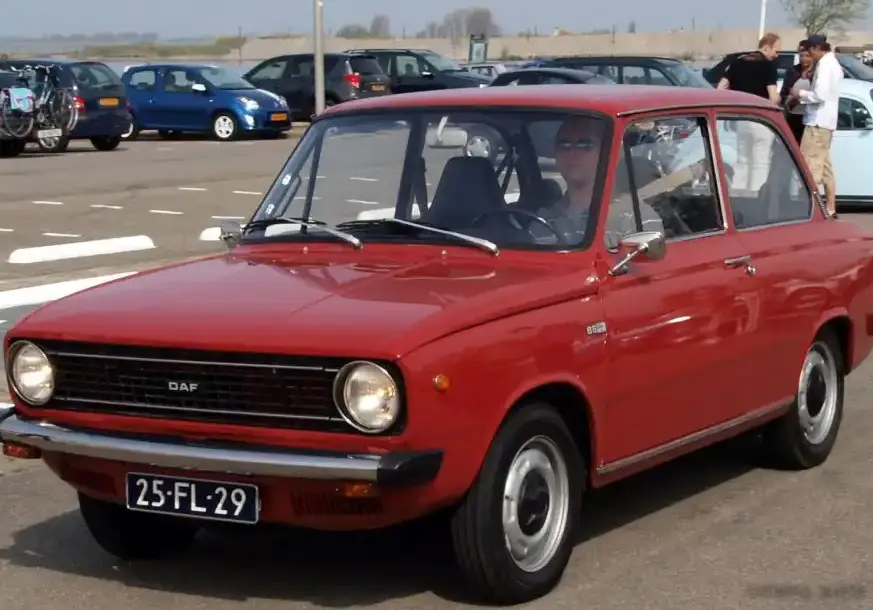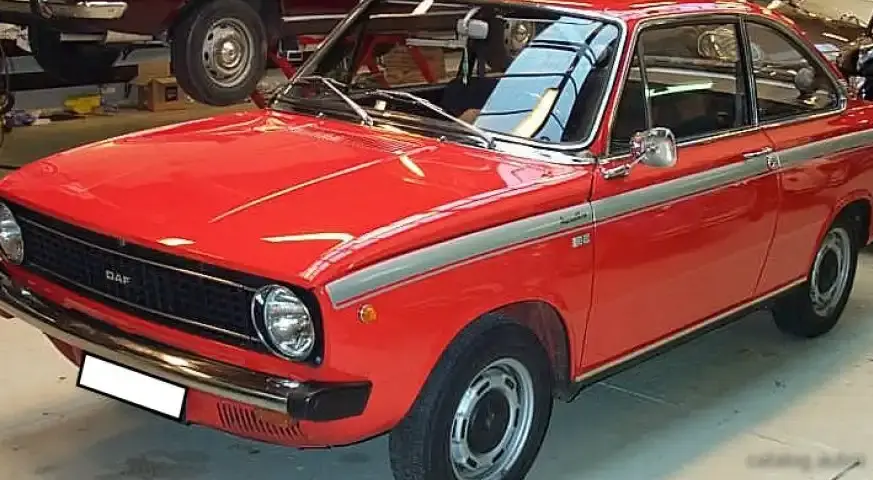
The DAF 66 Combi 1.1 Marathon, produced between 1972 and 1975, represents a unique chapter in the history of Dutch automotive manufacturing. As a station wagon variant of the DAF 66, it offered practical family transport with the innovative features DAF was known for, particularly its continuously variable transmission (CVT). The “Marathon” designation denoted a specific trim level, typically representing a slightly better-equipped version of the standard 66 Combi. This model occupied the entry-level position within the DAF 66 range, appealing to buyers seeking economical and functional transportation. It was a key part of DAF’s attempt to broaden its appeal beyond its core, technologically-minded customer base.
Technical Specifications
| Brand | DAF |
| Model | 66 |
| Generation | 66 Combi |
| Type (Engine) | 1.1 Marathon (54 hp) |
| Start of Production | 1972 |
| End of Production | 1975 |
| Powertrain Architecture | Internal Combustion Engine |
| Body Type | Station Wagon (Estate) |
| Fuel Type | Petrol (Gasoline) |
| Power | 54 hp |
| Engine Aspiration | Naturally Aspirated |
Powertrain & Engine Architecture
The DAF 66 Combi 1.1 Marathon was powered by a 1,108 cc (67.6 cubic inch) inline four-cylinder engine. This engine, internally designated as the type 4G8, was a relatively simple design, featuring a single overhead camshaft and a two-barrel Solex carburetor. The engine produced 54 horsepower at 5,500 rpm and approximately 69 lb-ft of torque at 3,500 rpm. It was a naturally aspirated engine, meaning it did not utilize a turbocharger or supercharger. The engine block was constructed from cast iron, while the cylinder head was made of aluminum alloy.
However, the defining characteristic of the DAF 66 wasn’t the engine itself, but the transmission. DAF pioneered the use of a continuously variable transmission (CVT), known as the Variomatic. This system, developed in-house, used two pulleys connected by a V-belt. The effective gear ratio was altered by changing the diameter of the pulleys, providing a seamless and stepless transition between “gears.” The Variomatic eliminated the need for a traditional clutch pedal and manual gear selection, simplifying the driving experience. The 1.1 Marathon version of the Variomatic was tuned for fuel efficiency and smooth operation, rather than outright performance.
Driving Characteristics
The driving experience in a DAF 66 Combi 1.1 Marathon was markedly different from contemporary cars with manual or traditional automatic transmissions. The Variomatic provided exceptionally smooth acceleration, but it wasn’t particularly quick. The 54 horsepower engine, coupled with the weight of the station wagon body, resulted in modest performance. Acceleration from 0 to 60 mph took approximately 18-20 seconds. The Variomatic’s operation was characterized by a distinctive “rubber band” feel, where engine speed would rise and remain high during acceleration, while the vehicle gradually gained speed. This could feel unusual to drivers accustomed to conventional transmissions.
The Variomatic’s design prioritized fuel economy. Under normal driving conditions, the 1.1 Marathon achieved fuel consumption figures in the range of 28-32 mpg. The suspension consisted of independent front suspension with coil springs and a live axle with leaf springs at the rear. The ride quality was generally comfortable, although the leaf-sprung rear end could be somewhat bouncy when unloaded. The steering was rack and pinion, providing reasonably precise control.
Equipment & Trim Levels
The “Marathon” trim level on the DAF 66 Combi represented a step up from the base model. Standard equipment typically included cloth upholstery, a basic AM radio, and a heater. The Marathon also featured upgraded interior trim and exterior brightwork. Optional extras included a sunroof, whitewall tires, and a more sophisticated radio with additional speakers. The interior was functional and utilitarian, reflecting the car’s focus on practicality. The dashboard was relatively simple, with a speedometer, fuel gauge, and warning lights. The seats were designed for comfort, but lacked extensive bolstering.
Chassis & Braking
The DAF 66 Combi 1.1 Marathon utilized a monocoque chassis construction, providing a good balance of strength and weight. The front suspension featured independent coil springs and wishbones, while the rear suspension employed a live axle with leaf springs. This configuration was typical for European cars of the era. The braking system consisted of disc brakes at the front and drum brakes at the rear. The brakes were adequate for the car’s weight and performance, but lacked the stopping power of more modern systems. The steering was a rack and pinion setup, offering reasonable precision and feedback.
Market Reception & Comparison
The DAF 66 Combi 1.1 Marathon received mixed reviews from automotive critics. While the Variomatic transmission was widely praised for its smoothness and ease of use, some critics found it lacking in responsiveness and driver engagement. The engine was considered adequate for everyday driving, but it was not particularly powerful. The car’s practicality and fuel economy were generally well-received. Compared to other cars in its class, such as the Volkswagen Variant or the Ford Cortina Estate, the DAF 66 Combi offered a unique driving experience thanks to the Variomatic transmission. However, it was often more expensive than its competitors.
The 1.1 Marathon was positioned as the entry-level model in the 66 Combi range. The more powerful 1.3-liter engine was available as an upgrade, offering improved performance at a higher price. The 1.3-liter version was favored by drivers who prioritized acceleration and overall driving enjoyment. The 1.1 Marathon appealed to buyers who valued fuel economy, ease of use, and a comfortable ride.
Legacy
The DAF 66 Combi 1.1 Marathon, while not a high-performance vehicle, holds a significant place in automotive history as a pioneer of the CVT transmission. The Variomatic system, though refined over the years, remains a key technology in modern vehicles. Today, the DAF 66 Combi is a sought-after classic car, particularly among enthusiasts who appreciate its unique engineering and quirky charm. The 1.1 Marathon variant, being the most common version, is relatively affordable and readily available in the used car market. Reliability is generally good, although parts availability can be a challenge. The engine is relatively robust, but the Variomatic transmission requires regular maintenance to ensure smooth operation. Rust is a common issue, particularly in vehicles that have not been properly stored. The DAF 66 Combi 1.1 Marathon remains a testament to Dutch innovation and a reminder of a time when automotive manufacturers were willing to experiment with unconventional technologies.