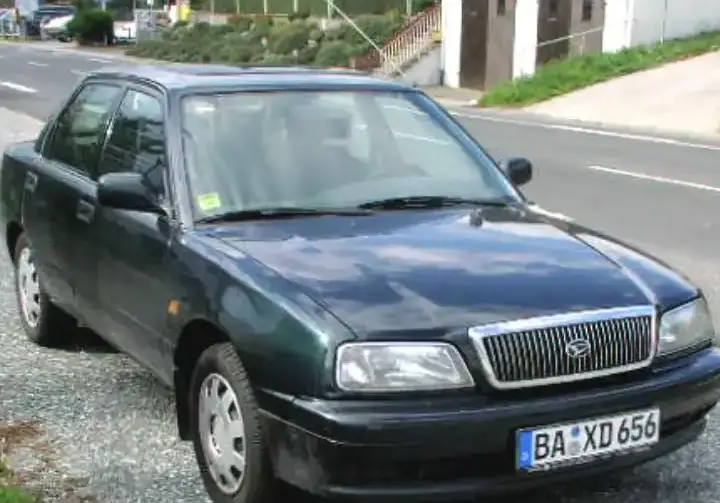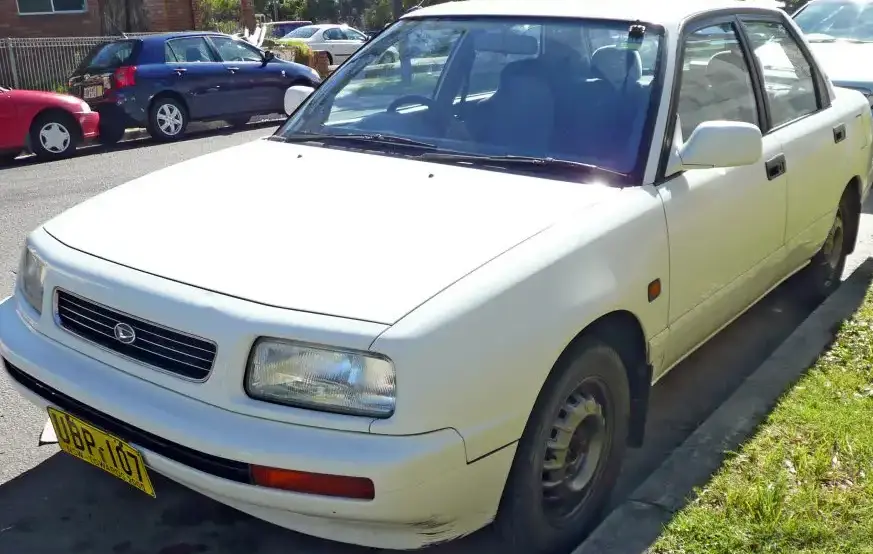
The Daihatsu Applause, a compact hatchback produced between 1989 and 1997, represented Daihatsu’s attempt to move upmarket and offer a more refined vehicle. The first generation, designated A101 and A111, was notable for its relatively spacious interior and available all-wheel drive options. The 1.6 16V 4WD (A111) variant, producing 105 horsepower, occupied a mid-range position within the Applause lineup, offering a balance between performance, fuel economy, and all-weather capability. This model was primarily sold in Japan and select export markets, including Europe and Australia, and was positioned as a practical and comfortable family vehicle.
Technical Specifications
| Brand | Daihatsu |
| Model | Applause |
| Generation | Applause I (A101, A111) |
| Type | 1.6 16V 4WD (A111) (105 Hp) |
| Start of production | 1989 |
| End of production | 1997 |
| Powertrain Architecture | Internal Combustion engine |
| Body type | Hatchback |
| Seats | 5 |
| Doors | 5 |
| Fuel consumption (combined) | 7.4 l/100 km (31.8 US mpg, 38.2 UK mpg, 13.5 km/l) |
| Fuel Type | Petrol (Gasoline) |
| Acceleration 0 – 100 km/h | 10.2 sec |
| Acceleration 0 – 62 mph | 10.2 sec |
| Acceleration 0 – 60 mph | 9.7 sec |
| Maximum speed | 180 km/h (111.85 mph) |
| Weight-to-power ratio | 9.9 kg/Hp, 101 Hp/tonne |
| Weight-to-torque ratio | 7.8 kg/Nm, 128.8 Nm/tonne |
| Power | 105 Hp @ 6000 rpm |
| Power per litre | 66 Hp/l |
| Torque | 134 Nm @ 4800 rpm (98.83 lb.-ft. @ 4800 rpm) |
| Engine layout | Front, Transverse |
| Engine displacement | 1590 cm3 (97.03 cu. in.) |
| Number of cylinders | 4 |
| Engine configuration | Inline |
| Cylinder Bore | 76 mm (2.99 in.) |
| Piston Stroke | 87.6 mm (3.45 in.) |
| Compression ratio | 9.5:1 |
| Number of valves per cylinder | 4 |
| Fuel injection system | Multi-port manifold injection |
| Engine aspiration | Naturally aspirated engine |
| Valvetrain | OHC |
| Kerb Weight | 1040 kg (2292.81 lbs.) |
| Max. weight | 1505 kg (3317.96 lbs.) |
| Max load | 465 kg (1025.15 lbs.) |
| Trunk (boot) space – minimum | 412 l (14.55 cu. ft.) |
| Trunk (boot) space – maximum | 764 l (26.98 cu. ft.) |
| Fuel tank capacity | 48 l (12.68 US gal | 10.56 UK gal) |
| Length | 4315 mm (169.88 in.) |
| Width | 1660 mm (65.35 in.) |
| Height | 1440 mm (56.69 in.) |
| Wheelbase | 2470 mm (97.24 in.) |
| Front track | 1425 mm (56.1 in.) |
| Rear (Back) track | 1415 mm (55.71 in.) |
| Drive wheel | All wheel drive (4×4) |
| Number of gears and type of gearbox | 5 gears, manual transmission |
| Front suspension | Spring Strut |
| Rear suspension | Double wishbone |
| Front brakes | Ventilated discs |
| Rear brakes | Drum |
| Assisting systems | ABS (Anti-lock braking system) |
| Steering type | Steering rack and pinion |
| Power steering | Hydraulic Steering |
| Tires size | 185/60 R14 H |
Powertrain & Engine Architecture
The heart of the Applause 1.6 16V 4WD was the 4A91 engine, a 1.6-liter inline-four cylinder gasoline engine. This engine featured a single overhead camshaft (SOHC) valvetrain operating four valves per cylinder, contributing to its relatively high output for its displacement. The engine utilized multi-port fuel injection, a common feature for the time, to improve fuel efficiency and throttle response. The 4A91 engine was known for its durability and relatively simple design, making it easier to maintain. The all-wheel drive system employed a viscous coupling to distribute power between the front and rear axles, providing enhanced traction in slippery conditions. The five-speed manual transmission offered precise gear changes and contributed to the vehicle’s engaging driving experience.
Driving Characteristics
The 105 horsepower and 134 Nm (98.83 lb-ft) of torque provided by the 1.6-liter engine delivered adequate performance for everyday driving. Acceleration to 60 mph took approximately 9.7 seconds, which was competitive for its class in the early 1990s. The all-wheel drive system significantly improved handling and stability, particularly on loose surfaces. Compared to the base 1.5-liter Applause models, the 1.6 16V offered noticeably more power and responsiveness. However, it didn’t possess the outright performance of larger-engined competitors. The five-speed manual transmission allowed drivers to keep the engine in its optimal power band, maximizing acceleration and fuel efficiency. The gear ratios were well-spaced, providing a comfortable driving experience on both city streets and highways.
Equipment & Trim Levels
The 1.6 16V 4WD Applause typically came equipped with features such as power steering, central locking, and electric windows. Interior upholstery was generally cloth, with options for upgraded materials available. The dashboard layout was functional and straightforward, prioritizing ease of use. Optional extras included air conditioning, a cassette player, and alloy wheels. The trim level of the 1.6 16V 4WD often sat in the mid-range of the Applause lineup, offering a good balance of features and affordability. It was a step up from the more basic models but didn’t include the luxury appointments found in the top-of-the-line trims.
Chassis & Braking
The Applause featured a MacPherson strut front suspension and a double wishbone rear suspension, providing a comfortable ride and predictable handling. The front brakes were ventilated discs, offering good stopping power, while the rear brakes were drums. The inclusion of ABS (Anti-lock Braking System) was a significant safety feature for the time, helping to prevent wheel lockup during hard braking. The chassis was relatively lightweight, contributing to the vehicle’s agility. Stabilizer bars were fitted to both the front and rear axles to reduce body roll during cornering.
Market Reception & Comparison
The Daihatsu Applause 1.6 16V 4WD was generally well-received by automotive critics for its spacious interior, comfortable ride, and all-weather capability. However, some reviewers noted that its styling was somewhat conservative compared to its competitors. Fuel economy was considered reasonable for its class, averaging around 31.8 US mpg. In terms of reliability, the Applause was generally regarded as a dependable vehicle, although maintenance costs could be higher due to the availability of parts. Compared to other compact hatchbacks of the era, such as the Honda Civic or Toyota Corolla, the Applause offered a unique combination of features and affordability.
Legacy
The Daihatsu Applause, while not a mainstream success in many markets, established Daihatsu as a manufacturer capable of producing well-engineered and practical vehicles. The 1.6 16V 4WD variant, in particular, is remembered for its robust powertrain and all-weather performance. Today, the Applause is a relatively rare sight on the roads, but it has gained a following among enthusiasts who appreciate its unique character and reliability. The 4A91 engine is known for its longevity, and well-maintained examples can still provide years of reliable service. The Applause represents a unique chapter in Daihatsu’s history, showcasing the company’s commitment to innovation and quality.