
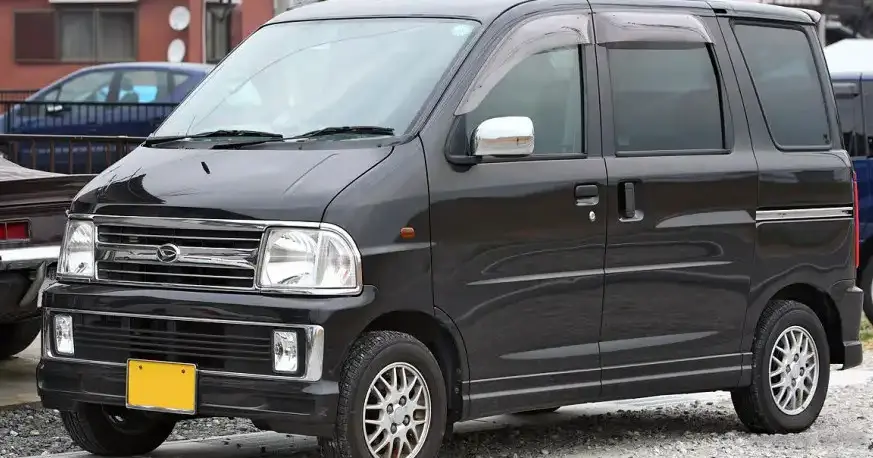
The Daihatsu Atrai/Extol 0.7 i V12, producing 48 horsepower, was a compact, rear-wheel drive minivan produced between 1999 and 2005. Sold primarily in the Japanese domestic market (JDM), the Atrai/Extol served as a practical and affordable people carrier, particularly suited for navigating narrow urban streets. This specific variant, equipped with a 0.7-liter inline-three cylinder engine and a four-speed automatic transmission, represented an entry-level option within the Atrai/Extol lineup, prioritizing fuel efficiency and ease of use over outright performance. The “Extol” name was often used as a trim level designation, indicating a slightly more equipped version of the base Atrai.
Technical Specifications
| Brand | Daihatsu |
| Model | Atrai/Extol |
| Generation | Atrai/Extol |
| Type (Engine) | 0.7 i V12 (48 Hp) Automatic |
| Start of production | 1999 |
| End of production | 2005 |
| Powertrain Architecture | Internal Combustion engine |
| Body type | Minivan |
| Seats | 7 |
| Doors | 4 |
| Fuel consumption (urban) | 10.5 l/100 km (22.4 US mpg) |
| Fuel consumption (extra urban) | 6.5 l/100 km (36.2 US mpg) |
| Fuel Type | Petrol (Gasoline) |
| Weight-to-power ratio | 19.6 kg/Hp |
| Weight-to-torque ratio | 14.9 kg/Nm |
| Power | 48 Hp @ 5900 rpm |
| Power per litre | 72.8 Hp/l |
| Torque | 63 Nm @ 4000 rpm (46.47 lb.-ft. @ 4000 rpm) |
| Engine layout | Front, Longitudinal |
| Engine displacement | 659 cm3 (40.21 cu. in.) |
| Number of cylinders | 3 |
| Engine configuration | Inline |
| Cylinder Bore | 68 mm (2.68 in.) |
| Piston Stroke | 60.5 mm (2.38 in.) |
| Compression ratio | 10.5:1 |
| Number of valves per cylinder | 4 |
| Fuel injection system | Multi-port manifold injection |
| Engine aspiration | Naturally aspirated |
| Valvetrain | DOHC |
| Kerb Weight | 940 kg (2072.35 lbs.) |
| Max. weight | 1160 kg (2557.36 lbs.) |
| Max load | 220 kg (485.02 lbs.) |
| Fuel tank capacity | 46 l (12.15 US gal) |
| Length | 3395 mm (133.66 in.) |
| Width | 1475 mm (58.07 in.) |
| Height | 1865 mm (73.43 in.) |
| Wheelbase | 2420 mm (95.28 in.) |
| Front track | 1285 mm (50.59 in.) |
| Rear track | 1290 mm (50.79 in.) |
| Drivetrain | Rear wheel drive |
| Number of gears | 4 |
| Gearbox type | Automatic transmission |
| Front suspension | Coil spring |
| Rear suspension | Coil spring |
| Front brakes | Ventilated discs |
| Rear brakes | Drum |
| Assisting systems | ABS (Anti-lock braking system) |
| Steering type | Steering rack and pinion |
| Power steering | Hydraulic |
| Tires size | 165/70 R13 |
| Wheel rims size | 13 |
Powertrain & Engine Architecture
The heart of the Atrai/Extol 0.7 i V12 was the Daihatsu ED-20 engine, a 659cc inline-three cylinder unit. This engine utilized a double overhead camshaft (DOHC) valvetrain with four valves per cylinder, a relatively sophisticated setup for an engine of this displacement. Multi-port fuel injection was employed to deliver fuel to the cylinders, contributing to improved efficiency and smoother operation. The engine’s modest 48 horsepower output at 5900 rpm and 63 Nm (46.47 lb-ft) of torque at 4000 rpm were characteristic of small-displacement engines designed for economy rather than performance. The four-speed automatic transmission was a conventional hydraulic unit, chosen for its simplicity and ease of use, aligning with the target demographic of this vehicle. The engine was mounted longitudinally in the front of the vehicle, driving the rear wheels.
Driving Characteristics
The 0.7-liter engine and automatic transmission combination resulted in leisurely acceleration. The Atrai/Extol was not designed for quick getaways or highway cruising. Instead, it excelled in urban environments where its compact size and easy maneuverability were significant advantages. The automatic transmission, while convenient, featured relatively widely spaced gear ratios, prioritizing fuel economy over responsiveness. Compared to the available manual transmission or the slightly more powerful variants, this setup felt noticeably slower. However, the automatic transmission made it a particularly appealing option for drivers unfamiliar with manual gearboxes or those who frequently encountered stop-and-go traffic.
Equipment & Trim Levels
The Atrai/Extol 0.7 i V12 typically came equipped with basic amenities. Standard features generally included power steering, air conditioning (often optional), and a basic audio system. The interior was functional and utilitarian, with durable plastic trim and cloth upholstery. The “Extol” trim level often added features like upgraded seat fabric, a more comprehensive instrument cluster, and sometimes, power windows. Optional extras could include alloy wheels, a sunroof, and a more advanced audio system. The focus was on providing a practical and affordable vehicle, so luxury features were generally limited.
Chassis & Braking
The Atrai/Extol utilized a body-on-frame construction, a common practice for light commercial vehicles and minivans of this era. Suspension consisted of coil springs at both the front and rear, providing a reasonably comfortable ride, especially considering the vehicle’s utilitarian purpose. The front brakes were ventilated discs, offering adequate stopping power for the vehicle’s weight, while the rear brakes were drums. An Anti-lock Braking System (ABS) was often included, enhancing safety. The relatively narrow tires (165/70 R13) contributed to fuel efficiency but limited grip in more demanding driving situations.
Market Reception & Comparison
The Daihatsu Atrai/Extol 0.7 i V12 was well-received in Japan as a practical and economical people carrier. Critics praised its compact size, ease of driving, and fuel efficiency. However, the limited power output and leisurely acceleration were often noted. Compared to other trims in the Atrai/Extol lineup, such as those with larger engines or manual transmissions, this variant was positioned as the entry-level option, appealing to budget-conscious buyers and those prioritizing ease of use. Its fuel economy was competitive within its class, and its simple mechanical design contributed to relatively low maintenance costs.
Legacy
The Daihatsu Atrai/Extol 0.7 i V12, while not a performance icon, remains a popular choice in the used car market in Japan. Its reputation for reliability and affordability has ensured its continued demand. The ED-20 engine, while simple, is known for its durability when properly maintained. Parts availability can be a concern outside of Japan, but within its home market, the Atrai/Extol continues to provide a practical and economical transportation solution. The vehicle represents a specific era of Japanese automotive engineering, prioritizing functionality and efficiency in a compact and affordable package.
