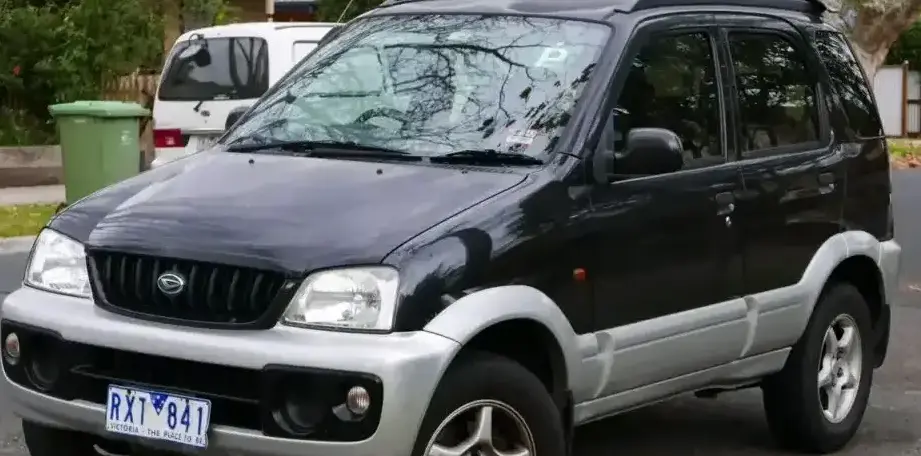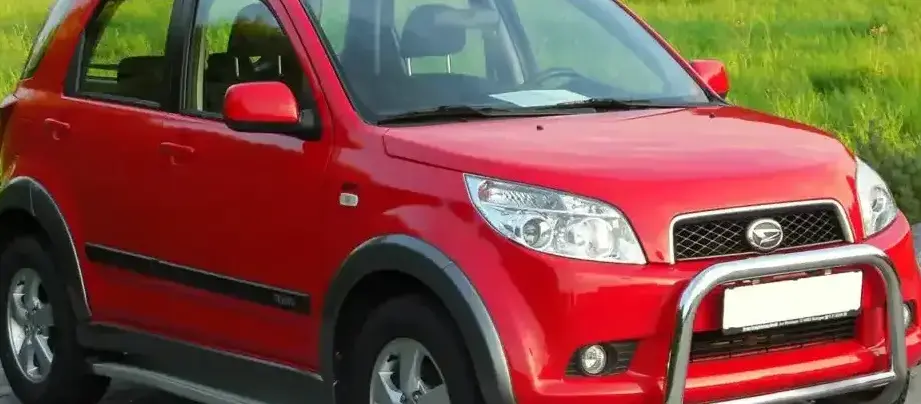
The Daihatsu Terios II (J200) 1.5 i 16V, produced from 2006 to 2017, represents a significant iteration of Daihatsu’s compact SUV offering. This variant, powered by the 3SZ-VE 1.5-liter engine producing 105 horsepower, was primarily aimed at markets outside of Japan, particularly in Southeast Asia, South America, and parts of Europe. It occupied a middle ground within the Terios II lineup, offering a balance between affordability and reasonable performance. The J200 generation marked a shift towards a more conventional SUV design compared to its predecessor, and the 1.5 i 16V model was a key volume seller due to its accessible price point and fuel efficiency.
Technical Specifications
| Brand | Daihatsu |
| Model | Terios |
| Generation | Terios II (J200) |
| Type (Engine) | 1.5 i 16V (105 Hp) |
| Start of production | 2006 |
| End of production | 2017 |
| Powertrain Architecture | Internal Combustion engine |
| Body type | SUV |
| Seats | 5 |
| Doors | 5 |
| Fuel consumption (urban) | 9.7 l/100 km (24.2 US mpg) |
| Fuel consumption (extra urban) | 7 l/100 km (33.6 US mpg) |
| Fuel Type | Petrol (Gasoline) |
| Acceleration 0 – 100 km/h | 11.9 sec |
| Acceleration 0 – 62 mph | 11.9 sec |
| Acceleration 0 – 60 mph | 11.3 sec |
| Maximum speed | 160 km/h (99.42 mph) |
| Weight-to-power ratio | 11 kg/Hp |
| Weight-to-torque ratio | 8.2 kg/Nm |
| Power | 105 Hp @ 6000 rpm |
| Torque | 140 Nm @ 4400 rpm (103.26 lb.-ft. @ 4400 rpm) |
| Engine layout | Front, Longitudinal |
| Engine Model/Code | 3SZ-VE |
| Engine displacement | 1495 cm3 (91.23 cu. in.) |
| Number of cylinders | 4 |
| Engine configuration | Inline |
| Cylinder Bore | 72 mm (2.83 in.) |
| Piston Stroke | 91.8 mm (3.61 in.) |
| Compression ratio | 10:1 |
| Number of valves per cylinder | 4 |
| Fuel injection system | Multi-port manifold injection |
| Engine aspiration | Naturally aspirated |
| Engine oil capacity | 3.2 l (3.38 US qt | 2.82 UK qt) |
| Coolant capacity | 4.6 l (4.86 US qt | 4.05 UK qt) |
| Kerb Weight | 1150 kg (2535.32 lbs.) |
| Max. weight | 1720 kg (3791.95 lbs.) |
| Max load | 570 kg (1256.63 lbs.) |
| Trunk (boot) space – minimum | 380 l (13.42 cu. ft.) |
| Trunk (boot) space – maximum | 755 l (26.66 cu. ft.) |
| Fuel tank capacity | 50 l (13.21 US gal | 11 UK gal) |
| Length | 4055 mm (159.65 in.) |
| Width | 1695 mm (66.73 in.) |
| Height | 1740 mm (68.5 in.) |
| Wheelbase | 2580 mm (101.57 in.) |
| Front track | 1450 mm (57.09 in.) |
| Rear track | 1480 mm (58.27 in.) |
| Drivetrain Architecture | Rear wheel drive |
| Number of gears | 5 |
| Gearbox type | Manual transmission |
| Front suspension | Independent, McPherson with coil spring and anti-roll bar |
| Rear suspension | Coil spring |
| Front brakes | Disc |
| Rear brakes | Drum |
| Assisting systems | ABS (Anti-lock braking system) |
| Tires size | 215/65R16 |
Powertrain & Engine Architecture
The heart of the Terios II 1.5 i 16V is the 3SZ-VE engine, a 1.5-liter inline-four cylinder gasoline engine. This engine utilizes a multi-point fuel injection system and a single overhead camshaft (SOHC) valvetrain with four valves per cylinder. The 3SZ-VE is known for its relatively simple design, contributing to its reliability and ease of maintenance. The engine’s 105 horsepower output at 6000 rpm and 140 Nm (103 lb-ft) of torque at 4400 rpm are delivered through a five-speed manual transmission in this configuration. While not a powerhouse, the engine was designed for efficiency and durability rather than outright performance. The longitudinal engine layout, coupled with rear-wheel drive, was a notable characteristic, differentiating it from many contemporary compact SUVs that favored front-wheel drive.
Driving Characteristics
The 1.5-liter engine and five-speed manual transmission combination in the Terios II provided adequate, though not exhilarating, performance. Acceleration from 0-60 mph took around 11.3 seconds, and top speed was limited to 99.42 mph. The rear-wheel-drive setup offered a different driving experience compared to front-wheel-drive competitors, providing a more balanced feel, especially when cornering. However, the relatively low horsepower and torque figures meant that the Terios II 1.5 i 16V was best suited for city driving and moderate highway cruising. The manual transmission allowed for greater driver control, but the gear ratios were tuned for fuel economy rather than rapid acceleration. Compared to potential higher-spec variants (if offered in certain markets) with larger engines, this version prioritized practicality and affordability.
Equipment & Trim Levels
The Terios II 1.5 i 16V typically came with a fairly basic level of equipment, reflecting its position as a value-oriented model. Standard features generally included air conditioning, power steering, and basic audio system. Interior upholstery was typically cloth, and the dashboard featured a functional, if somewhat utilitarian, design. Optional extras could include alloy wheels, a CD player, and power windows. Trim levels varied depending on the market, but the 1.5 i 16V generally represented the entry-level or mid-range option, offering a good balance of features for the price.
Chassis & Braking
The Terios II utilized a body-on-frame construction, contributing to its robustness and off-road capability. The front suspension employed an independent McPherson strut setup with coil springs and an anti-roll bar, while the rear suspension featured a simpler coil spring arrangement. Braking duties were handled by disc brakes at the front and drum brakes at the rear. ABS (Anti-lock Braking System) was typically standard, enhancing safety. The suspension tuning was geared towards comfort and ride quality, rather than sporty handling. The rear-wheel-drive configuration and relatively high ground clearance made the Terios II capable of handling mild off-road conditions.
Market Reception & Comparison
The Daihatsu Terios II 1.5 i 16V was generally well-received in its target markets as an affordable and practical compact SUV. Critics praised its reliability, fuel efficiency, and ruggedness. However, some reviewers noted its lack of refinement and relatively modest performance. Compared to other compact SUVs available at the time, such as the Suzuki Jimny or various offerings from Hyundai and Kia, the Terios II offered a unique combination of rear-wheel drive and body-on-frame construction. Fuel economy was competitive, and maintenance costs were generally low. The manual transmission version was favored by those seeking greater control and fuel efficiency.
Legacy
The Daihatsu Terios II 1.5 i 16V has proven to be a durable and reliable vehicle, and well-maintained examples continue to be found on the used car market today. The 3SZ-VE engine is known for its longevity, and parts availability remains reasonable. While not a collector’s item, the Terios II 1.5 i 16V represents a practical and affordable option for those seeking a compact SUV with rear-wheel drive and a simple, robust design. Its enduring appeal lies in its dependability and low running costs, making it a popular choice for budget-conscious buyers.