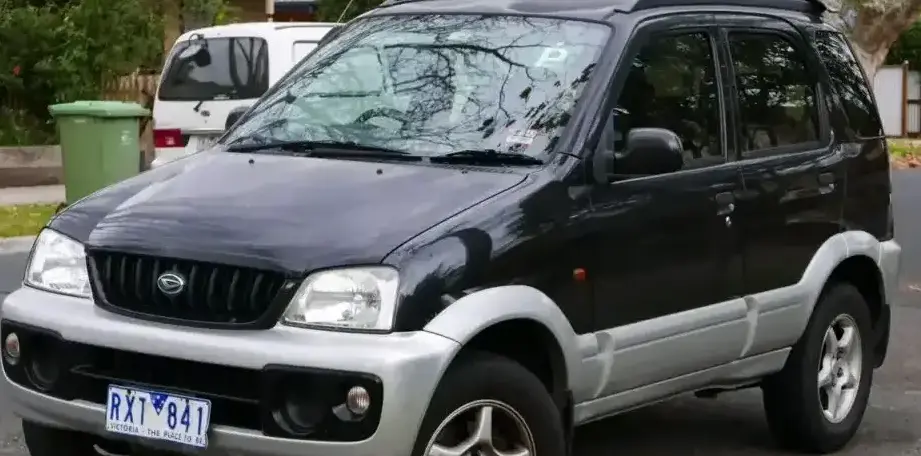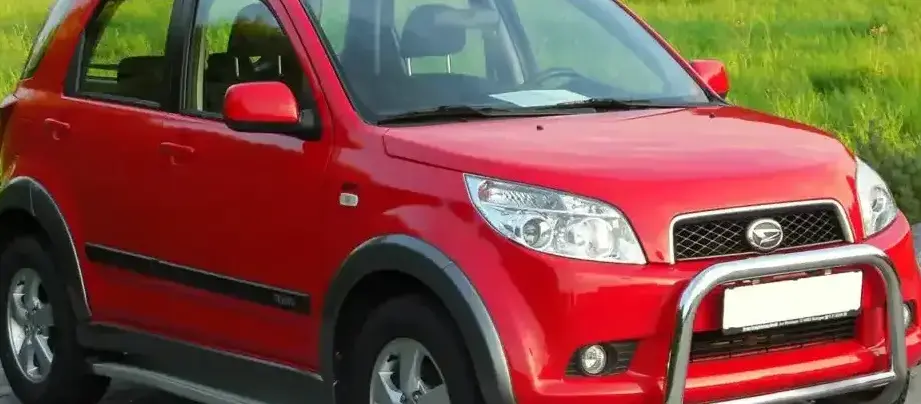
The Daihatsu Terios II (J200) 1.5 i 16V 4WD Automatic, produced from 2006 to 2017, represents a significant iteration of Daihatsu’s compact SUV offering. Positioned as a practical and affordable all-wheel-drive vehicle, it primarily targeted markets outside of North America, finding considerable success in Asia, Europe, and Australia. This particular variant, equipped with the 3SZ-VE 1.5-liter engine and a four-speed automatic transmission, served as a mid-range option within the Terios II lineup, offering a balance between fuel efficiency, usability, and all-weather capability. It was designed to appeal to families and individuals seeking a versatile vehicle for both urban commuting and light off-road adventures.
Technical Specifications
| Brand | Daihatsu |
| Model | Terios |
| Generation | Terios II (J200) |
| Type | 1.5 i 16V 4WD (105 Hp) Automatic |
| Start of production | 2006 |
| End of production | 2017 |
| Powertrain Architecture | Internal Combustion engine |
| Body type | SUV |
| Seats | 5 |
| Doors | 5 |
| Fuel consumption (urban) | 10.7 l/100 km (22 US mpg) |
| Fuel consumption (extra urban) | 7.1 l/100 km (33.1 US mpg) |
| Fuel Type | Petrol (Gasoline) |
| Acceleration 0 – 100 km/h | 14 sec |
| Acceleration 0 – 62 mph | 14 sec |
| Acceleration 0 – 60 mph | 13.3 sec |
| Maximum speed | 160 km/h (99.42 mph) |
| Weight-to-power ratio | 11.4 kg/Hp |
| Weight-to-torque ratio | 8.6 kg/Nm |
| Power | 105 Hp @ 6000 rpm |
| Torque | 140 Nm @ 4400 rpm (103.26 lb.-ft. @ 4400 rpm) |
| Engine layout | Front, Longitudinal |
| Engine Model/Code | 3SZ-VE |
| Engine displacement | 1495 cm3 (91.23 cu. in.) |
| Number of cylinders | 4 |
| Engine configuration | Inline |
| Cylinder Bore | 72 mm (2.83 in.) |
| Piston Stroke | 91.8 mm (3.61 in.) |
| Compression ratio | 10:1 |
| Number of valves per cylinder | 4 |
| Fuel injection system | Multi-port manifold injection |
| Engine aspiration | Naturally aspirated |
| Engine oil capacity | 3.2 l (3.38 US qt | 2.82 UK qt) |
| Coolant capacity | 4.6 l (4.86 US qt | 4.05 UK qt) |
| Kerb Weight | 1200 kg (2645.55 lbs.) |
| Max. weight | 1720 kg (3791.95 lbs.) |
| Max load | 520 kg (1146.4 lbs.) |
| Trunk (boot) space – minimum | 380 l (13.42 cu. ft.) |
| Trunk (boot) space – maximum | 755 l (26.66 cu. ft.) |
| Fuel tank capacity | 50 l (13.21 US gal | 11 UK gal) |
| Length | 4055 mm (159.65 in.) |
| Width | 1675 mm (65.94 in.) |
| Height | 1740 mm (68.5 in.) |
| Wheelbase | 2580 mm (101.57 in.) |
| Front track | 1450 mm (57.09 in.) |
| Rear track | 1480 mm (58.27 in.) |
| Drive wheel | All wheel drive (4×4) |
| Number of gears | 4 |
| Gearbox type | Automatic transmission |
| Front suspension | Independent, McPherson with coil spring and anti-roll bar |
| Rear suspension | Coil spring |
| Front brakes | Disc |
| Rear brakes | Drum |
| Assisting systems | ABS (Anti-lock braking system) |
| Tires size | 215/65 R16 |
| Wheel rims size | 16 |
Powertrain & Engine Architecture
The heart of the Terios II 1.5 i 4WD Automatic is the 3SZ-VE engine, a 1.5-liter (1495 cc) inline-four cylinder gasoline engine. This engine utilizes a single overhead camshaft (SOHC) design with four valves per cylinder, contributing to reasonable power output for its displacement. The 3SZ-VE employs multi-point fuel injection, delivering fuel directly to each intake port for improved combustion efficiency. The engine is known for its relative simplicity and durability, though it doesn’t boast the performance of more modern, direct-injected engines. Paired with this engine is a four-speed automatic transmission. This transmission, while providing convenience, is a somewhat dated design compared to the five or six-speed automatics becoming common during the Terios II’s production run. The four-speed configuration results in wider gear ratios, potentially impacting fuel economy at highway speeds and requiring the engine to work harder during acceleration.
Driving Characteristics
The 105 horsepower and 140 Nm (103 lb-ft) of torque produced by the 3SZ-VE engine, when channeled through the four-speed automatic, delivers adequate, but not exhilarating, performance. Acceleration from 0-60 mph takes around 13.3 seconds, and top speed is limited to 99.42 mph. The automatic transmission prioritizes smooth shifts over aggressive performance. In real-world driving, the Terios II 1.5 i Automatic feels best suited for city and suburban environments. The all-wheel-drive system provides enhanced traction in slippery conditions, making it a capable vehicle for inclement weather or light off-road use. Compared to the manual transmission versions of the same engine, the automatic suffers a slight performance penalty due to the transmission’s inherent inefficiencies. Higher-spec Terios models equipped with larger engines, such as the 1.8-liter, offered significantly more power and a more engaging driving experience.
Equipment & Trim Levels
The 1.5 i 4WD Automatic trim typically included standard features such as air conditioning, power windows, power door locks, and a basic audio system. Interior upholstery was generally cloth, with a functional, rather than luxurious, design. Optional extras often included alloy wheels, a CD player, and sometimes, a basic navigation system. The dashboard layout was straightforward and easy to use, prioritizing practicality over aesthetic flair. Safety features were relatively basic for the period, typically including ABS brakes and a driver’s airbag. Higher trim levels offered additional features like fog lights, roof rails, and upgraded interior trim.
Chassis & Braking
The Terios II utilizes a body-on-frame construction, contributing to its robustness and off-road capability. The front suspension employs an independent McPherson strut setup with coil springs and an anti-roll bar, providing a comfortable ride on paved roads. The rear suspension utilizes a simpler coil spring arrangement. Braking duties are handled by disc brakes at the front and drum brakes at the rear. While adequate for the vehicle’s weight and performance, the drum brakes on the rear wheels are a cost-saving measure that doesn’t offer the same stopping power as a full disc setup. The all-wheel-drive system is typically a part-time system, allowing the driver to switch between two-wheel drive and four-wheel drive modes as needed.
Market Reception & Comparison
The Daihatsu Terios II 1.5 i 4WD Automatic was generally well-received as a practical and affordable SUV. Critics praised its all-wheel-drive capability and fuel efficiency, but noted its relatively modest performance. Compared to other trims in the Terios II lineup, the 1.5-liter automatic offered a good balance between price and features. It was often seen as a more sensible choice than the higher-powered, more expensive models, particularly for buyers who prioritized fuel economy and all-weather capability over outright performance. Reliability was generally considered good, although the four-speed automatic transmission was sometimes criticized for its dated design.
Legacy
The Daihatsu Terios II 1.5 i 4WD Automatic has proven to be a relatively reliable vehicle, and well-maintained examples continue to be found on the used car market today. The 3SZ-VE engine is known for its durability, and the four-speed automatic transmission, while not the most sophisticated, is generally dependable. However, potential buyers should be aware of the possibility of age-related issues, such as worn suspension components and corrosion. The Terios II remains a popular choice for those seeking an affordable and capable compact SUV, particularly in regions where all-wheel drive is highly valued. Its simplicity and robust construction contribute to its enduring appeal.