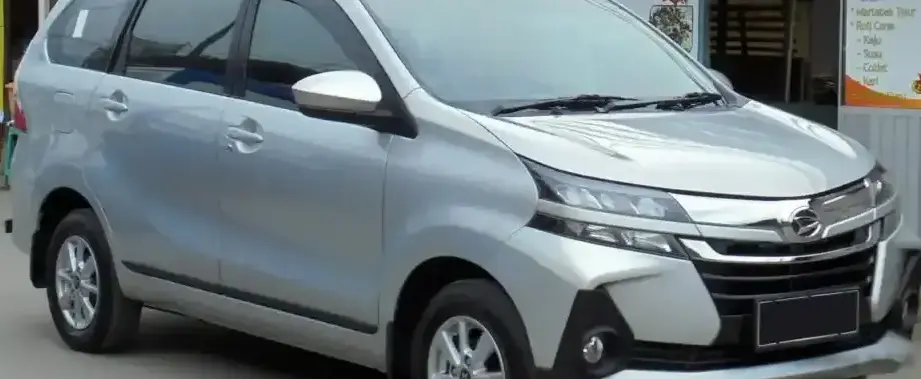
The Daihatsu Xenia II (F650) 1.3, producing 92 horsepower with an automatic transmission, was a significant variant within the second generation Xenia lineup, produced from 2011 to 2015. Positioned as an entry-level to mid-range option, it catered to families seeking affordable and practical transportation in the Indonesian market, where the Xenia was particularly popular. The Xenia, and its twin the Toyota Avanza, dominated the Low Multi-Purpose Vehicle (LMPV) segment, offering a seven-seat configuration in a relatively compact and economical package. This variant aimed to balance affordability with the convenience of an automatic gearbox, appealing to a broader range of buyers than the base manual transmission models.
Technical Specifications
| Brand | Daihatsu |
| Model | Xenia |
| Generation | Xenia II (F650) |
| Type (Engine) | 1.3 (92 Hp) Automatic |
| Start of production | November, 2011 |
| End of production | 2015 |
| Powertrain Architecture | Internal Combustion engine |
| Body type | MPV |
| Seats | 7 |
| Doors | 5 |
| Fuel Type | Petrol (Gasoline) |
| Weight-to-power ratio | 11.7 kg/Hp, 85.2 Hp/tonne |
| Weight-to-torque ratio | 9.2 kg/Nm, 108.3 Nm/tonne |
| Power | 92 Hp @ 6000 rpm |
| Power per litre | 70.9 Hp/l |
| Torque | 117 Nm @ 4400 rpm, 86.29 lb.-ft. @ 4400 rpm |
| Engine layout | Front, Longitudinal |
| Engine Model/Code | K3-VE |
| Engine displacement | 1298 cm3, 79.21 cu. in. |
| Number of cylinders | 4 |
| Engine configuration | Inline |
| Cylinder Bore | 72 mm, 2.83 in. |
| Piston Stroke | 79.7 mm, 3.14 in. |
| Number of valves per cylinder | 4 |
| Fuel injection system | Multi-port manifold injection |
| Engine aspiration | Naturally aspirated engine |
| Valvetrain | DOHC, VVT-i |
| Kerb Weight | 1080 kg, 2380.99 lbs |
| Max. weight | 1585 kg, 3494.33 lbs |
| Max load | 505 kg, 1113.33 lbs |
| Fuel tank capacity | 45 l, 11.89 US gal | 9.9 UK gal |
| Length | 4140 mm, 162.99 in |
| Width | 1660 mm, 65.35 in |
| Height | 1695 mm, 66.73 in |
| Wheelbase | 2655 mm, 104.53 in |
| Front track | 1425 mm, 56.1 in |
| Rear (Back) track | 1435 mm, 56.5 in |
| Ride height (ground clearance) | 180-200 mm, 7.09 – 7.87 in |
| Minimum turning circle (turning diameter) | 9.4 m, 30.84 ft |
| Drivetrain Architecture | The Internal combustion engine (ICE) drives the rear wheels of the vehicle. |
| Drive wheel | Rear wheel drive |
| Number of gears and type of gearbox | 4 gears, automatic transmission |
| Front suspension | Independent, type McPherson with coil spring and anti-roll bar |
| Rear suspension | Rigid axle suspension |
| Front brakes | Disc |
| Rear brakes | Drum |
| Steering type | Steering rack and pinion |
| Power steering | Electric Steering |
| Tires size | 185/70 R14 |
| Wheel rims size | 5.5J x 14 |
Powertrain & Engine Architecture
The heart of the Xenia II 1.3 Automatic is the Daihatsu K3-VE engine, a 1.3-liter (1298cc) inline-four cylinder gasoline engine. This engine utilizes a multi-point fuel injection system and a double overhead camshaft (DOHC) valvetrain with Variable Valve Timing-intelligence (VVT-i). The VVT-i system optimizes valve timing based on engine speed and load, improving both fuel efficiency and power output. The K3-VE engine is known for its relative simplicity and durability, making it a cost-effective choice for the Xenia’s target market. The engine produces 92 horsepower at 6000 rpm and 117 Nm (86.29 lb-ft) of torque at 4400 rpm. Paired with this engine is a four-speed automatic transmission. While not the most modern transmission, it provided a level of convenience that was highly valued by buyers in this segment. The transmission’s gear ratios were tuned for everyday drivability rather than outright performance.
Driving Characteristics
The 1.3L automatic Xenia offers a comfortable, if not particularly exciting, driving experience. Acceleration is modest, with the 92 hp engine and four-speed automatic resulting in a 0-60 mph time estimated to be around 13-15 seconds. The automatic transmission prioritizes smooth shifts and fuel economy over aggressive downshifting. In real-world conditions, the Xenia 1.3 Automatic feels adequate for city driving and highway cruising with a light load. However, fully loaded with passengers and luggage, the engine can feel strained, especially when climbing hills. Compared to the 1.5L variants, the 1.3L automatic offers noticeably less power, but it also delivers better fuel economy. The rear-wheel drive configuration, while uncommon in modern MPVs, contributes to a relatively stable feel, particularly when carrying a full load.
Equipment & Trim Levels
The Xenia II 1.3 Automatic typically came equipped with basic amenities, reflecting its position as an entry-level to mid-range model. Standard features generally included air conditioning, power steering, and basic audio system. Interior upholstery was typically cloth, and the dashboard featured a functional, if somewhat basic, design. Optional extras, depending on the specific market and year, could include power windows, central locking, and an upgraded audio system. Higher trim levels within the Xenia II range offered features like alloy wheels, fog lights, and woodgrain interior trim.
Chassis & Braking
The Xenia II utilizes a body-on-frame construction, which is typical for vehicles in this class and price range. The front suspension consists of an independent McPherson strut setup with coil springs and an anti-roll bar, while the rear suspension employs a rigid axle configuration. This setup prioritizes ride comfort and load-carrying capacity over sporty handling. Braking duties are handled by disc brakes at the front and drum brakes at the rear. The braking system is adequate for normal driving conditions, but it lacks the stopping power of more sophisticated setups found in higher-end vehicles. Steering is rack and pinion, assisted by electric power steering.
Market Reception & Comparison
The Daihatsu Xenia II 1.3 Automatic was well-received in Indonesia and other Southeast Asian markets due to its affordability, practicality, and seven-seat capacity. Critics generally praised its spacious interior and fuel efficiency, but noted its lack of performance and relatively basic features. Compared to the 1.5L variants, the 1.3L automatic offered a more economical option, but at the expense of power and acceleration. The Toyota Avanza, being a mechanically identical twin, offered a similar driving experience and market positioning. The Xenia and Avanza consistently outsold competitors in the LMPV segment, establishing themselves as dominant players in the market.
Legacy
The Daihatsu Xenia II 1.3 Automatic, while not a performance icon, has proven to be a reliable and durable vehicle. The K3-VE engine is known for its longevity, and the four-speed automatic transmission, while not particularly advanced, is generally dependable. In the used car market, these Xenia models remain popular due to their affordability and practicality. Maintenance costs are relatively low, and spare parts are readily available. The Xenia II 1.3 Automatic represents a significant chapter in Daihatsu’s history, demonstrating the company’s ability to produce affordable and functional vehicles that meet the needs of a broad range of consumers.