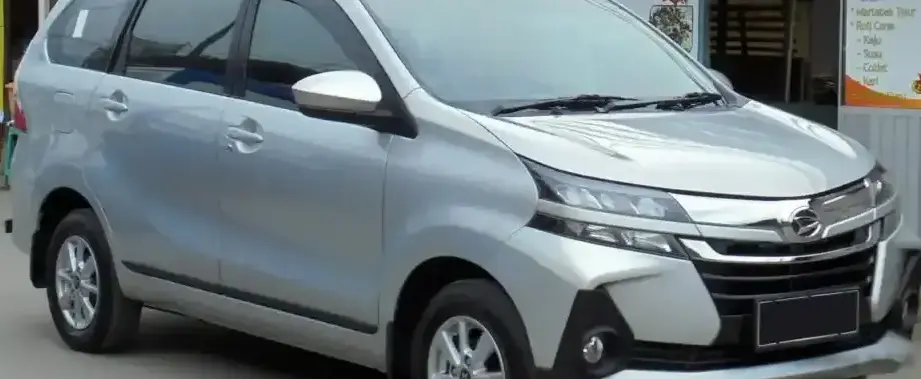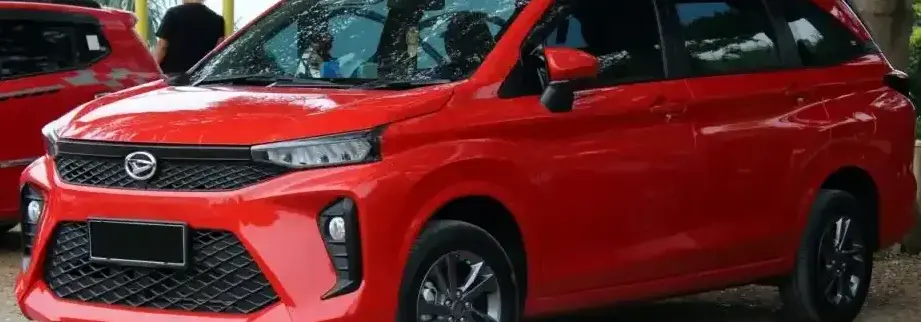
The Daihatsu Xenia III (W100) 1.5, producing 106 horsepower with a Continuously Variable Transmission (CVT), represents a significant iteration in Daihatsu’s popular multi-purpose vehicle (MPV) line. Introduced in 2021, this variant is primarily targeted towards the Indonesian and broader Southeast Asian markets, where affordable and spacious family vehicles are in high demand. The W100 generation marked a substantial redesign of the Xenia, moving away from a rebadged Toyota Avanza to a more independent design and engineering approach. This specific 1.5L CVT trim occupies a mid-range position within the Xenia III lineup, offering a balance between affordability, fuel efficiency, and convenience.
Technical Specifications
| Brand | Daihatsu |
| Model | Xenia |
| Generation | Xenia III (W100) |
| Type (Engine) | 1.5 (106 Hp) CVT |
| Start of production | 2021 |
| Powertrain Architecture | Internal Combustion engine |
| Body type | MPV |
| Seats | 7 |
| Doors | 5 |
| Fuel Type | Petrol (Gasoline) |
| Weight-to-power ratio | 10.5 kg/Hp, 95.1 Hp/tonne |
| Weight-to-torque ratio | 8.1 kg/Nm, 123.8 Nm/tonne |
| Power | 106 Hp @ 6000 rpm |
| Power per litre | 70.9 Hp/l |
| Torque | 138 Nm @ 4200 rpm, 101.78 lb.-ft. @ 4200 rpm |
| Engine layout | Front, Transverse |
| Engine Model/Code | 2NR-VE |
| Engine displacement | 1496 cm3, 91.29 cu. in. |
| Number of cylinders | 4 |
| Engine configuration | Inline |
| Cylinder Bore | 72.5 mm, 2.85 in. |
| Piston Stroke | 90.6 mm, 3.57 in. |
| Number of valves per cylinder | 4 |
| Fuel injection system | Multi-port manifold injection |
| Engine aspiration | Naturally aspirated engine |
| Valvetrain | DOHC |
| Engine oil capacity | 3.5 l, 3.7 US qt | 3.08 UK qt |
| Kerb Weight | 1115 kg, 2458.15 lbs. |
| Max. weight | 1705 kg, 3758.88 lbs. |
| Max load | 590 kg, 1300.73 lbs. |
| Fuel tank capacity | 43 l, 11.36 US gal | 9.46 UK gal |
| Length | 4395 mm, 173.03 in. |
| Width | 1730 mm, 68.11 in. |
| Height | 1700 mm, 66.93 in. |
| Wheelbase | 2750 mm, 108.27 in. |
| Front track | 1505 mm, 59.25 in. |
| Rear (Back) track | 1500 mm, 59.06 in. |
| Ride height (ground clearance) | 205 mm, 8.07 in. |
| Drivetrain Architecture | The Internal combustion engine (ICE) drives the front wheels of the vehicle. |
| Drive wheel | Front wheel drive |
| Number of gears and type of gearbox | automatic transmission CVT |
| Front suspension | Independent type McPherson |
| Rear suspension | Torsion |
| Front brakes | Ventilated discs |
| Rear brakes | Drum |
| Assisting systems | ABS (Anti-lock braking system) |
| Steering type | Worm-reduction unit |
| Power steering | Electric Steering |
| Tires size | 195/60 R16 |
Powertrain & Engine Architecture
The heart of the Xenia III 1.5 CVT is the 2NR-VE engine, a 1.5-liter inline-four cylinder gasoline engine. This engine utilizes a dual overhead camshaft (DOHC) valvetrain and multi-port fuel injection to optimize combustion efficiency and power delivery. The 2NR-VE is known for its reliability and relatively simple design, making it a cost-effective choice for a mass-market vehicle. The engine produces 106 horsepower at 6000 rpm and 138 Nm (101.78 lb-ft) of torque at 4200 rpm. Paired with this engine is a Continuously Variable Transmission (CVT). The CVT is designed to provide smooth, stepless gear changes, prioritizing fuel economy over outright acceleration. Unlike traditional automatic transmissions with fixed gear ratios, a CVT uses a belt and pulley system to continuously adjust the gear ratio, keeping the engine operating at its most efficient point.
Driving Characteristics
The Xenia III 1.5 CVT offers a comfortable and practical driving experience, prioritizing ease of use over sporty performance. The CVT contributes to smooth acceleration, but it lacks the responsiveness of a traditional automatic or manual transmission. The engine feels adequate for everyday driving situations, such as commuting and city driving, but may feel strained when fully loaded with passengers and cargo, or when attempting quick overtaking maneuvers. The CVT’s programming is tuned for fuel efficiency, which means the engine often operates at lower RPMs, resulting in a quieter cabin experience. Compared to a hypothetical Xenia III with a manual transmission, the CVT version would offer less driver engagement but improved fuel economy and ease of driving, especially in congested traffic. A higher-output variant, if available, would provide more spirited performance but at the expense of fuel efficiency.
Equipment & Trim Levels
The 1.5 CVT trim of the Xenia III typically includes standard features such as air conditioning, power windows, power door locks, and a basic audio system with Bluetooth connectivity. Higher trim levels add features like alloy wheels, a touchscreen infotainment system, rear parking sensors, and additional safety features. Interior upholstery is typically cloth, with a functional and durable design. Optional extras often include a rear-view camera, upgraded audio systems, and body kits. The dashboard layout is straightforward and user-friendly, prioritizing practicality over aesthetic flair.
Chassis & Braking
The Xenia III utilizes a front-engine, front-wheel-drive layout. The front suspension employs an independent McPherson strut setup, providing a reasonable level of ride comfort and handling. The rear suspension utilizes a torsion beam axle, a cost-effective and space-saving design. Braking duties are handled by ventilated discs at the front and drum brakes at the rear. An Anti-lock Braking System (ABS) is standard, enhancing safety during emergency braking situations. The steering system is a worm-reduction unit with electric power steering, providing light and easy steering feel.
Market Reception & Comparison
The Daihatsu Xenia III 1.5 CVT has been well-received in its target markets, particularly Indonesia, due to its affordability, spaciousness, and practicality. Critics generally praise its fuel efficiency and comfortable ride, but note its lack of sporty performance. Compared to other MPVs in its class, such as the Toyota Avanza (with which it shares some underlying architecture), the Xenia III offers a competitive price point and a similar level of features. The CVT transmission contributes to good fuel economy, but some reviewers have noted that it can feel less responsive than traditional automatic transmissions. Reliability has been generally good, with the 2NR-VE engine proving to be a durable and dependable unit.
Legacy
The Daihatsu Xenia III 1.5 CVT represents a significant step forward for the Xenia model line, offering a more refined and modern driving experience. The 2NR-VE engine and CVT transmission combination has proven to be a reliable and fuel-efficient powertrain. In the used car market, these models are generally sought after for their practicality and affordability. While not known for its performance, the Xenia III 1.5 CVT remains a popular choice for families and individuals seeking a spacious, reliable, and economical MPV. Its long-term durability and relatively low maintenance costs contribute to its continued appeal in the Southeast Asian automotive landscape.