
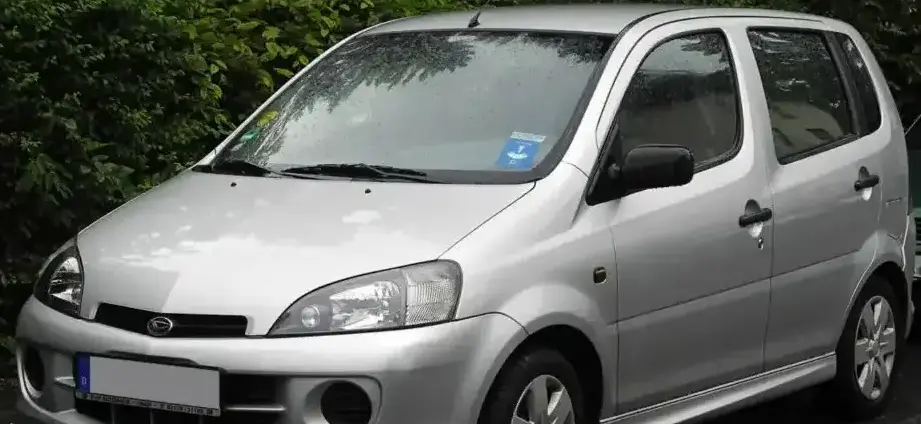
The Daihatsu YRV 1.0 i 12V, produced between 2000 and 2005, represents an entry-level offering within the second generation YRV (Y2) lineup. Positioned as a compact, affordable, and practical minivan, the YRV aimed to provide efficient transportation for small families and urban dwellers, primarily in the Japanese domestic market and select European countries. This particular variant, with its 1.0-liter engine and 64 horsepower output, served as the base model, prioritizing fuel economy and ease of driving over outright performance. It was a key component of Daihatsu’s strategy to offer versatile and economical vehicles.
Technical Specifications
| Brand | Daihatsu |
| Model | YRV |
| Generation | YRV |
| Type (Engine) | 1.0 i 12V (64 Hp) |
| Start of production | 2000 year |
| End of production | 2005 year |
| Powertrain Architecture | Internal Combustion engine |
| Body type | Minivan |
| Seats | 5 |
| Doors | 5 |
| Fuel consumption (urban) | 7 l/100 km (33.6 US mpg) |
| Fuel consumption (extra urban) | 5 l/100 km (47 US mpg) |
| Fuel Type | Petrol (Gasoline) |
| Maximum speed | 150 km/h (93.21 mph) |
| Power | 64 Hp @ 7000 rpm |
| Torque | 94 Nm @ 3600 rpm (69.33 lb.-ft. @ 3600 rpm) |
| Engine layout | Front, Longitudinal |
| Engine displacement | 989 cm3 (60.35 cu. in.) |
| Number of cylinders | 3 |
| Engine configuration | Inline |
| Cylinder Bore | 72 mm (2.83 in.) |
| Piston Stroke | 81 mm (3.19 in.) |
| Compression ratio | 9.5:1 |
| Number of valves per cylinder | 4 |
| Fuel injection system | Multi-port manifold injection |
| Engine aspiration | Naturally aspirated engine |
| Valvetrain | DOHC |
| Trunk (boot) space – minimum | 165 l (5.83 cu. ft.) |
| Trunk (boot) space – maximum | 1075 l (37.96 cu. ft.) |
| Fuel tank capacity | 40 l (10.57 US gal | 8.8 UK gal) |
| Length | 3765 mm (148.23 in.) |
| Width | 1620 mm (63.78 in.) |
| Height | 1550 mm (61.02 in.) |
| Wheelbase | 2355 mm (92.72 in.) |
| Front track | 1395 mm (54.92 in.) |
| Rear (Back) track | 1365 mm (53.74 in.) |
| Minimum turning circle | 8.8 m (28.87 ft.) |
| Drivetrain Architecture | Front wheel drive |
| Number of gears and type of gearbox | 5 gears, manual transmission |
| Front suspension | Coil spring |
| Rear suspension | Coil spring |
| Front brakes | Disc |
| Rear brakes | Drum |
| Assisting systems | ABS (Anti-lock braking system) |
| Steering type | Steering rack and pinion |
| Power steering | Hydraulic Steering |
| Tires size | 165/65 R14 |
Powertrain & Engine Architecture
The heart of the YRV 1.0 i 12V is the Daihatsu ED-20 engine, a 989cc inline-three cylinder gasoline engine. This engine utilizes a double overhead camshaft (DOHC) valvetrain with four valves per cylinder, contributing to its relatively efficient breathing for its size. The engine employs multi-point fuel injection, a common feature for the era, ensuring precise fuel delivery. The 12-valve configuration (four valves per cylinder) was a key element in maximizing volumetric efficiency. The engine’s longitudinal mounting within the front-wheel-drive chassis was a space-saving design choice, common in compact Japanese vehicles. The five-speed manual transmission was the standard offering for this variant, providing a direct connection between the engine and the front wheels. The transmission was chosen for its simplicity and contribution to fuel efficiency. The ED-20 engine, while simple in design, was known for its durability and relatively low maintenance requirements, a characteristic valued in the target market.
Driving Characteristics
The 64 horsepower output of the 1.0-liter engine translates to modest, but adequate, performance. Acceleration is best described as leisurely, with a 0-60 mph time estimated around 14-16 seconds. The engine’s torque peak of 94 Nm (69.33 lb-ft) at 3600 rpm provides sufficient pull for everyday driving situations, but overtaking maneuvers require careful planning. The five-speed manual transmission allows drivers to keep the engine within its optimal power band. Compared to the more powerful 1.3-liter variants, the 1.0-liter model prioritizes fuel economy and ease of use over spirited driving. The gear ratios are tuned for maximizing fuel efficiency, resulting in a slightly less engaging driving experience than the higher-performance models. The engine is surprisingly responsive at lower RPMs, making it well-suited for city driving, but it does feel strained when pushed hard on inclines or at higher speeds.
Equipment & Trim Levels
The YRV 1.0 i 12V typically came equipped with basic, but functional, features. Standard equipment included power steering, central locking, and an AM/FM radio. Interior upholstery was typically cloth, with a simple, durable design. Air conditioning was often an optional extra, as were power windows and alloy wheels. The dashboard layout was straightforward and functional, prioritizing usability over aesthetic flair. The rear seats offered a 60/40 split-folding configuration, enhancing cargo versatility. Trim levels were generally limited, with the 1.0-liter model representing the entry point to the YRV range. Higher trim levels, available with the 1.3-liter engine, added features like upgraded audio systems, more refined interior materials, and exterior enhancements like body-colored bumpers and door handles.
Chassis & Braking
The YRV’s chassis utilizes a coil spring suspension system at both the front and rear, providing a comfortable, if somewhat basic, ride quality. The front brakes are disc brakes, offering adequate stopping power, while the rear brakes are drum brakes, a cost-saving measure common in this class of vehicle. Anti-lock Braking System (ABS) was included as a standard safety feature. The steering system employs a rack and pinion setup with hydraulic power assistance, providing light and responsive steering. The relatively narrow tires (165/65 R14) contribute to fuel efficiency but offer limited grip in demanding driving conditions. The suspension is tuned for comfort rather than sporty handling, resulting in noticeable body roll during cornering.
Market Reception & Comparison
The YRV 1.0 i 12V was generally well-received as an affordable and practical city car. Critics praised its fuel efficiency and compact size, making it ideal for navigating congested urban environments. However, its limited power output was often noted as a drawback. Compared to the 1.3-liter YRV variants, the 1.0-liter model offered significantly better fuel economy but at the expense of performance. The 1.3-liter models were targeted towards drivers who required more power for highway driving or carrying heavier loads. In terms of reliability, the YRV 1.0 i 12V proved to be a generally dependable vehicle, with relatively few major mechanical issues reported. It competed with other small MPVs like the Honda Fit (Jazz) and Toyota Yaris, offering a similar blend of practicality and affordability.
Legacy
The Daihatsu YRV 1.0 i 12V remains a relatively common sight on used car markets, particularly in Europe and Japan. Its simple mechanical design and robust engine contribute to its long-term reliability. While not a performance icon, it continues to appeal to buyers seeking an affordable, economical, and practical vehicle. Parts availability is generally good, and maintenance costs are relatively low. The YRV 1.0 i 12V represents a practical and efficient solution for basic transportation, embodying Daihatsu’s commitment to producing accessible and reliable vehicles. Its enduring appeal lies in its simplicity and dependability, making it a viable option for first-time car buyers or those seeking a no-frills, economical runabout.
