
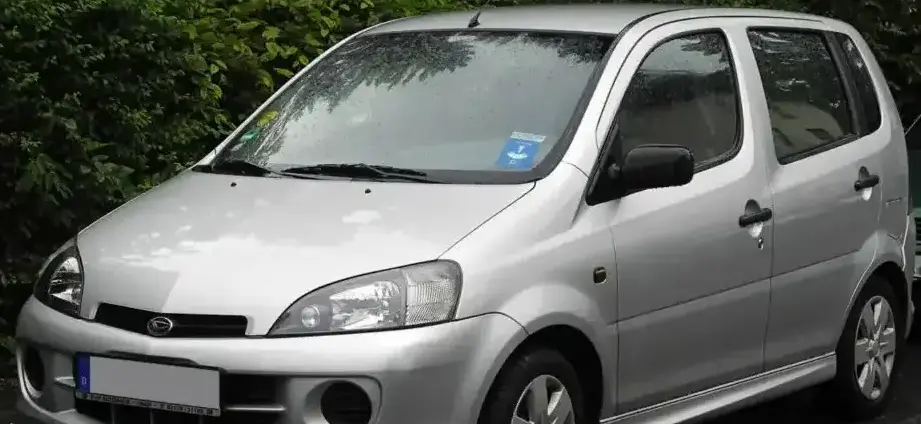
The Daihatsu YRV 1.3 i 16V, producing 90 horsepower with a four-speed automatic transmission and all-wheel drive, was a compact MPV (Multi-Purpose Vehicle) marketed primarily in Japan and Europe from 2000 to 2005. Positioned as an entry-level offering within the YRV range, it aimed to provide affordable and practical transportation with the added security of all-wheel drive. The YRV (Youthful Revolutionary Vehicle) itself was built on Daihatsu’s compact platform, sharing components with other models in their lineup. This particular variant represented a balance between fuel efficiency, ease of use, and all-weather capability, making it popular with families and drivers in regions experiencing inclement weather.
Technical Specifications
| Brand | Daihatsu |
| Model | YRV |
| Generation | YRV |
| Type | 1.3 i 16V (90 Hp) 4WD Automatic |
| Start of production | 2000 |
| End of production | 2005 |
| Powertrain Architecture | Internal Combustion engine |
| Body type | Minivan |
| Seats | 5 |
| Doors | 5 |
| Fuel Type | Petrol (Gasoline) |
| Weight-to-power ratio | 10.7 kg/Hp, 93.8 Hp/tonne |
| Weight-to-torque ratio | 7.8 kg/Nm, 128.1 Nm/tonne |
| Power | 90 Hp @ 6000 rpm |
| Power per litre | 69.4 Hp/l |
| Torque | 123 Nm @ 4400 rpm (90.72 lb.-ft. @ 4400 rpm) |
| Engine layout | Front, Longitudinal |
| Engine displacement | 1297 cm3 (79.15 cu. in.) |
| Number of cylinders | 4 |
| Engine configuration | Inline |
| Cylinder Bore | 72 mm (2.83 in.) |
| Piston Stroke | 79.5 mm (3.13 in.) |
| Compression ratio | 10:1 |
| Number of valves per cylinder | 4 |
| Fuel injection system | Multi-port manifold injection |
| Engine aspiration | Naturally aspirated engine |
| Valvetrain | DOHC |
| Kerb Weight | 960 kg (2116.44 lbs.) |
| Trunk (boot) space – minimum | 238 l (8.4 cu. ft.) |
| Trunk (boot) space – maximum | 1026 l (36.23 cu. ft.) |
| Fuel tank capacity | 37 l (9.77 US gal | 8.14 UK gal) |
| Length | 3765 mm (148.23 in.) |
| Width | 1620 mm (63.78 in.) |
| Height | 1550 mm (61.02 in.) |
| Wheelbase | 2355 mm (92.72 in.) |
| Front track | 1395 mm (54.92 in.) |
| Rear (Back) track | 1365 mm (53.74 in.) |
| Minimum turning circle | 8.8 m (28.87 ft.) |
| Drive wheel | All wheel drive (4×4) |
| Number of gears | 4 |
| Gearbox type | automatic transmission |
| Front suspension | Spring Strut |
| Rear suspension | Coil spring |
| Front brakes | Ventilated discs |
| Rear brakes | Drum |
| Assisting systems | ABS (Anti-lock braking system) |
| Steering type | Steering rack and pinion |
| Power steering | Hydraulic Steering |
| Tires size | 165/70 R13 |
| Wheel rims size | 13 |
Powertrain & Engine Architecture
The heart of the YRV 1.3 i 16V was the Daihatsu K3-VE engine, a 1.3-liter inline-four cylinder gasoline engine. This engine featured a double overhead camshaft (DOHC) valvetrain with four valves per cylinder, contributing to its relatively efficient operation. The multi-port fuel injection system delivered fuel directly to the intake ports, optimizing combustion. The engine’s 90 horsepower output at 6000 rpm and 123 Nm (90.72 lb-ft) of torque at 4400 rpm were modest, but adequate for the vehicle’s weight and intended purpose. Paired with a four-speed automatic transmission, the powertrain prioritized smooth operation and ease of driving over outright performance. The transmission was a conventional hydraulic automatic, lacking the more advanced features found in some contemporary transmissions. It was a reliable unit, but not known for particularly quick shifts or fuel efficiency compared to later designs.
Driving Characteristics
The YRV 1.3 i 16V 4WD Automatic offered a comfortable, if uninspiring, driving experience. Acceleration was adequate for city driving and highway merging, but the 90 horsepower engine didn’t provide significant reserves of power. The automatic transmission, while smooth, had relatively long gear ratios, prioritizing fuel economy over responsiveness. Compared to the manual transmission versions of the YRV, the automatic felt noticeably slower. The all-wheel drive system provided enhanced traction in slippery conditions, making it a practical choice for drivers in regions with snow or rain. The steering was light and easy, contributing to the vehicle’s maneuverability in urban environments. The suspension, tuned for comfort, absorbed bumps reasonably well, but didn’t offer particularly sporty handling. Body roll was noticeable in corners, and the vehicle wasn’t designed for aggressive driving.
Equipment & Trim Levels
The 1.3 i 16V 4WD Automatic trim typically included basic amenities such as power steering, central locking, and electric windows. Interior upholstery was generally cloth, with a simple and functional dashboard layout. Air conditioning was often standard, but features like alloy wheels, a CD player, and upgraded interior trim were usually optional extras. The YRV was designed to be a practical and affordable vehicle, so luxury features were kept to a minimum. The focus was on providing a comfortable and reliable transportation solution for families and individuals. Higher trim levels, though rare in this configuration, might have included features like a rear wiper or upgraded seat fabrics.
Chassis & Braking
The YRV utilized a relatively simple chassis design. Front suspension consisted of MacPherson strut coil springs, while the rear employed a coil spring setup. Front brakes were ventilated discs, providing adequate stopping power, while the rear brakes were drums, a cost-saving measure common in this class of vehicle. An anti-lock braking system (ABS) was typically included as standard equipment, enhancing safety. The relatively lightweight construction of the YRV helped to offset the limitations of the braking system. Stabilizer bars were present, but were relatively thin, reflecting the vehicle’s focus on comfort rather than sporty handling. The suspension geometry was tuned for ride comfort, prioritizing a smooth ride over precise handling.
Market Reception & Comparison
The YRV 1.3 i 16V 4WD Automatic was generally well-received as a practical and affordable MPV. Critics praised its spacious interior, ease of driving, and the added security of all-wheel drive. However, the engine’s modest power output and the automatic transmission’s lack of responsiveness were often cited as drawbacks. Compared to other trims in the YRV lineup, such as the 1.5-liter versions, the 1.3 i 16V offered lower running costs but less performance. Fuel economy was a strong point, with the YRV achieving respectable mileage for its class – typically around 35-40 mpg in mixed driving. Reliability was generally good, although routine maintenance was essential to ensure long-term durability. It competed with other small MPVs like the Honda Stream and Toyota Sienta, but offered a more affordable price point.
Legacy
The Daihatsu YRV, particularly the 1.3 i 16V 4WD Automatic variant, has developed a reputation as a reliable and practical used car. The K3-VE engine is known for its durability, provided it receives regular maintenance, including oil changes and timing belt replacements. While not a particularly exciting vehicle to drive, the YRV’s affordability, spaciousness, and all-wheel drive capability continue to make it a popular choice for budget-conscious buyers seeking a versatile and dependable MPV. Today, well-maintained examples can still be found on the used car market, offering a cost-effective transportation solution. Parts availability can be a concern in some regions, but the engine’s simplicity makes it relatively easy to repair. The YRV remains a testament to Daihatsu’s focus on building practical and reliable vehicles.
