
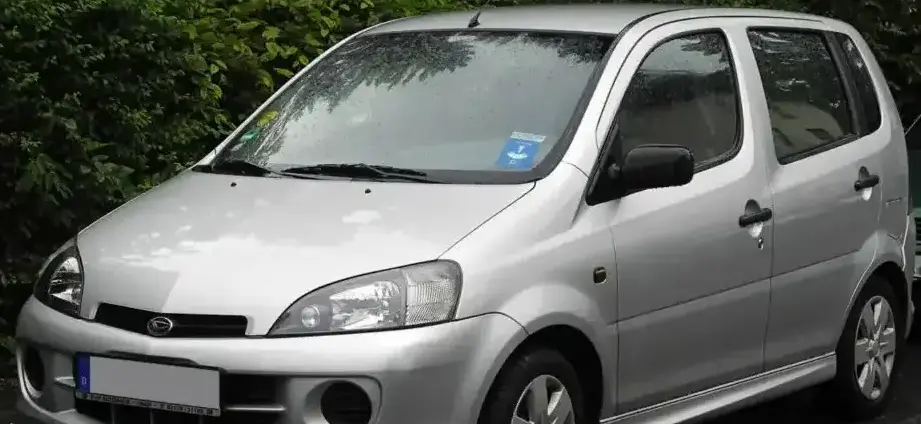
The Daihatsu YRV 1.3 i 16V Turbo, produced between 2002 and 2005, represents a unique offering within the compact MPV (Multi-Purpose Vehicle) segment. Positioned as a slightly more performance-oriented variant of the YRV, this model combined a turbocharged 1.3-liter engine with a five-speed manual transmission. It was primarily marketed in Japan and Europe, offering a blend of practicality, fuel efficiency, and surprisingly spirited driving dynamics for its class. The YRV (Innovative Utility Vehicle) itself was a second-generation model, building upon the success of its predecessor and aiming to provide a versatile and affordable vehicle for small families and urban dwellers.
Technical Specifications
| Brand | Daihatsu |
| Model | YRV |
| Generation | YRV |
| Type (Engine) | 1.3 i 16V Turbo (129 Hp) |
| Start of production | 2002 |
| End of production | 2005 |
| Powertrain Architecture | Internal Combustion engine |
| Body type | Minivan |
| Seats | 5 |
| Doors | 5 |
| Fuel consumption (urban) | 9.4 l/100 km (25 US mpg, 30.1 UK mpg) |
| Fuel consumption (extra urban) | 5.6 l/100 km (42 US mpg, 50.4 UK mpg) |
| Fuel consumption (combined) | 7 l/100 km (33.6 US mpg, 40.4 UK mpg) |
| Fuel Type | Petrol (Gasoline) |
| Acceleration 0 – 100 km/h | 8.4 sec |
| Acceleration 0 – 62 mph | 8.4 sec |
| Acceleration 0 – 60 mph | 8 sec |
| Maximum speed | 180 km/h (111.85 mph) |
| Weight-to-power ratio | 7.2 kg/Hp |
| Weight-to-torque ratio | 5.5 kg/Nm |
| Power | 129 Hp @ 6400 rpm |
| Power per litre | 99.4 Hp/l |
| Torque | 170 Nm @ 3200 rpm (125.39 lb.-ft. @ 3200 rpm) |
| Engine layout | Front, Longitudinal |
| Engine Model/Code | K3-VET |
| Engine displacement | 1298 cm3 (79.21 cu. in.) |
| Number of cylinders | 4 |
| Engine configuration | Inline |
| Cylinder Bore | 72 mm (2.83 in.) |
| Piston Stroke | 79.7 mm (3.14 in.) |
| Compression ratio | 8.5:1 |
| Number of valves per cylinder | 4 |
| Fuel injection system | Multi-port manifold injection |
| Engine aspiration | Turbocharger, Intercooler |
| Valvetrain | DOHC |
| Engine oil capacity | 3.6 l (3.8 US qt | 3.17 UK qt) |
| Coolant capacity | 4.3 l (4.54 US qt | 3.78 UK qt) |
| Kerb Weight | 935 kg (2061.32 lbs.) |
| Max. weight | 1445 kg (3185.68 lbs.) |
| Max load | 510 kg (1124.36 lbs.) |
| Trunk (boot) space – minimum | 165 l (5.83 cu. ft.) |
| Trunk (boot) space – maximum | 1075 l (37.96 cu. ft.) |
| Fuel tank capacity | 40 l (10.57 US gal | 8.8 UK gal) |
| Length | 3765 mm (148.23 in.) |
| Width | 1625 mm (63.98 in.) |
| Height | 1565 mm (61.61 in.) |
| Wheelbase | 2370 mm (93.31 in.) |
| Front track | 1380 mm (54.33 in.) |
| Rear track | 1365 mm (53.74 in.) |
| Minimum turning circle | 8.8 m (28.87 ft.) |
| Drivetrain Architecture | Front wheel drive |
| Number of gears | 5 |
| Gearbox type | Manual transmission |
| Front suspension | Coil spring |
| Rear suspension | Coil spring |
| Front brakes | Ventilated discs |
| Rear brakes | Drum |
| Assisting systems | ABS (Anti-lock braking system) |
| Steering type | Steering rack and pinion |
| Power steering | Hydraulic |
| Tires size | 175/55 R15 |
| Wheel rims size | 5J x 15 |
Powertrain & Engine Architecture
The heart of the YRV 1.3 i 16V Turbo is the K3-VET engine, a 1.3-liter inline-four cylinder gasoline engine. This engine utilizes a single-scroll turbocharger with an intercooler to boost power output. The K3-VET features multi-point fuel injection and a double overhead camshaft (DOHC) valvetrain, contributing to its relatively high specific output. The turbocharger significantly enhances torque, particularly in the low to mid-range, making the YRV feel more responsive than naturally aspirated versions. The five-speed manual transmission was well-matched to the engine’s characteristics, providing precise shifts and allowing the driver to fully exploit the available power. The engine code ‘VET’ signifies the presence of the turbo and intercooler, distinguishing it from the naturally aspirated K3-VE engine found in other YRV models.
Driving Characteristics
The 129 horsepower and 170 Nm (125 lb-ft) of torque delivered by the K3-VET engine provided a noticeable performance upgrade over the base YRV models. Acceleration from 0 to 60 mph was achieved in around 8 seconds, and a top speed of 112 mph was attainable. While not a sports car, the turbocharged YRV offered a surprisingly engaging driving experience. The turbocharger did exhibit some lag at lower RPMs, but once spooled up, it provided a strong surge of power. The manual transmission allowed for precise control, and the relatively lightweight chassis contributed to nimble handling. Compared to the automatic transmission options available on other YRV trims, the manual version felt significantly more responsive and enjoyable to drive.
Equipment & Trim Levels
The YRV 1.3 i 16V Turbo was typically offered with a reasonably well-equipped specification, though trim levels varied depending on the market. Standard features generally included power steering, central locking, electric windows, and an AM/FM radio. Air conditioning was often an optional extra. Interior upholstery was typically cloth, with a functional and durable design. The dashboard layout was straightforward and easy to use, prioritizing practicality over luxury. Optional extras could include alloy wheels, a sunroof, and upgraded audio systems.
Chassis & Braking
The YRV utilized a relatively simple chassis design, featuring coil springs and a torsion beam rear suspension. The front suspension employed MacPherson struts. Braking was handled by ventilated discs on the front wheels and drum brakes on the rear. ABS (Anti-lock Braking System) was standard, enhancing safety. The suspension setup prioritized comfort and ride quality, but also provided adequate handling for everyday driving. The relatively light weight of the vehicle helped to compensate for the less sophisticated rear braking system.
Market Reception & Comparison
The YRV 1.3 i 16V Turbo was generally well-received by automotive critics, who praised its combination of practicality, fuel efficiency, and surprisingly lively performance. It was often compared to other small MPVs such as the Renault Modus and the Fiat Multipla, but the YRV stood out for its turbocharged engine and available manual transmission. Fuel economy was a strong point, with combined figures around 33-40 mpg. Reliability was generally good, although turbocharger maintenance was a consideration. Compared to the naturally aspirated YRV models, the turbo version commanded a higher price but offered a significantly more engaging driving experience.
Legacy
The Daihatsu YRV 1.3 i 16V Turbo remains a relatively uncommon vehicle today, particularly outside of Japan and Europe. The K3-VET engine, while generally reliable, requires regular maintenance to ensure the turbocharger remains in good working order. In the used car market, these models are often sought after by enthusiasts who appreciate their unique combination of practicality and performance. The YRV’s innovative design and turbocharged engine helped to establish Daihatsu as a maker of small, efficient, and surprisingly fun-to-drive vehicles.
