
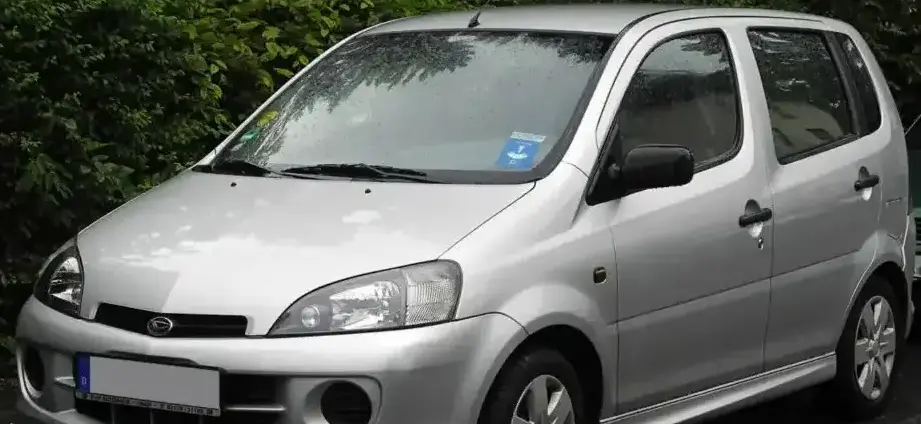
The Daihatsu YRV 1.3 i 16V Turbo 4WD, produced between 2000 and 2005, represents a unique offering within the compact MPV (Multi-Purpose Vehicle) segment. Positioned as a versatile and practical vehicle, the YRV aimed to provide a spacious interior and nimble handling in a relatively small package. This particular variant, equipped with the 1.3-liter turbocharged engine and all-wheel drive, was a mid-range option in the YRV lineup, offering a balance between performance, fuel efficiency, and all-weather capability. The YRV, internally designated as the P100 series, was primarily marketed in Japan and Europe, where demand for small, efficient, and adaptable vehicles was high. It was never officially sold in the United States.
Technical Specifications
| Brand | Daihatsu |
| Model | YRV |
| Generation | YRV |
| Type | 1.3 i 16V Turbo (140 Hp) 4WD |
| Start of production | 2000 |
| End of production | 2005 |
| Powertrain Architecture | Internal Combustion engine |
| Body type | Minivan |
| Seats | 5 |
| Doors | 5 |
| Fuel Type | Petrol (Gasoline) |
| Weight-to-power ratio | 7.1 kg/Hp |
| Power | 140 Hp @ 6400 rpm |
| Power per litre | 107.9 Hp/l |
| Torque | 177 Nm @ 3200 rpm (130.55 lb.-ft. @ 3200 rpm) |
| Engine layout | Front, Transverse |
| Engine displacement | 1298 cm3 (79.21 cu. in.) |
| Number of cylinders | 4 |
| Engine configuration | Inline |
| Cylinder Bore | 72 mm (2.83 in.) |
| Piston Stroke | 79.7 mm (3.14 in.) |
| Compression ratio | 10:1 |
| Number of valves per cylinder | 4 |
| Fuel injection system | Multi-port manifold injection |
| Engine aspiration | Turbocharger |
| Valvetrain | OHC |
| Kerb Weight | 990 kg (2182.58 lbs.) |
| Trunk (boot) space – minimum | 165 l (5.83 cu. ft.) |
| Trunk (boot) space – maximum | 1075 l (37.96 cu. ft.) |
| Fuel tank capacity | 40 l (10.57 US gal | 8.8 UK gal) |
| Length | 3765 mm (148.23 in.) |
| Width | 1625 mm (63.98 in.) |
| Height | 1565 mm (61.61 in.) |
| Wheelbase | 2370 mm (93.31 in.) |
| Front track | 1380 mm (54.33 in.) |
| Rear (Back) track | 1365 mm (53.74 in.) |
| Minimum turning circle | 8.8 m (28.87 ft.) |
| Drive wheel | All wheel drive (4×4) |
| Number of gears | 5 |
| Gearbox type | Manual transmission |
| Front suspension | Coil spring |
| Rear suspension | Coil spring |
| Front brakes | Ventilated discs |
| Rear brakes | Drum |
| Assisting systems | ABS (Anti-lock braking system) |
| Steering type | Steering rack and pinion |
| Power steering | Hydraulic Steering |
| Tires size | 175/60R14 |
Powertrain & Engine Architecture
The heart of the YRV 1.3 i 16V Turbo 4WD is the K3-VE engine, a 1.3-liter inline-four cylinder gasoline engine. This engine utilizes a single overhead camshaft (SOHC) valvetrain with four valves per cylinder, contributing to its relatively high specific output. The key feature is the addition of a turbocharger, which significantly boosts power output compared to naturally aspirated versions of the same engine. The turbocharger is a small, quick-spooling unit designed to minimize turbo lag and provide responsive acceleration. Fuel delivery is managed by a multi-port fuel injection system, ensuring precise fuel metering for optimal combustion. The engine produces 140 horsepower at 6400 rpm and 177 Nm (130.55 lb-ft) of torque at 3200 rpm. The transmission is a five-speed manual gearbox, chosen for its efficiency and driver engagement. The engine code, K3-VE, is crucial for identifying specific parts and maintenance requirements.
Driving Characteristics
The YRV 1.3 i 16V Turbo 4WD offers a surprisingly lively driving experience for its size and class. The turbocharger provides a noticeable boost in power, making overtaking and hill climbing relatively effortless. While not a sports car, the YRV feels nimble and responsive, particularly in comparison to larger, heavier MPVs. The five-speed manual transmission allows for precise control over the engine’s powerband. The all-wheel drive system enhances traction, particularly on slippery surfaces, providing added confidence in inclement weather. Compared to the naturally aspirated 1.3-liter YRV, the turbo version offers a significant performance advantage. However, it doesn’t quite match the performance of larger-engined competitors. The gear ratios are tuned for a balance between acceleration and fuel economy, with a relatively short final drive to compensate for the vehicle’s modest engine displacement.
Equipment & Trim Levels
The YRV 1.3 i 16V Turbo 4WD typically came equipped with a reasonable level of standard features. These included power steering, central locking, electric front windows, and an AM/FM radio. Air conditioning was often included, but sometimes offered as an optional extra. Interior upholstery was typically cloth, with a simple and functional dashboard layout. Optional extras could include alloy wheels, a sunroof, and upgraded audio systems. The trim level of this variant generally sat in the mid-range of the YRV lineup, offering more features and performance than the base models but falling short of the fully equipped luxury trims.
Chassis & Braking
The YRV utilizes a relatively simple chassis design, featuring coil spring suspension at both the front and rear. The front suspension employs MacPherson struts, while the rear utilizes a torsion beam setup. This configuration provides a comfortable ride quality, although it’s not particularly sporty. Braking duties are handled by ventilated discs at the front and drum brakes at the rear. An Anti-lock Braking System (ABS) was standard, enhancing safety by preventing wheel lockup during hard braking. The YRV’s relatively light weight contributes to its nimble handling and reasonable braking performance. Stabilizer bars were fitted to both the front and rear axles to reduce body roll during cornering.
Market Reception & Comparison
The Daihatsu YRV was generally well-received in its target markets, particularly for its practicality, fuel efficiency, and compact size. Critics praised its spacious interior and versatile seating arrangements. The 1.3 i 16V Turbo 4WD variant was seen as a good compromise between performance and economy. Compared to other trims in the YRV lineup, the turbo version offered a noticeable performance boost, but at the expense of slightly higher fuel consumption. Reliability was generally considered good, although turbocharger maintenance was a potential concern. Competitors included the Honda Jazz (Fit), Toyota Yaris (Echo), and Renault Modus.
Legacy
The Daihatsu YRV, while not a mainstream success in many markets, has developed a loyal following among enthusiasts who appreciate its unique blend of practicality, efficiency, and quirky styling. The K3-VE engine, when properly maintained, is known for its durability. Today, the YRV 1.3 i 16V Turbo 4WD can be found on the used car market, often at affordable prices. Its all-wheel drive system and turbocharged engine make it a desirable option for those seeking a small, versatile vehicle with added performance and all-weather capability. Parts availability can be a challenge in some regions, but a dedicated online community exists to support YRV owners.
