
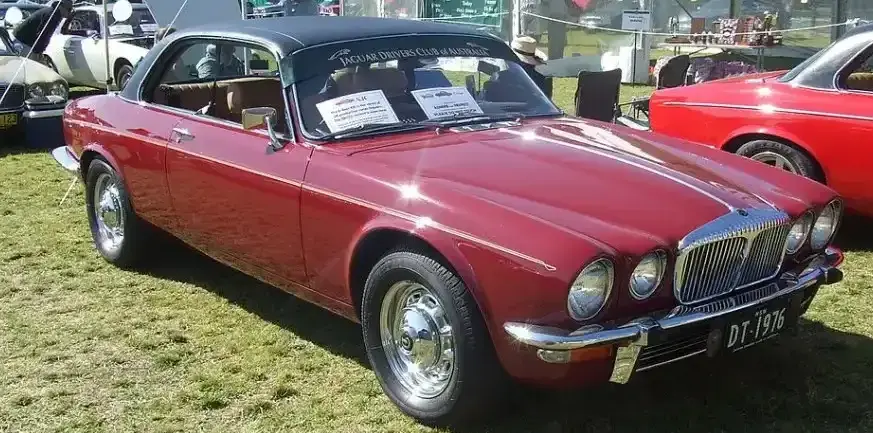
The Daimler Coupe Double Six 5.3, produced between 1975 and 1977, represents a luxurious and powerful grand tourer from the British manufacturer Daimler – then a part of the British Leyland Motor Corporation. This model, based heavily on the Jaguar XJ6 Coupe, distinguished itself with a larger, more potent V12 engine and a more opulent interior, aimed at a clientele seeking a blend of performance and refined comfort. It occupied the top echelon of Daimler’s coupe offerings, representing the pinnacle of their engineering and design capabilities during that period. Production numbers were relatively low, contributing to its rarity and collectibility today.
Technical Specifications
| Brand | Daimler |
| Model | Coupe |
| Generation | Coupe |
| Type (Engine) | Double Six 5.3 (289 Hp) |
| Start of Production | 1975 |
| End of Production | 1977 |
| Powertrain Architecture | Internal Combustion Engine |
| Body Type | Coupe |
| Fuel Type | Petrol (Gasoline) |
| Power | 289 Hp |
| Engine Aspiration | Naturally Aspirated |
Powertrain & Engine Architecture
The heart of the Daimler Coupe Double Six 5.3 is its 5.3-liter V12 engine, designated the Jaguar V12 engine. This engine, a naturally aspirated powerplant, produced 289 horsepower. It featured a 60-degree V-angle, aluminum alloy cylinder heads and block, and a single overhead camshaft per cylinder bank. The engine utilized a Bosch mechanical fuel injection system, a complex setup for its time, designed to deliver precise fuel metering across the engine’s operating range. This system, while effective, could be prone to issues requiring specialized maintenance. The V12’s valvetrain employed three valves per cylinder – two intake and one exhaust – contributing to its smooth power delivery and relatively high specific output for the era. The engine was mated to a three-speed automatic transmission, a Chrysler Torqueflite unit, chosen for its robustness and ability to handle the engine’s substantial torque. This transmission, while reliable, lacked the sophistication of more modern automatics, offering a relatively limited number of gear ratios.
Driving Characteristics
The Daimler Coupe Double Six 5.3 offered a distinctly grand touring experience. The 289 horsepower and substantial torque (approximately 314 lb-ft) provided brisk acceleration, although the car’s considerable weight (around 4,300 lbs) limited its outright performance. The three-speed automatic transmission, while smooth, meant that the engine often operated at higher RPMs during highway cruising, impacting fuel economy. Compared to the standard XJ6 Coupe with its inline-six engine, the Double Six 5.3 offered a significantly more refined and powerful driving experience. The V12’s smoothness and abundant torque made it a relaxed and effortless cruiser. However, the automatic transmission lacked the responsiveness of a manual gearbox, and the car’s size and weight made it less agile in tight corners. The gear ratios were optimized for acceleration and cruising comfort rather than maximizing fuel efficiency or track performance.
Equipment & Trim Levels
The Daimler Coupe Double Six 5.3 was exceptionally well-equipped, reflecting its status as a luxury vehicle. Standard features included power-assisted steering, power windows, central locking, and a high-quality sound system. The interior was lavishly trimmed with Connolly leather upholstery, wood veneer trim, and deep-pile carpets. Daimler-specific touches, such as the fluted leather upholstery and the distinctive Daimler grille, further distinguished it from its Jaguar counterpart. Optional extras included air conditioning, a sunroof, and a more advanced audio system. The dashboard layout was largely shared with the Jaguar XJ6 Coupe, but with Daimler-specific instrumentation and trim details. The overall ambiance was one of understated elegance and refined luxury.
Chassis & Braking
The Daimler Coupe Double Six 5.3 utilized a monocoque chassis construction, providing a good balance of strength and rigidity. The suspension system consisted of independent double wishbones at the front and a live axle with trailing arms at the rear. Anti-roll bars were fitted to both axles to reduce body roll during cornering. The braking system featured disc brakes all around, providing adequate stopping power for the car’s weight and performance. However, the braking system lacked the advanced features found on more modern vehicles, such as anti-lock brakes (ABS). The steering was power-assisted, making it relatively easy to maneuver at low speeds, but it lacked the precision and feedback of more modern steering systems. The suspension was tuned for comfort, providing a smooth and compliant ride, but it could feel somewhat floaty on uneven surfaces.
Market Reception & Comparison
The Daimler Coupe Double Six 5.3 was generally well-received by automotive critics, who praised its luxurious interior, powerful engine, and smooth ride. However, some critics noted the car’s high price, complex fuel injection system, and relatively limited handling capabilities. Compared to other grand tourers of the era, such as the Aston Martin V8, the Daimler offered a more affordable entry point into the world of high-performance luxury coupes. However, it lacked the outright performance and exclusivity of the Aston Martin. Against the Jaguar XJ6 Coupe, the Double Six 5.3 offered a significant performance advantage, but at a higher price point. Fuel economy was predictably poor, a common characteristic of V12 engines of that era. Reliability was generally good, but the Bosch fuel injection system required regular maintenance and could be prone to issues.
Legacy
The Daimler Coupe Double Six 5.3 remains a sought-after classic car today, prized for its rarity, elegance, and powerful V12 engine. The powertrain, while complex, is generally considered robust when properly maintained. However, finding qualified mechanics familiar with the Bosch fuel injection system can be challenging. Parts availability can also be an issue, although a dedicated network of suppliers caters to the classic Jaguar and Daimler community. The car’s value has steadily increased in recent years, reflecting its growing collectibility. It represents a unique chapter in Daimler’s history, showcasing the brand’s commitment to luxury and performance during a period of significant change within the British automotive industry. A well-maintained example is a testament to British engineering and a captivating piece of automotive history, offering a driving experience that is both refined and exhilarating.
