
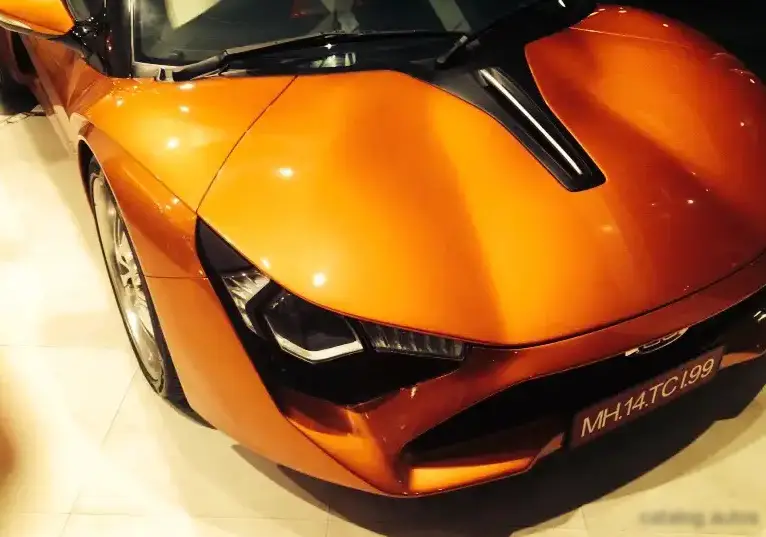
The DC Avanti 2.0, produced between 2012 and 2015, represents a unique chapter in Indian automotive history. Designed and manufactured by DC Design (Dilip Chhabria), the Avanti was positioned as India’s first domestically produced sports car, aiming to offer a high-performance, visually striking alternative to imported grand tourers. While not a high-volume seller, the Avanti garnered significant attention for its ambitious design and engineering, attempting to bridge the gap between kit cars and fully-fledged production vehicles. This specific 2.0-liter, 250 horsepower variant, equipped with a six-speed manual transmission, served as the flagship model during its production run.
Technical Specifications
| Brand | DC |
| Model | Avanti |
| Generation | Avanti |
| Type (Engine) | 2.0 (250 Hp) |
| Start of production | 2012 |
| End of production | 2015 |
| Powertrain Architecture | Internal Combustion engine |
| Body type | Coupe |
| Seats | 2 |
| Doors | 2 |
| Fuel Type | Petrol (Gasoline) |
| Acceleration 0 – 100 km/h | 6 sec |
| Acceleration 0 – 62 mph | 6 sec |
| Acceleration 0 – 60 mph | 5.7 sec |
| Maximum speed | 200 km/h (124.27 mph) |
| Weight-to-power ratio | 6.3 kg/Hp, 158.2 Hp/tonne |
| Weight-to-torque ratio | 4.6 kg/Nm, 215.2 Nm/tonne |
| Power | 250 Hp @ 5500 rpm |
| Power per litre | 125.1 Hp/l |
| Torque | 340 Nm @ 2750-5000 rpm (250.77 lb.-ft. @ 2750-5000 rpm) |
| Engine layout | Middle, Transverse |
| Engine displacement | 1998 cm3 (121.93 cu. in.) |
| Number of cylinders | 4 |
| Engine configuration | Inline |
| Number of valves per cylinder | 4 |
| Fuel injection system | Direct injection |
| Engine aspiration | Turbocharger, Intercooler |
| Valvetrain | DOHC |
| Kerb Weight | 1580 kg (3483.3 lbs) |
| Length | 4565 mm (179.72 in) |
| Width | 2120 mm (83.46 in) |
| Height | 1200 mm (47.24 in) |
| Wheelbase | 2700 mm (106.3 in) |
| Front track | 1670 mm (65.75 in) |
| Rear track | 1650 mm (64.96 in) |
| Ride height (ground clearance) | 170 mm (6.69 in) |
| Drivetrain Architecture | Rear wheel drive |
| Drive wheel | Rear wheel drive |
| Number of gears and type of gearbox | 6 gears, manual transmission |
| Front suspension | Double wishbone |
| Rear suspension | Double wishbone |
| Front brakes | Ventilated discs |
| Rear brakes | Ventilated discs |
| Assisting systems | ABS (Anti-lock braking system) |
| Steering type | Steering rack and pinion |
| Power steering | Electric Steering |
| Tires size | 255/35 R20; 295/30 R20 |
| Wheel rims size | 20 |
Powertrain & Engine Architecture
The heart of the Avanti 2.0 is a 1.998-liter, turbocharged inline-four cylinder engine. This engine, sourced from Renault, is a heavily modified version of the F4R unit, featuring direct fuel injection and a twin-scroll turbocharger. The engine’s DOHC (Double Overhead Camshaft) valvetrain and intercooler contribute to its power output of 250 horsepower at 5500 rpm and 340 Nm (250.77 lb-ft) of torque between 2750 and 5000 rpm. The engine is transversely mounted in a mid-engine layout, contributing to a balanced weight distribution. The six-speed manual transmission, while not a particularly sophisticated unit, provides a direct connection between the driver and the engine, enhancing the sporty driving experience. The gearbox ratios are tuned for acceleration, prioritizing responsiveness over outright fuel economy.
Driving Characteristics
The Avanti 2.0 delivers a surprisingly engaging driving experience. The mid-engine layout and relatively low weight (1580 kg / 3483.3 lbs) contribute to nimble handling. Acceleration from 0 to 60 mph is quoted at around 5.7 seconds, making it competitive with other sports coupes of its era. The turbocharger provides a noticeable boost in power, but some turbo lag is present, particularly at lower engine speeds. The manual transmission requires a firm hand, but offers precise shifts. Compared to a hypothetical Avanti equipped with an automatic transmission, the manual version provides greater driver control and a more visceral connection to the car. While not as refined as established European sports cars, the Avanti 2.0 offers a unique and exciting driving experience.
Equipment & Trim Levels
The Avanti 2.0 was relatively well-equipped for an Indian-made sports car. Standard features included leather upholstery, air conditioning, power windows, and a basic audio system. The interior design, while functional, was somewhat spartan, reflecting the car’s focus on performance. Optional extras included a more advanced audio system, navigation, and custom paint finishes. The interior layout prioritized the driver, with a focused dashboard design and supportive bucket seats. The overall aesthetic aimed for a modern, sporty feel, although material quality was not on par with more established brands.
Chassis & Braking
The Avanti 2.0 utilizes a space frame chassis constructed from steel tubes, providing a rigid and lightweight platform. Suspension is handled by double wishbone setups at both the front and rear, offering a good balance between ride comfort and handling precision. Braking duties are performed by ventilated disc brakes on all four wheels, assisted by an Anti-lock Braking System (ABS). The car rides on 20-inch alloy wheels, fitted with 255/35 R20 tires at the front and 295/30 R20 tires at the rear, providing ample grip. The steering is rack and pinion, with electric power assistance.
Market Reception & Comparison
The DC Avanti 2.0 received mixed reviews from automotive critics. While praised for its bold design and ambitious engineering, it was also criticized for its build quality, reliability issues, and relatively high price. Compared to other sports cars available in the Indian market, the Avanti offered a unique proposition, but faced competition from imported models like the Porsche Cayman and BMW Z4. Fuel economy was reasonable for a performance car, but not exceptional. Reliability proved to be a significant concern, with reports of electrical issues and mechanical failures.
Legacy
The DC Avanti 2.0, despite its limited production run and mixed reception, remains a significant vehicle in Indian automotive history. It demonstrated the potential for domestic sports car manufacturing and inspired a new generation of automotive enthusiasts. Today, the Avanti 2.0 is a relatively rare and collectible vehicle, with values steadily increasing. The 2.0-liter turbocharged engine, while not without its quirks, has proven to be reasonably durable with proper maintenance. However, finding qualified technicians familiar with the Avanti’s unique construction and components can be challenging. The car represents a bold attempt to create a world-class sports car in India, and its legacy continues to resonate with automotive enthusiasts.
