
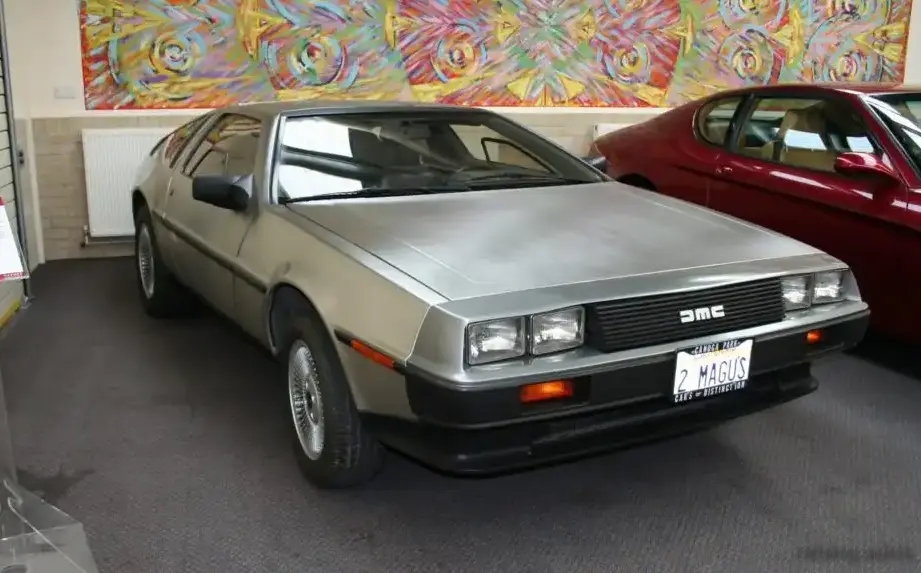
The De Lorean DMC-12, powered by the 2.9-liter V6 engine producing 132 horsepower, represents a unique and often misunderstood chapter in automotive history. Produced between 1981 and 1983, the DMC-12 was the sole model offered by the De Lorean Motor Company, founded by John Z. De Lorean. The car gained notoriety for its stainless steel body, gull-wing doors, and, later, its association with the Back to the Future film franchise. The 2.9 V6 variant was the standard engine offering throughout the car’s short production run, positioned as the only powertrain available to consumers. It was built on a backbone chassis, a design intended to provide both strength and flexibility, and aimed to compete with established sports car manufacturers, though it ultimately carved out a niche as a distinctive, if flawed, grand tourer.
Technical Specifications
| Brand | De Lorean |
| Model | DMC-12 |
| Generation | DMC-12 |
| Type (Engine) | 2.9 V6 (132 Hp) |
| Start of production | 1981 |
| End of production | 1983 |
| Powertrain Architecture | Internal Combustion engine |
| Body type | Coupe |
| Seats | 2 |
| Doors | 2 |
| Fuel Type | Petrol (Gasoline) |
| Acceleration 0 – 100 km/h | 9.4 sec |
| Acceleration 0 – 62 mph | 9.4 sec |
| Acceleration 0 – 60 mph | 8.9 sec |
| Maximum speed | 209 km/h (129.87 mph) |
| Weight-to-power ratio | 9.3 kg/Hp, 107.1 Hp/tonne |
| Weight-to-torque ratio | 5.5 kg/Nm, 182.5 Nm/tonne |
| Power | 132 Hp @ 5500 rpm |
| Power per litre | 46.3 Hp/l |
| Torque | 225 Nm @ 2750 rpm (165.95 lb.-ft. @ 2750 rpm) |
| Engine layout | Rear, Longitudinal |
| Engine Model/Code | ZMJ-159 |
| Engine displacement | 2849 cm3 (173.86 cu. in.) |
| Number of cylinders | 6 |
| Engine configuration | V-engine |
| Cylinder Bore | 91 mm (3.58 in.) |
| Piston Stroke | 73 mm (2.87 in.) |
| Compression ratio | 8.8:1 |
| Number of valves per cylinder | 2 |
| Fuel injection system | Multi-port manifold injection |
| Engine aspiration | Naturally aspirated engine |
| Valvetrain | SOHC |
| Engine oil capacity | 6.5 l (6.87 US qt | 5.72 UK qt) |
| Coolant | 11 l (11.62 US qt | 9.68 UK qt) |
| Kerb Weight | 1233 kg (2718.3 lbs.) |
| Max. weight | 1471 kg (3243 lbs.) |
| Max load | 238 kg (524.7 lbs.) |
| Trunk (boot) space – minimum | 396 l (13.98 cu. ft.) |
| Fuel tank capacity | 52 l (13.74 US gal | 11.44 UK gal) |
| Length | 4267 mm (167.99 in.) |
| Width | 1989 mm (78.31 in.) |
| Height | 1140 mm (44.88 in.) |
| Wheelbase | 2408 mm (94.8 in.) |
| Front track | 1590 mm (62.6 in.) |
| Rear (Back) track | 1588 mm (62.52 in.) |
| Drag coefficient (Cd) | 0.34 |
| Minimum turning circle | 12.8 m (41.99 ft.) |
| Drivetrain Architecture | Rear wheel drive |
| Number of gears | 5 gears, manual transmission |
| Front suspension | Independent coil spring |
| Rear suspension | Independent multi-link suspension |
| Front brakes | Disc |
| Rear brakes | Disc |
| Steering type | Steering rack and pinion |
| Tires size | 195/60 R14; 235/60 R15 |
| Wheel rims size | 14; 15 |
Introduction
The De Lorean DMC-12, specifically the 2.9 V6 (132 hp) variant, was the only production model from the De Lorean Motor Company, manufactured from 1981 to 1983. The car was conceived by John Z. De Lorean, a former engineer at General Motors, with the intention of creating a revolutionary sports car that challenged the conventions of the automotive industry. The DMC-12 was built in Northern Ireland, utilizing a unique stainless steel body and featuring distinctive gull-wing doors. The 2.9-liter V6 engine, sourced from Peugeot, Renault, and Volvo (PRV engine), was the sole powertrain option, paired exclusively with a five-speed manual transmission. Despite its innovative design and initial excitement, the DMC-12 faced numerous production and financial challenges, ultimately leading to the company’s bankruptcy in 1982.
Powertrain & Engine Architecture
The heart of the DMC-12 was the PRV V6 engine, designated ZMJ-159. This engine was a collaborative effort between Peugeot, Renault, and Volvo, designed as a versatile powerplant for a range of vehicles. The 2.9-liter (2849 cc) engine featured a single overhead camshaft (SOHC) valvetrain with two valves per cylinder. It utilized multi-port fuel injection, a relatively advanced system for the early 1980s, contributing to improved fuel efficiency and performance. The engine produced 132 horsepower at 5500 rpm and 165.95 lb-ft of torque at 2750 rpm. The engine was mounted longitudinally in the rear of the vehicle, driving the rear wheels. The five-speed manual transmission, sourced from ZF, was the only transmission option available. The gear ratios were relatively long, geared towards comfortable cruising rather than outright acceleration.
Driving Characteristics
The driving experience in a DMC-12 2.9 V6 was often described as unique, but not necessarily exhilarating. The engine, while adequate, was not particularly powerful for a sports car of the era. Acceleration from 0 to 60 mph took around 8.9 seconds, and top speed was approximately 129.87 mph. The rear-wheel drive layout and relatively soft suspension provided decent handling, but the car’s weight (approximately 2718 lbs) and less-than-sporty tires limited its cornering ability. The long gear ratios meant that the engine often felt strained when accelerating, requiring frequent downshifts. Compared to potential higher-performance variants that were considered (including a turbocharged version), the 132 hp model prioritized usability and fuel economy over outright speed. The car’s weight distribution, combined with the rear-engine layout, could also lead to a tendency towards oversteer if pushed hard.
Equipment & Trim Levels
The DMC-12 was relatively sparsely equipped, reflecting the company’s financial constraints and focus on the car’s core design elements. Standard features included power windows, power door locks, and air conditioning. The interior was characterized by its minimalist design, with gray leather upholstery and a simple dashboard layout. Optional extras were limited, but included a premium sound system and upgraded wheels. The interior, while functional, was often criticized for its lack of refinement and perceived low quality of materials. There were no distinct trim levels offered; all DMC-12s were essentially equipped to the same standard, with limited customization options available.
Chassis & Braking
The DMC-12 featured a unique backbone chassis, constructed from steel. This design aimed to provide a strong and lightweight platform, but it also contributed to the car’s somewhat flexy feel. The suspension consisted of independent coil springs at the front and an independent multi-link suspension at the rear. Braking was provided by disc brakes on all four wheels, offering adequate stopping power for the car’s weight and performance. The steering was a rack and pinion system, providing reasonably precise control. The standard tire size was 195/60 R14, although some cars were equipped with larger 235/60 R15 tires for improved grip.
Market Reception & Comparison
The DMC-12 received mixed reviews upon its release. Critics praised its innovative design and distinctive styling, but many were disappointed by its performance and build quality. The engine was considered underpowered for a sports car, and the car’s handling was not as sharp as its competitors. The stainless steel body, while visually striking, proved difficult and expensive to repair. Compared to other sports cars of the era, such as the Porsche 911 and Chevrolet Corvette, the DMC-12 offered less performance for a similar price. Fuel economy was average for the time, and reliability was a concern due to the car’s complex engineering and production issues.
Legacy
Despite its short production run and financial failure, the De Lorean DMC-12 has achieved a lasting legacy as a cultural icon. Its distinctive design and association with the Back to the Future film franchise have made it a highly sought-after collectible car. The PRV V6 engine, while not known for its exceptional reliability, has proven to be reasonably durable with proper maintenance. Today, DMC-12s in good condition can fetch significant prices on the used car market. The car remains a testament to John Z. De Lorean’s ambition and vision, and a reminder of a unique and often-overlooked chapter in automotive history. Parts availability can be challenging, but a dedicated community of enthusiasts continues to support and preserve these iconic vehicles.
