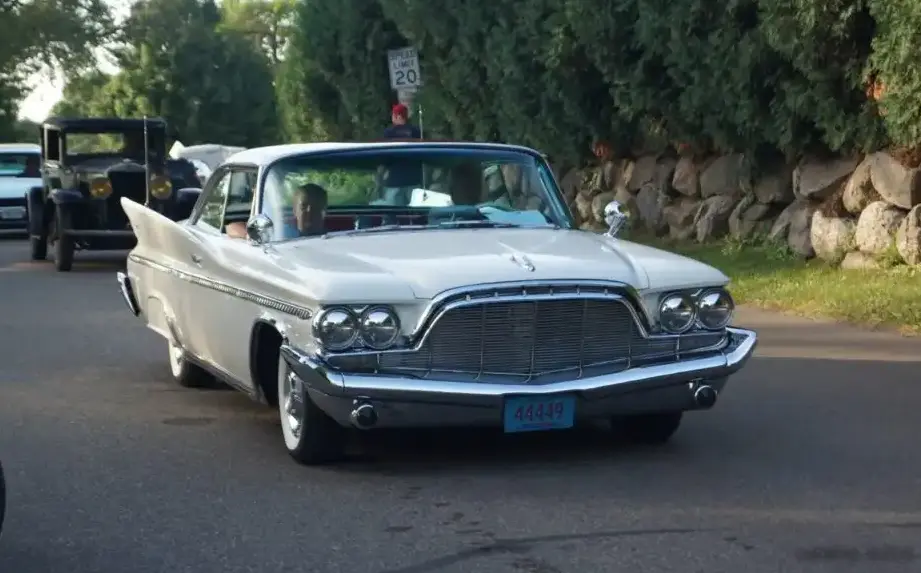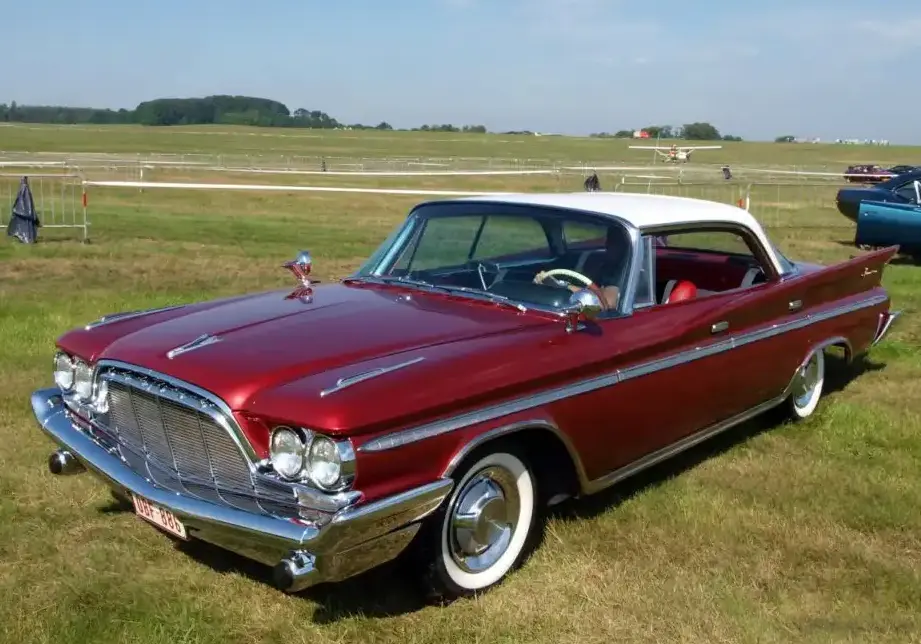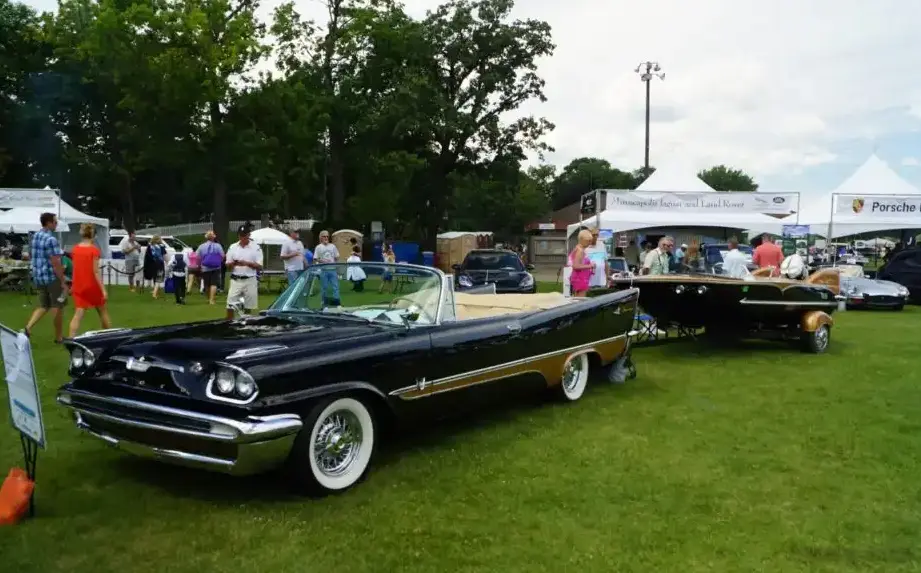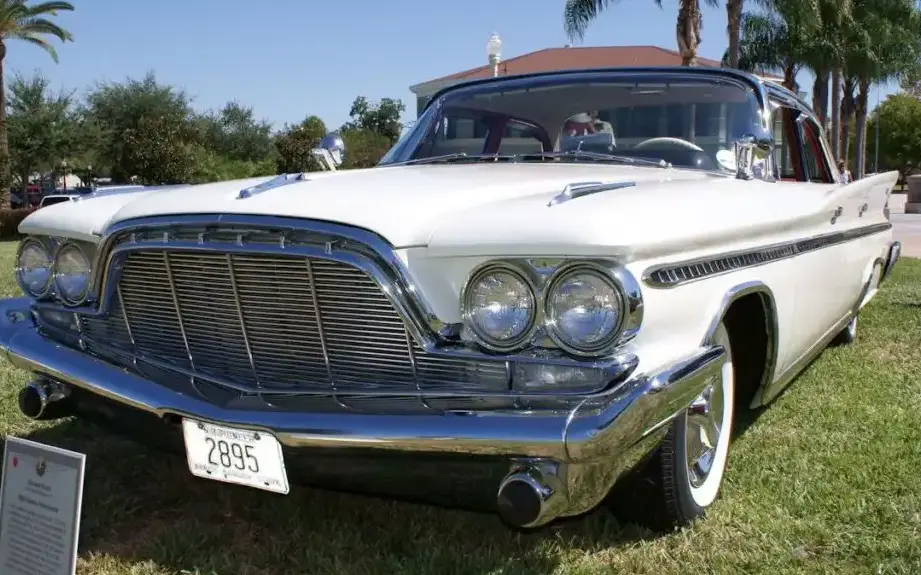
The DeSoto Adventurer I 4-Door Sedan, powered by a 6.3-liter V8 engine producing 325 horsepower and coupled with a TorqueFlite automatic transmission, represented a significant offering from the Chrysler Corporation’s DeSoto division during the 1959 and 1960 model years. Positioned as a premium, performance-oriented vehicle, the Adventurer aimed to capture a segment of the American market seeking luxury and power. It was a short-lived model, reflecting the challenges faced by DeSoto in the late 1950s and early 1960s, ultimately contributing to the brand’s discontinuation in 1961. The Adventurer I was built on the Chrysler “H” body platform, shared with other full-size Chrysler products.
Technical Specifications
| Brand | DeSoto |
| Model | Adventurer |
| Generation | Adventurer I 4-Door Sedan |
| Type (Engine) | 6.3 V8 (325 Hp) TorqueFlite |
| Start of production | 1959 |
| End of production | 1960 |
| Powertrain Architecture | Internal Combustion engine |
| Body type | Sedan |
| Seats | 6 |
| Doors | 4 |
| Fuel Type | Petrol (Gasoline) |
| Power | 325 Hp @ 4600 rpm |
| Power per litre | 51.8 Hp/l |
| Torque | 576 Nm @ 2800 rpm / 424.84 lb.-ft. @ 2800 rpm |
| Engine displacement | 6276 cm3 / 382.99 cu. in. |
| Number of cylinders | 8 |
| Engine configuration | V-engine |
| Cylinder Bore | 107.95 mm / 4.25 in. |
| Piston Stroke | 85.85 mm / 3.38 in. |
| Compression ratio | 10:1 |
| Number of valves per cylinder | 2 |
| Fuel injection system | Carburettor |
| Engine aspiration | Naturally aspirated engine |
| Valvetrain | OHV |
| Engine oil capacity | 4.7 l / 4.97 US qt | 4.14 UK qt |
| Coolant | 16.1 l / 17.01 US qt | 14.17 UK qt |
| Trunk (boot) space – maximum | 929 l / 32.81 cu. ft. |
| Fuel tank capacity | 87 l / 22.98 US gal | 19.14 UK gal |
| Length | 5512 mm / 217.01 in. |
| Width | 2017 mm / 79.41 in. |
| Height | 1397 mm / 55 in. |
| Wheelbase | 3099 mm / 122.01 in. |
| Front track | 1549 mm / 60.98 in. |
| Rear (Back) track | 1516 mm / 59.69 in. |
| Front overhang | 881 mm / 34.69 in. |
| Rear overhang | 1532 mm / 60.31 in. |
| Ride height (ground clearance) | 132 mm / 5.2 in. |
| Minimum turning circle (turning diameter) | 14.3 m / 46.92 ft. |
| Approach angle | 15.6° |
| Departure angle | 10.4° |
| Ramp-over (brakeover) angle | 12.4° |
| Drivetrain Architecture | The Internal combustion engine (ICE) drives the rear wheels of the vehicle. |
| Drive wheel | Rear wheel drive |
| Number of gears and type of gearbox | 3 gears, automatic transmission TorqueFlite |
| Front suspension | Independent torsion bar, double wishbone |
| Rear suspension | Leaf spring |
| Front brakes | Drum, 279 mm |
| Rear brakes | Drum, 279 mm |
| Steering type | Worm-reduction unit |
Powertrain & Engine Architecture
The heart of the Adventurer I was DeSoto’s 383 cubic inch (6.3-liter) V8 engine. This engine, designated as the “B” engine by Chrysler, was a robust and relatively modern design for its time. It featured a cast iron block, aluminum cylinder heads, and a hydraulic lifter camshaft. The 325 horsepower output was achieved through a four-barrel carburetor, a high compression ratio of 10:1, and a dual exhaust system. The engine utilized an overhead valve (OHV) configuration with two valves per cylinder. The TorqueFlite automatic transmission, a three-speed unit, was standard equipment. This transmission was known for its smoothness and durability, and it was a key selling point for DeSoto and Chrysler vehicles. The TorqueFlite featured a torque converter that provided smooth acceleration and reduced driveline shock.
Driving Characteristics
The combination of the 325 horsepower V8 and the TorqueFlite automatic transmission provided the Adventurer I with brisk acceleration for the late 1950s. While not a dedicated sports car, the Adventurer offered a noticeable performance advantage over other DeSoto models and many of its competitors. The automatic transmission, while smooth, did result in some power loss compared to a manual transmission. The gear ratios were optimized for cruising, making the Adventurer a comfortable highway car. However, it wasn’t particularly nimble in tight corners due to its large size and relatively soft suspension. The rear-wheel-drive configuration provided predictable handling, but it lacked the sophistication of more modern suspension systems.
Equipment & Trim Levels
The Adventurer I was positioned as DeSoto’s flagship model, and it was well-equipped for its time. Standard features included power steering, power brakes, a deluxe interior with cloth and vinyl upholstery, and a full wheel cover. The Adventurer also featured distinctive exterior trim, including brightwork around the windows and body sides, and a unique grille design. Optional extras included air conditioning, a radio, power windows, and a continental kit (spare tire mounted on the rear bumper). The interior was designed with comfort and luxury in mind, featuring spacious seating and a well-appointed dashboard.
Chassis & Braking
The Adventurer I utilized a body-on-frame construction, which was typical for American cars of the era. The front suspension featured an independent torsion bar setup with double wishbones, providing a relatively comfortable ride. The rear suspension employed a traditional leaf spring design. Braking was accomplished via drum brakes on all four wheels. While adequate for the time, the drum brakes lacked the stopping power and fade resistance of disc brakes. The steering system was a worm-reduction unit, which provided relatively heavy but precise steering feel.
Market Reception & Comparison
The DeSoto Adventurer I was generally well-received by automotive critics, who praised its powerful engine, comfortable ride, and luxurious appointments. However, it faced stiff competition from other full-size American cars, including models from Chevrolet, Ford, and Plymouth. Compared to the base DeSoto models, the Adventurer offered a significant performance upgrade and a more luxurious interior. However, it was also more expensive. The Adventurer’s fuel economy was typical for a large American car of the late 1950s, averaging around 15-18 miles per gallon. Reliability was generally good, but the carburetor and electrical system could require occasional maintenance.
Legacy
The DeSoto Adventurer I, despite its short production run, remains a desirable classic car among collectors. The 383 cubic inch V8 engine is known for its durability and ease of maintenance. While parts availability can be a challenge, many components are still available through specialist suppliers. The Adventurer I represents a high point in DeSoto’s history, showcasing the brand’s commitment to performance and luxury. Today, well-preserved examples of the Adventurer I command a premium in the used car market, appealing to enthusiasts who appreciate the styling and engineering of the late 1950s American automobile.