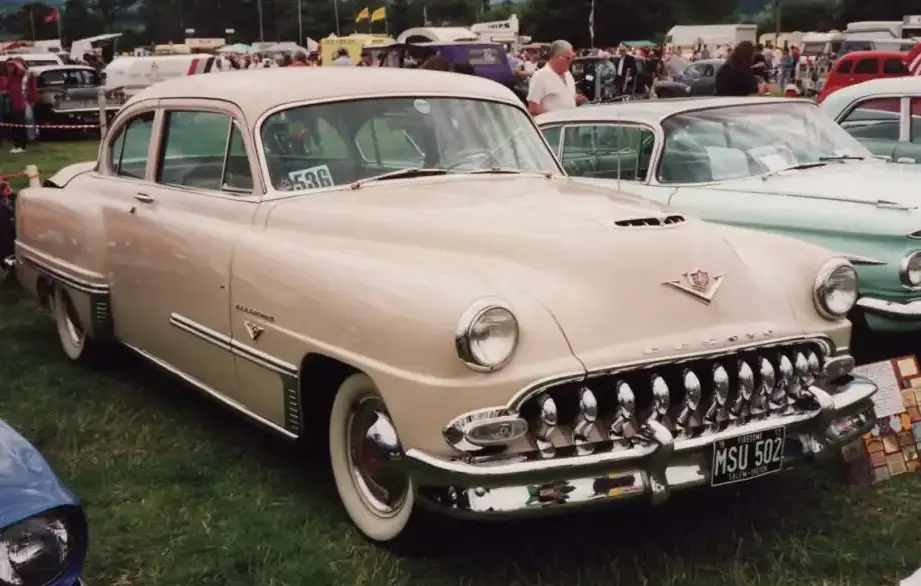
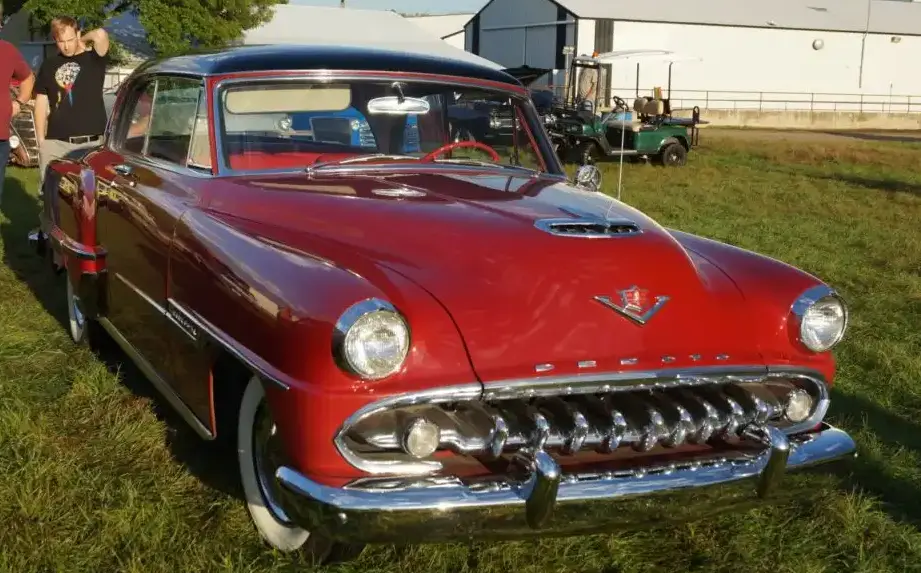
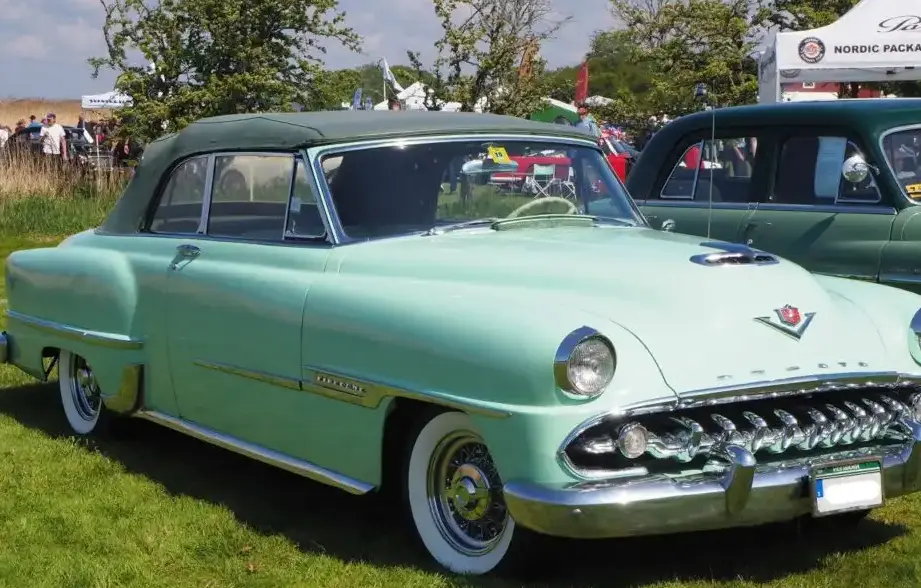
The DeSoto Firedome All-Steel Station Wagon, specifically the facelifted 1953 model, represents a significant moment in American automotive history. Produced for a limited run from 1952 to 1953, this vehicle was one of the first mass-produced all-steel station wagons, moving away from the traditional wood-bodied designs of the era. It occupied a mid-range position within the DeSoto lineup, offering a blend of family practicality and the styling cues of the time. The 1953 facelift brought subtle but noticeable changes to the exterior, enhancing its appeal in a competitive market. This variant was powered by a 4.5-liter V8 engine producing 160 horsepower.
Technical Specifications
| Brand | DeSoto |
| Model | Firedome |
| Generation | Firedome All-Steel Station Wagon (facelift 1953) |
| Type (Engine) | 4.5 V8 (160 Hp) |
| Start of production | 1952 |
| End of production | 1953 |
| Powertrain Architecture | Internal Combustion engine |
| Body type | Station wagon (estate) |
| Seats | 6 |
| Doors | 5 |
| Fuel Type | Petrol (Gasoline) |
| Power | 160 Hp @ 4400 rpm |
| Power per litre | 35.4 Hp/l |
| Torque | 339 Nm @ 2000 rpm |
| Torque (lb-ft) | 250.03 lb.-ft. @ 2000 rpm |
| Engine Model/Code | S16-1001 |
| Engine displacement | 4524 cm3 |
| Engine displacement (cu. in.) | 276.07 cu. in. |
| Number of cylinders | 8 |
| Engine configuration | V-engine |
| Cylinder Bore | 92.075 mm |
| Cylinder Bore (in.) | 3.63 in. |
| Piston Stroke | 84.931 mm |
| Piston Stroke (in.) | 3.34 in. |
| Compression ratio | 7.1:1 |
| Number of valves per cylinder | 2 |
| Fuel injection system | Carburettor |
| Engine aspiration | Naturally aspirated engine |
| Engine oil capacity | 4.7 l |
| Engine oil capacity (US qt) | 4.97 US qt |
| Engine oil capacity (UK qt) | 4.14 UK qt |
| Coolant capacity | 21.7 l |
| Coolant capacity (US qt) | 22.93 US qt |
| Coolant capacity (UK qt) | 19.09 UK qt |
| Length | 5404 mm |
| Length (in.) | 212.76 in. |
| Width | 1963 mm |
| Width (in.) | 77.28 in. |
| Height | 1588 mm |
| Height (in.) | 62.52 in. |
| Wheelbase | 3188 mm |
| Wheelbase (in.) | 125.51 in. |
| Front track | 1430 mm |
| Front track (in.) | 56.3 in. |
| Rear track | 1513 mm |
| Rear track (in.) | 59.57 in. |
| Drag coefficient (Cd) | 0.6 |
| Minimum turning circle | 13 m |
| Minimum turning circle (ft) | 42.65 ft. |
| Drivetrain Architecture | Rear wheel drive |
| Number of gears | 3 |
| Gearbox type | Manual transmission |
| Front suspension | Independent coil spring |
| Rear suspension | Leaf spring |
| Front brakes | Drum, 305 mm |
| Rear brakes | Drum, 305 mm |
Powertrain & Engine Architecture
The heart of the 1953 DeSoto Firedome Station Wagon was the S16-1001 4.5-liter (276.07 cubic inch) V8 engine. This engine featured a traditional overhead valve (OHV) configuration with two valves per cylinder. It utilized a single Carter carburetor for fuel delivery, a common setup for the time. The 7.1:1 compression ratio was typical for the era, balancing performance with the fuel quality available. The engine’s robust construction and relatively simple design contributed to its durability. The three-speed manual transmission was the standard offering, providing a direct connection between the engine and the rear wheels. The transmission’s gear ratios were geared towards providing adequate acceleration and cruising ability for a vehicle of its size and weight.
Driving Characteristics
The 1953 Firedome Station Wagon, with its 160 horsepower and 339 Nm (250 lb-ft) of torque, offered respectable performance for its time. While not a sports car, the V8 provided sufficient power for highway cruising and comfortable family transportation. The manual transmission allowed for driver control, but the gear ratios weren’t optimized for rapid acceleration. Compared to later DeSoto models with more powerful engines, this variant prioritized fuel economy and reliability over outright speed. The large size and weight of the station wagon meant that handling was not particularly nimble, and the leaf spring rear suspension could result in a somewhat bumpy ride, especially on uneven surfaces.
Equipment & Trim Levels
The Firedome Station Wagon was positioned as a comfortable and practical family vehicle. Standard features included a spacious interior with seating for six passengers, ample cargo space behind the rear seat, and a relatively well-appointed dashboard with basic instrumentation. Upholstery typically consisted of durable cloth or vinyl materials. Optional extras included a radio, heater, and whitewall tires. The trim level was fairly consistent across the Firedome range, with the station wagon receiving the same exterior chrome accents and interior finishes as the sedan and coupe models. The focus was on providing a functional and aesthetically pleasing vehicle without excessive luxury.
Chassis & Braking
The Firedome Station Wagon utilized a body-on-frame construction, a common practice for American cars of the 1950s. The chassis was designed to provide a stable and durable platform for the vehicle. The front suspension featured independent coil springs, offering a degree of ride comfort. The rear suspension employed leaf springs, which were more robust but less refined than the front suspension. Braking was handled by drum brakes on all four wheels, measuring 305 mm in diameter. While adequate for the time, the drum brakes lacked the stopping power and fade resistance of later disc brake systems. Steering was accomplished via a conventional steering box, providing a somewhat indirect steering feel.
Market Reception & Comparison
The 1953 DeSoto Firedome All-Steel Station Wagon was generally well-received by critics and consumers. The all-steel construction was a significant selling point, offering improved durability and safety compared to wood-bodied station wagons. However, the vehicle faced competition from other manufacturers offering similar models, such as Ford and Plymouth. The Firedome’s V8 engine provided a performance advantage over some competitors, but its fuel economy was typical for the era – relatively low by modern standards. Reliability was generally good, although maintenance requirements were higher than those of more modern vehicles. Compared to higher-trim DeSoto models, the Firedome offered a more affordable entry point into the brand, appealing to a broader range of buyers.
Legacy
The DeSoto Firedome All-Steel Station Wagon holds a significant place in automotive history as one of the pioneers of the modern station wagon. Its all-steel construction set a new standard for durability and safety. While DeSoto as a brand ultimately faded away in the 1960s, the Firedome Station Wagon remains a popular choice among classic car enthusiasts. The 4.5-liter V8 engine is known for its reliability and relative simplicity, making it a relatively easy engine to maintain and repair. Today, well-preserved examples of the 1953 Firedome Station Wagon are highly sought after by collectors, representing a nostalgic reminder of a bygone era of American automotive design and engineering.