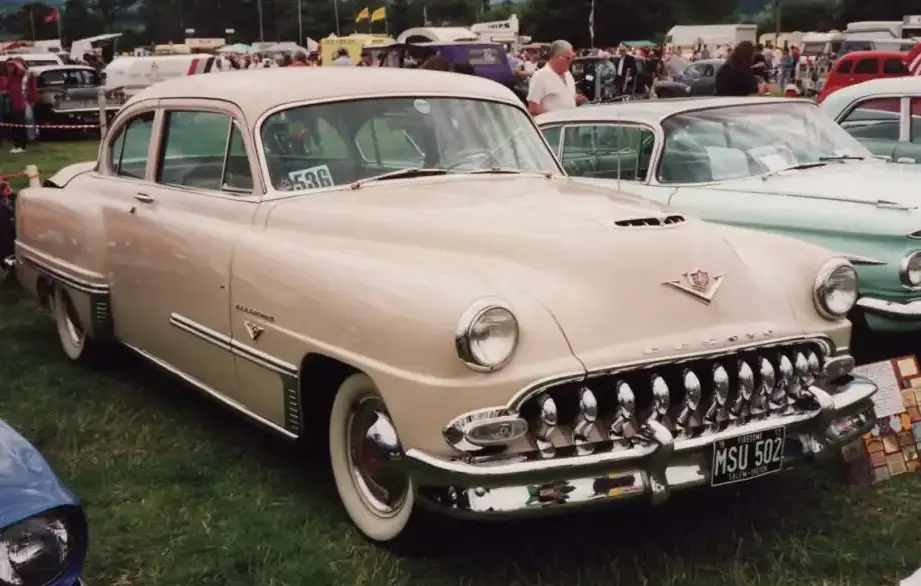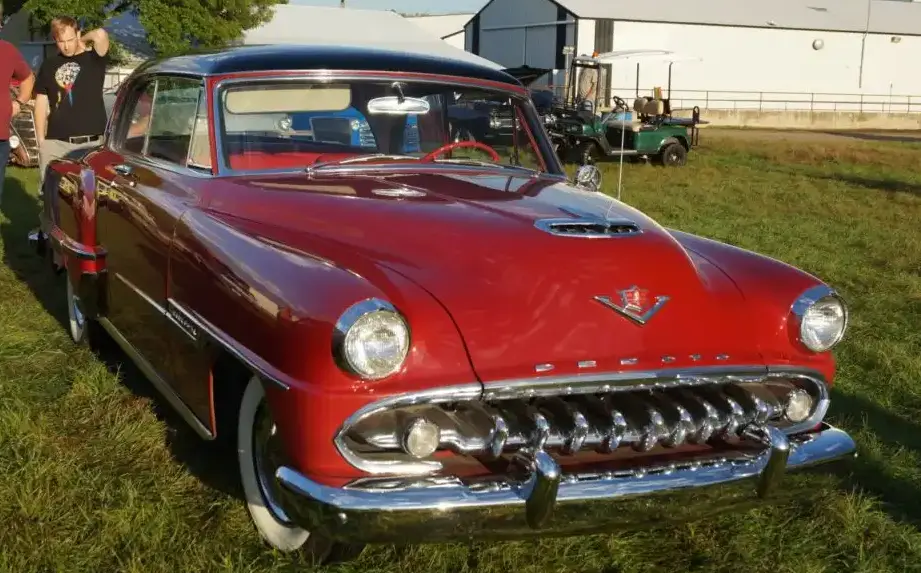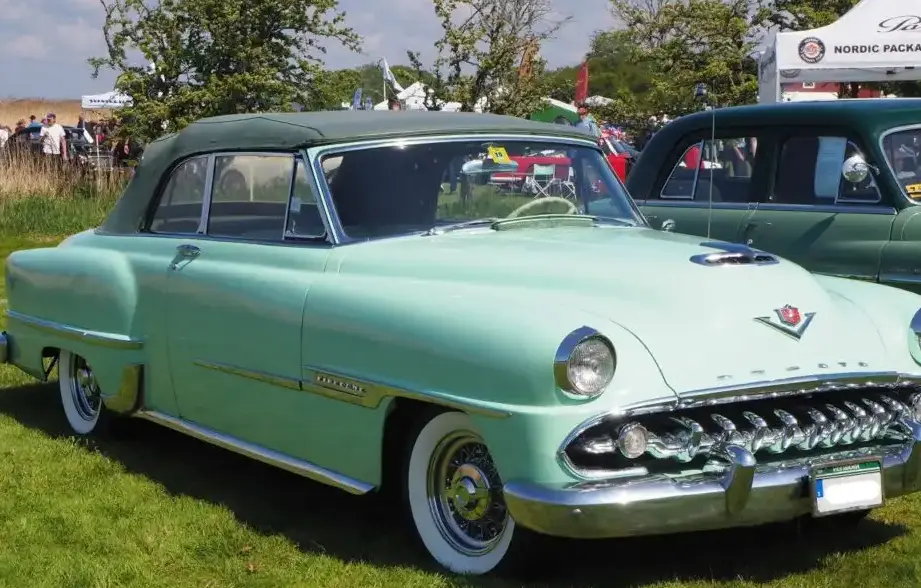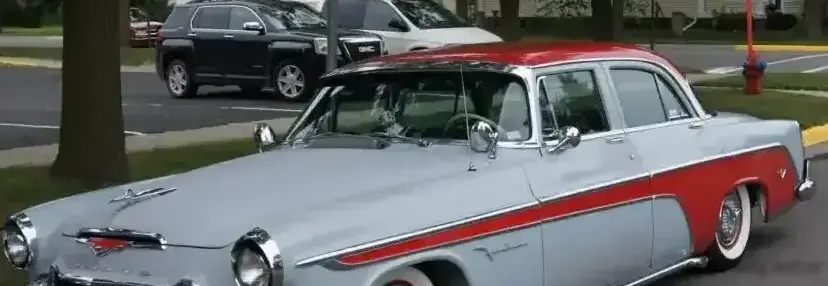
The DeSoto Firedome II Four-Door Sedan, powered by a 4.8-liter V8 engine producing 185 horsepower, represented a significant offering from the Chrysler Corporation’s mid-range brand during the 1954 and 1955 model years. Positioned as a step up from the DeSoto Deluxe, the Firedome II aimed to provide a blend of style, comfort, and performance for the American family. It was part of the broader effort by Chrysler to modernize its image and compete with rivals like Ford and General Motors in the burgeoning post-war automotive market. The “II” designation denoted updates to the original Firedome, primarily focusing on styling and minor mechanical refinements.
Technical Specifications
| Brand | DeSoto |
| Model | Firedome |
| Generation | Firedome II Four-Door Sedan |
| Type (Engine) | 4.8 V8 (185 Hp) |
| Start of production | 1954 |
| End of production | 1955 |
| Powertrain Architecture | Internal Combustion engine |
| Body type | Sedan |
| Seats | 6 |
| Doors | 4 |
| Fuel Type | Petrol (Gasoline) |
| Weight-to-power ratio | 9.5 kg/Hp, 104.9 Hp/tonne |
| Weight-to-torque ratio | 5.3 kg/Nm, 188.2 Nm/tonne |
| Power | 185 Hp @ 4400 rpm |
| Power per litre | 38.8 Hp/l |
| Torque | 332 Nm @ 2800 rpm, 244.87 lb.-ft. @ 2800 rpm |
| Engine Model/Code | S21-1001 |
| Engine displacement | 4769 cm3, 291.02 cu. in. |
| Number of cylinders | 8 |
| Engine configuration | V-engine |
| Cylinder Bore | 94.49 mm, 3.72 in. |
| Piston Stroke | 84.931 mm, 3.34 in. |
| Compression ratio | 7.5:1 |
| Number of valves per cylinder | 2 |
| Fuel injection system | Carburettor |
| Engine aspiration | Naturally aspirated engine |
| Valvetrain | OHV |
| Engine oil capacity | 4.7 l, 4.97 US qt | 4.14 UK qt |
| Coolant | 21.8 l, 23.04 US qt | 19.18 UK qt |
| Kerb Weight | 1764 kg, 3888.95 lbs |
| Fuel tank capacity | 76 l, 20.08 US gal | 16.72 UK gal |
| Length | 5535 mm, 217.91 in |
| Width | 1989 mm, 78.31 in |
| Height | 1539 mm, 60.59 in |
| Wheelbase | 3200 mm, 125.98 in |
| Front track | 1529 mm, 60.2 in |
| Rear (Back) track | 1514 mm, 59.61 in |
| Front overhang | 930 mm, 36.61 in |
| Rear overhang | 1405 mm, 55.31 in |
| Ride height (ground clearance) | 160 mm, 6.3 in |
| Minimum turning circle (turning diameter) | 13.4 m, 43.96 ft |
| Approach angle | 21° |
| Departure angle | 12° |
| Ramp-over (brakeover) angle | 11° |
| Drivetrain Architecture | The Internal combustion engine (ICE) drives the rear wheels of the vehicle. |
| Drive wheel | Rear wheel drive |
| Number of gears and type of gearbox | 3 gears, manual transmission |
| Front suspension | Independent coil spring |
| Rear suspension | Leaf spring |
| Front brakes | Drum, 305 mm |
| Rear brakes | Drum, 305 mm |
| Steering type | Worm-reduction unit |
| Power steering | Hydraulic Steering |
Powertrain & Engine Architecture
The heart of the Firedome II was the DeSoto S21-1001 4.8-liter (291 cubic inch) V8 engine. This engine featured a cast iron block and cylinder heads, with a 7.5:1 compression ratio. It utilized a single Carter carburetor for fuel delivery and an overhead valve (OHV) valvetrain. The engine’s design prioritized low-end torque, making it well-suited for the typical driving conditions of the era. The 185 horsepower output, while respectable, wasn’t groundbreaking compared to some of the larger V8s offered by Chevrolet and Ford. The standard transmission was a three-speed manual, although a PowerFlite two-speed automatic transmission was offered as an option, though less common in this specific trim.
Driving Characteristics
The Firedome II with the standard three-speed manual transmission offered a reasonably engaging driving experience for the time. The engine’s torque allowed for effortless cruising, and the manual gearbox provided drivers with a degree of control. However, it wasn’t a particularly sporty car. The emphasis was on comfortable transportation rather than outright performance. The automatic transmission, when equipped, smoothed out the driving experience further, but at the cost of some responsiveness. Acceleration was adequate, but not brisk, and the car felt substantial due to its weight. The rear-wheel-drive layout and leaf spring rear suspension were typical for American cars of the period, providing a stable but somewhat firm ride.
Equipment & Trim Levels
The Firedome II Four-Door Sedan came standard with a relatively comprehensive list of features for the mid-1950s. These included a spacious interior upholstered in cloth and vinyl, a full-width bench seat, and a steering wheel. Exterior styling featured generous chrome trim, a prominent grille, and two-tone paint options. Optional extras included power steering, power brakes, a radio, a heater, and whitewall tires. The Firedome II occupied a middle ground in the DeSoto lineup. It was more luxurious than the base Deluxe model but less opulent than the top-of-the-line Firesweep.
Chassis & Braking
The Firedome II utilized a body-on-frame construction, common for American cars of the era. The front suspension was independent, employing coil springs, while the rear suspension relied on a traditional leaf spring setup. This configuration provided a reasonable balance between ride comfort and handling. Braking was accomplished via drum brakes on all four wheels. While adequate for the time, the drum brakes lacked the stopping power of modern disc brakes. The steering system was a worm-reduction unit, and power steering was available as an option, making maneuvering the large sedan easier.
Market Reception & Comparison
The DeSoto Firedome II was generally well-received by automotive critics, who praised its styling and comfortable ride. However, it often found itself overshadowed by the more popular offerings from Chevrolet, Ford, and Plymouth. Compared to the base DeSoto Deluxe, the Firedome II offered a noticeable step up in performance and refinement. However, the Firesweep, with its more powerful engine and luxurious appointments, appealed to buyers seeking a more premium experience. Fuel economy, typical for a large American car of the 1950s, was modest. Reliability was generally good, but maintenance could be demanding due to the complexity of the V8 engine and the carburetor.
Legacy
The DeSoto Firedome II, while not a runaway success, remains a significant example of mid-century American automotive design. Today, it is a sought-after classic car among collectors and enthusiasts. The 4.8-liter V8 engine, while not known for exceptional longevity, is relatively straightforward to maintain with readily available parts. The Firedome II represents a transitional period in automotive history, bridging the gap between the post-war era and the more modern designs of the late 1950s. Its enduring appeal lies in its classic styling, spacious interior, and the nostalgic charm of a bygone era.