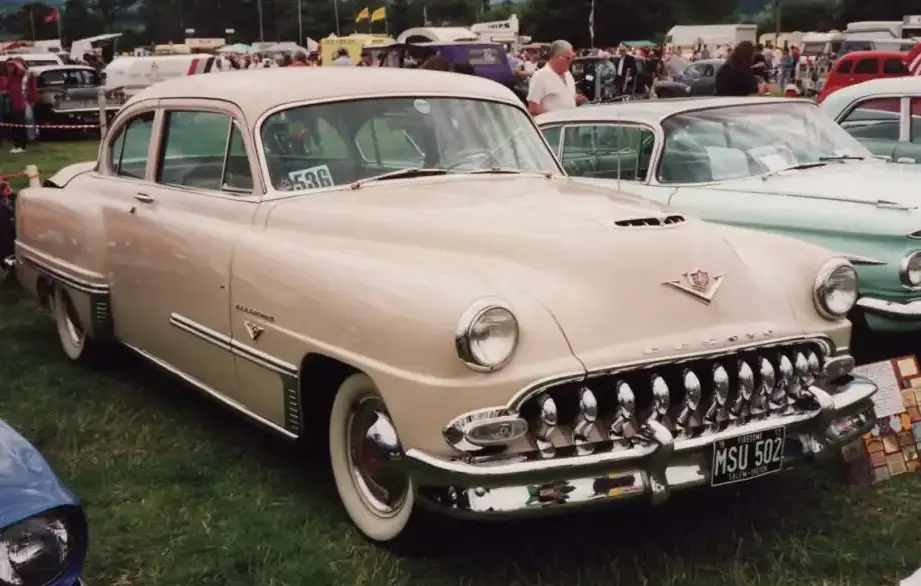
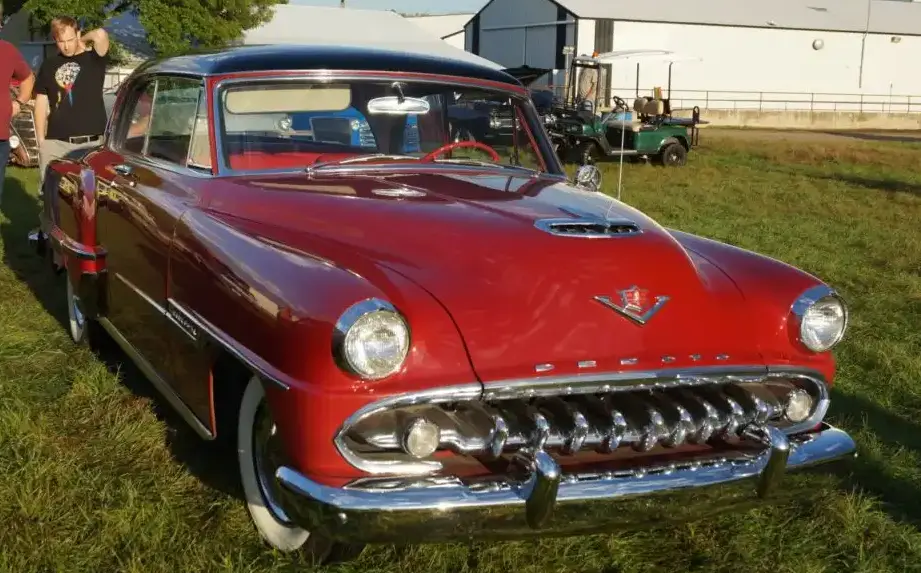
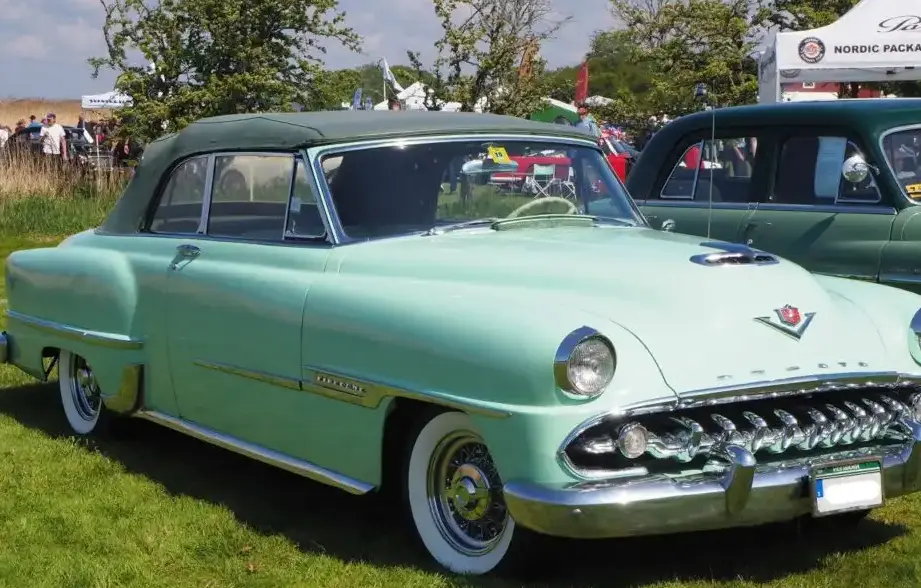
The DeSoto Firedome III Four-Door Sedan, specifically the facelifted 1958 model, represented a pinnacle of American automotive styling and engineering during the late 1950s. Produced from 1957 to 1958, it was positioned as DeSoto’s full-size offering, slotting above the Firesweep in the company’s lineup. The 1958 facelift brought significant cosmetic changes, including revised grille work, tailfins, and trim, reflecting the era’s obsession with dramatic design. This variant, equipped with the 5.9-liter V8 engine producing 295 horsepower, aimed to deliver a blend of luxury, performance, and spaciousness for American families.
Technical Specifications
| Brand | DeSoto |
| Model | Firedome |
| Generation | Firedome III Four-Door Sedan (facelift 1958) |
| Type (Engine) | 5.9 V8 (295 Hp) |
| Start of production | 1957 |
| End of production | 1958 |
| Powertrain Architecture | Internal Combustion engine |
| Body type | Sedan |
| Seats | 6 |
| Doors | 4 |
| Fuel Type | Petrol (Gasoline) |
| Weight-to-power ratio | 6.2 kg/Hp, 160.2 Hp/tonne |
| Weight-to-torque ratio | 3.5 kg/Nm, 287.2 Nm/tonne |
| Power | 295 Hp @ 4600 rpm |
| Power per litre | 49.9 Hp/l |
| Torque | 529 Nm @ 2400 rpm, 390.17 lb.-ft. @ 2400 rpm |
| Engine displacement | 5916 cm3, 361.02 cu. in. |
| Number of cylinders | 8 |
| Engine configuration | V-engine |
| Cylinder Bore | 104.65 mm, 4.12 in. |
| Piston Stroke | 85.85 mm, 3.38 in. |
| Compression ratio | 10:1 |
| Number of valves per cylinder | 2 |
| Fuel injection system | Carburettor |
| Engine aspiration | Naturally aspirated engine |
| Valvetrain | OHV |
| Engine oil capacity | 3.8 l, 4.02 US qt | 3.34 UK qt |
| Coolant | 16.1 l, 17.01 US qt | 14.17 UK qt |
| Kerb Weight | 1842 kg, 4060.91 lbs |
| Fuel tank capacity | 87 l, 22.98 US gal | 19.14 UK gal |
| Length | 5552 mm, 218.58 in |
| Width | 1989 mm, 78.31 in |
| Height | 1450 mm, 57.09 in |
| Wheelbase | 3200 mm, 125.98 in |
| Front track | 1549 mm, 60.98 in |
| Rear (Back) track | 1516 mm, 59.69 in |
| Front overhang | 892 mm, 35.12 in |
| Rear overhang | 1461 mm, 57.52 in |
| Ride height (ground clearance) | 140 mm, 5.51 in |
| Minimum turning circle (turning diameter) | 15.1 m, 49.54 ft |
| Approach angle | 16.3° |
| Departure angle | 11.6° |
| Ramp-over (brakeover) angle | 10° |
| Drivetrain Architecture | The Internal combustion engine (ICE) drives the rear wheels of the vehicle. |
| Drive wheel | Rear wheel drive |
| Number of gears and type of gearbox | 3 gears, manual transmission |
| Front suspension | Independent coil spring |
| Rear suspension | Leaf spring |
| Front brakes | Drum, 305 mm |
| Rear brakes | Drum, 305 mm |
| Steering type | Worm-reduction unit |
Powertrain & Engine Architecture
The heart of the 1958 DeSoto Firedome III was the 5.9-liter (361 cubic inch) V8 engine. Designated with various codes depending on specific configurations, this engine was a cornerstone of DeSoto’s performance image. The engine utilized a cast iron block and cylinder heads, with a two-barrel carburetor managing fuel delivery. The overhead valve (OHV) configuration, common for the era, employed a single camshaft located within the engine block, actuating the valves via pushrods and rocker arms. The 10:1 compression ratio contributed to the engine’s respectable 295 horsepower output. The three-speed manual transmission was standard, delivering power to the rear wheels. This transmission, while robust, lacked the sophistication of later automatic offerings.
Driving Characteristics
The 1958 Firedome III, with its 295 horsepower and relatively lightweight construction for the time, offered brisk acceleration. While not a sports car, it provided ample power for highway cruising and passing maneuvers. The three-speed manual transmission required deliberate shifting, and the gear ratios were spaced to prioritize acceleration in the lower gears. Compared to potential automatic transmission equipped models, the manual offered a more engaging driving experience and slightly improved fuel economy, though the difference wasn’t substantial. The leaf spring rear suspension provided a comfortable ride, but it wasn’t as refined as the independent suspension found on some competing models.
Equipment & Trim Levels
The Firedome III was well-equipped for its time, offering a comfortable and luxurious interior. Standard features included a spacious bench seat upholstered in durable cloth or vinyl, a full-width dashboard with prominent instrumentation, and a steering wheel. Power steering and power brakes were often optional extras, as were air conditioning and a radio. The 1958 facelift brought updated interior trim options, including two-tone color schemes and revised dashboard detailing. The Firedome III aimed to provide a premium experience, but it didn’t quite reach the level of luxury offered by Cadillac or Lincoln.
Chassis & Braking
The Firedome III utilized a body-on-frame construction, typical of American cars of the era. The chassis featured an independent coil spring suspension at the front, providing a relatively comfortable ride. The rear suspension employed leaf springs, which were more cost-effective but less sophisticated. Braking duties were handled by drum brakes on all four wheels. While adequate for the time, the drum brakes lacked the stopping power and fade resistance of disc brakes. The steering system utilized a worm-reduction unit, which provided a relatively heavy but precise steering feel.
Market Reception & Comparison
The 1958 DeSoto Firedome III received mixed reviews from automotive critics. While praised for its styling and powerful engine, it was also criticized for its somewhat dated chassis and braking system. Compared to its siblings, the Firedome III offered a significant performance advantage over the lower-trim Firesweep, but it lacked the ultimate luxury and refinement of the Adventurer. Fuel economy was typical for a full-size American car of the era, averaging around 15-18 miles per gallon. Reliability was generally good, but the carburetor required periodic adjustment and maintenance.
Legacy
The DeSoto Firedome III, and the DeSoto brand as a whole, ultimately faded into automotive history. Production ceased in 1961 due to declining sales and competition from other manufacturers. However, the 1958 Firedome III remains a popular choice among classic car enthusiasts. The 5.9-liter V8 engine is known for its durability and relatively simple maintenance requirements. Today, well-maintained examples command a respectable price in the collector car market, representing a tangible link to a bygone era of American automotive excess and design flair. Parts availability can be a challenge, but a dedicated network of suppliers caters to the classic DeSoto community.