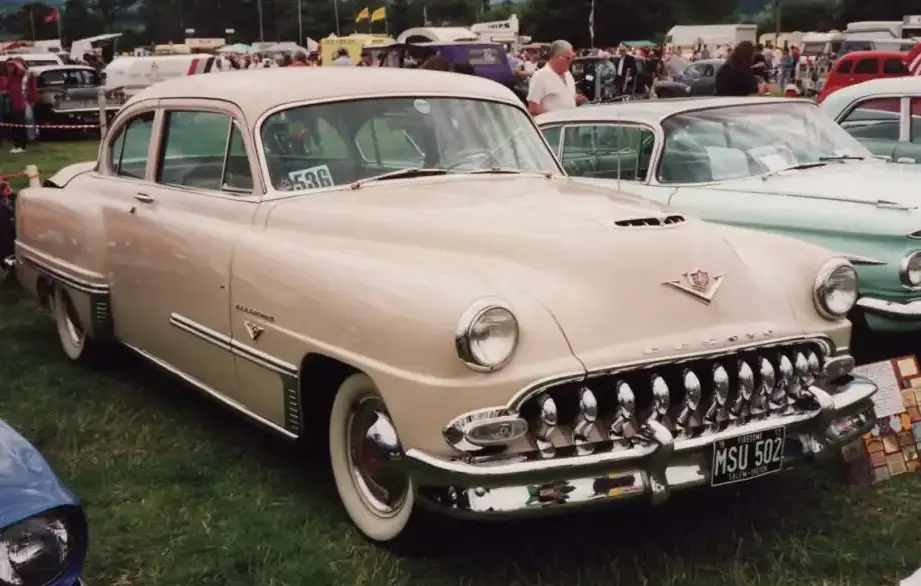
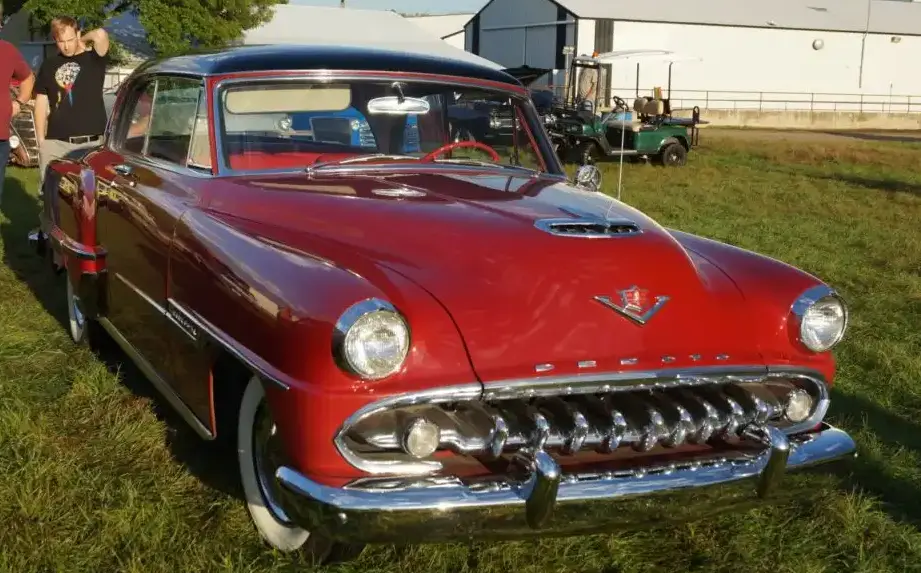
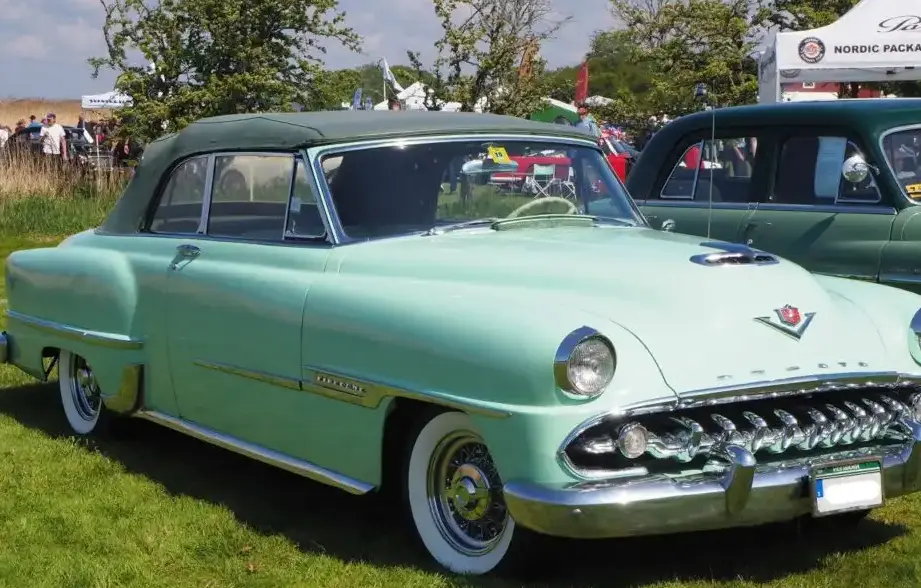
The DeSoto Firedome III Four-Door Sportsman, specifically the 1959 facelift model equipped with the 6.3-liter V8 engine producing 305 horsepower, represents a high point in DeSoto’s final years of production. Manufactured from 1958 to 1959, this iteration of the Firedome sat at the top of the DeSoto lineup, offering a blend of luxury, performance, and distinctive 1950s styling. It was part of the broader Firedome III generation, characterized by its bolder design and increased size compared to previous models. The “Sportsman” designation denoted the four-door sedan body style, emphasizing its family-oriented practicality alongside its performance capabilities.
Technical Specifications
| Brand | DeSoto |
| Model | Firedome |
| Generation | Firedome III Four-Door Sportsman (facelift 1959) |
| Type (Engine) | 6.3 V8 (305 Hp) |
| Start of production | 1958 |
| End of production | 1959 |
| Powertrain Architecture | Internal Combustion engine |
| Body type | Sedan |
| Seats | 6 |
| Doors | 4 |
| Fuel Type | Petrol (Gasoline) |
| Weight-to-power ratio | 6.1 kg/Hp, 163.4 Hp/tonne |
| Weight-to-torque ratio | 3.4 kg/Nm, 297.8 Nm/tonne |
| Power | 305 Hp @ 4600 rpm |
| Power per litre | 48.6 Hp/l |
| Torque | 556 Nm @ 2400 rpm, 410.08 lb.-ft. @ 2400 rpm |
| Engine displacement | 6276 cm3, 382.99 cu. in. |
| Number of cylinders | 8 |
| Engine configuration | V-engine |
| Cylinder Bore | 107.95 mm, 4.25 in. |
| Piston Stroke | 85.85 mm, 3.38 in. |
| Compression ratio | 10.1:1 |
| Number of valves per cylinder | 2 |
| Fuel injection system | Carburettor |
| Engine aspiration | Naturally aspirated engine |
| Valvetrain | OHV |
| Engine oil capacity | 4.7 l, 4.97 US qt | 4.14 UK qt |
| Coolant | 15.1 l, 15.96 US qt | 13.29 UK qt |
| Kerb Weight | 1867 kg, 4116.03 lbs |
| Fuel tank capacity | 87 l, 22.98 US gal | 19.14 UK gal |
| Length | 5616 mm, 221.1 in |
| Width | 1999 mm, 78.7 in |
| Height | 1402 mm, 55.2 in |
| Wheelbase | 3200 mm, 125.98 in |
| Front track | 1549 mm, 60.98 in |
| Rear (Back) track | 1516 mm, 59.69 in |
| Front overhang | 889 mm, 35 in |
| Rear overhang | 1527 mm, 60.12 in |
| Ride height (ground clearance) | 142 mm, 5.59 in |
| Minimum turning circle (turning diameter) | 15.2 m, 49.87 ft |
| Approach angle | 15° |
| Departure angle | 11° |
| Ramp-over (brakeover) angle | 10.4° |
| Drivetrain Architecture | The Internal combustion engine (ICE) drives the rear wheels of the vehicle. |
| Drive wheel | Rear wheel drive |
| Number of gears and type of gearbox | 3 gears, manual transmission |
| Front suspension | Independent torsion bar, double wishbone |
| Rear suspension | Leaf spring |
| Front brakes | Drum, 305 mm |
| Rear brakes | Drum, 305 mm |
| Steering type | Worm-reduction unit |
Powertrain & Engine Architecture
The heart of the 1959 Firedome III Sportsman was DeSoto’s 6.3-liter (383 cubic inch) V8 engine. This engine, designated as the “Red Streak” V8, was a robust and powerful unit for its time. It featured a cast iron block and cylinder heads, with a 10.1:1 compression ratio. Fuel delivery was managed by a Carter carburetor, a common setup for American V8s of the era. The engine utilized an overhead valve (OHV) valvetrain with two valves per cylinder. The 305 horsepower output was achieved through careful tuning and a relatively high 4600 rpm peak power point. Torque, a substantial 556 Nm (410 lb-ft), was readily available at 2400 rpm, providing strong acceleration. The engine was paired with a standard three-speed manual transmission, offering a direct connection to the rear wheels.
Driving Characteristics
The 1959 Firedome III Sportsman, with its 305 hp V8 and three-speed manual transmission, delivered a driving experience typical of large American cars of the late 1950s. Acceleration was brisk, but not particularly quick by modern standards. The emphasis was on smooth, effortless cruising. The three-speed manual gearbox, while providing driver control, wasn’t known for its precision or quick shifts. The car’s substantial weight (1867 kg / 4116 lbs) and relatively long wheelbase contributed to a comfortable ride, but also limited its agility in corners. Compared to other DeSoto offerings, like the lower-powered models, the Firedome provided a noticeable performance upgrade. However, it lacked the more sophisticated handling characteristics of some European sports sedans of the time.
Equipment & Trim Levels
The Firedome III Sportsman was well-equipped for its era, offering a comfortable and luxurious interior. Standard features included plush upholstery (typically cloth and vinyl), a full-width bench seat, and a spacious cabin capable of seating six passengers. The dashboard featured a prominent instrument cluster with gauges for speed, fuel level, coolant temperature, and oil pressure. Power steering and power brakes were often included as standard equipment, enhancing the driving experience. Optional extras included air conditioning, a radio, and whitewall tires. The exterior styling was characterized by generous chrome trim, large tailfins, and a distinctive grille. The “Sportsman” trim level generally included more refined interior appointments compared to the base Firedome models.
Chassis & Braking
The Firedome III Sportsman utilized a body-on-frame construction, typical of American cars of the period. The chassis featured an independent torsion bar suspension at the front, providing a relatively comfortable ride. The rear suspension employed a traditional leaf spring setup, which was robust but less sophisticated than the front suspension. Braking duties were handled by drum brakes on all four wheels, measuring 305 mm in diameter. While adequate for the car’s weight and performance, the drum brakes lacked the stopping power and fade resistance of disc brakes. Steering was accomplished via a worm-reduction unit, which provided a relatively indirect steering feel.
Market Reception & Comparison
The 1959 DeSoto Firedome III Sportsman was generally well-received by automotive critics, who praised its powerful engine, comfortable ride, and stylish design. However, it faced competition from other large American sedans offered by Chevrolet, Ford, and Plymouth. The Firedome’s higher price point positioned it as a more premium offering, but it struggled to gain significant market share. Fuel economy was typical for a large American car of the era, averaging around 15-18 miles per gallon. Reliability was generally good, but maintenance costs could be high due to the car’s complex mechanical systems.
Legacy
The 1959 DeSoto Firedome III Sportsman represents a poignant chapter in DeSoto’s history. The brand was discontinued in 1961 due to declining sales and increasing competition. Today, the Firedome III is a sought-after classic car, appreciated for its distinctive styling and powerful V8 engine. While parts availability can be a challenge, the engine’s robust design contributes to its long-term reliability. Well-maintained examples command respectable prices in the collector car market, appealing to enthusiasts who appreciate the glamour and power of 1950s American automobiles. The 6.3L V8, while thirsty by modern standards, remains a testament to the engineering prowess of the era.