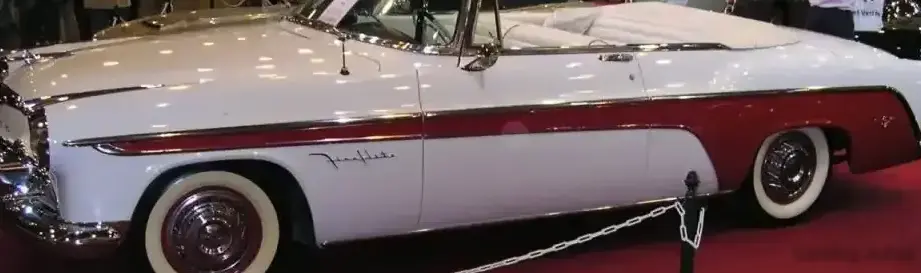
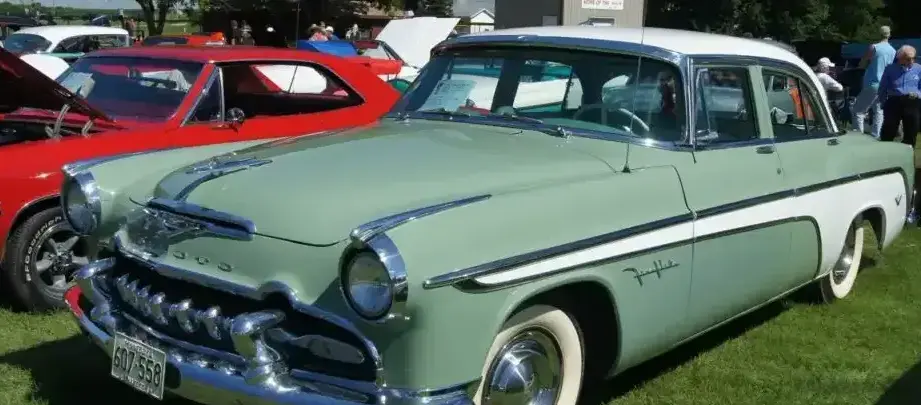
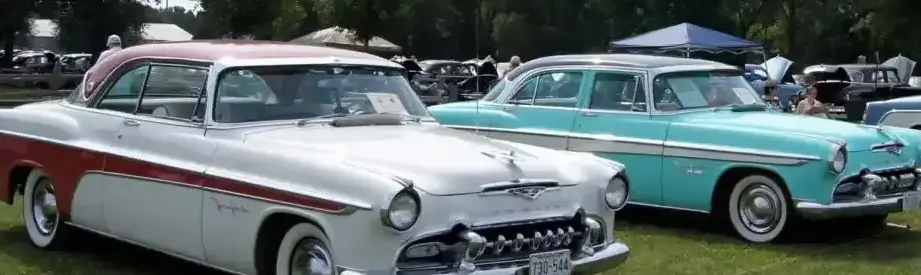
The DeSoto Fireflite Four-Door Hardtop with the 5.9 V8 engine and TorqueFlite automatic transmission represents a significant offering from the 1959 and 1960 model years. Positioned as a premium full-size automobile, the Fireflite aimed to blend performance with comfort and style during a period of dramatic automotive design in the United States. This particular configuration, featuring the larger displacement V8, was intended to appeal to buyers seeking a more powerful and refined driving experience within the DeSoto lineup. The Fireflite occupied a middle ground, offering more power than the base models but falling short of the ultimate performance offered by some of its Chrysler Corporation siblings.
Technical Specifications
| Brand | DeSoto |
| Model | Fireflite |
| Generation | Fireflite Four-Door Hardtop |
| Type (Engine) | 5.9 V8 (295 Hp) TorqueFlite |
| Start of production | 1959 |
| End of production | 1960 |
| Powertrain Architecture | Internal Combustion engine |
| Body type | Sedan |
| Seats | 6 |
| Doors | 4 |
| Fuel Type | Petrol (Gasoline) |
| Power | 295 Hp @ 4600 rpm |
| Power per litre | 49.9 Hp/l |
| Torque | 529 Nm @ 2400 rpm / 390.17 lb.-ft. @ 2400 rpm |
| Engine displacement | 5916 cm3 / 361.02 cu. in. |
| Number of cylinders | 8 |
| Engine configuration | V-engine |
| Cylinder Bore | 104.65 mm / 4.12 in. |
| Piston Stroke | 85.85 mm / 3.38 in. |
| Compression ratio | 10:1 |
| Number of valves per cylinder | 2 |
| Fuel injection system | Carburettor |
| Engine aspiration | Naturally aspirated engine |
| Valvetrain | OHV |
| Engine oil capacity | 4.7 l / 4.97 US qt | 4.14 UK qt |
| Coolant | 16.1 l / 17.01 US qt | 14.17 UK qt |
| Trunk (boot) space – maximum | 929 l / 32.81 cu. ft. |
| Fuel tank capacity | 87 l / 22.98 US gal | 19.14 UK gal |
| Length | 5471 mm / 215.39 in. |
| Width | 2017 mm / 79.41 in. |
| Height | 1397 mm / 55 in. |
| Wheelbase | 3099 mm / 122.01 in. |
| Front track | 1549 mm / 60.98 in. |
| Rear (Back) track | 1516 mm / 59.69 in. |
| Front overhang | 881 mm / 34.69 in. |
| Rear overhang | 1491 mm / 58.7 in. |
| Ride height (ground clearance) | 132 mm / 5.2 in. |
| Minimum turning circle (turning diameter) | 14.3 m / 46.92 ft. |
| Approach angle | 15.6° |
| Departure angle | 10.4° |
| Ramp-over (brakeover) angle | 12.4° |
| Drivetrain Architecture | The Internal combustion engine (ICE) drives the rear wheels of the vehicle. |
| Drive wheel | Rear wheel drive |
| Number of gears and type of gearbox | 3 gears, automatic transmission TorqueFlite |
| Front suspension | Independent torsion bar, double wishbone |
| Rear suspension | Leaf spring |
| Front brakes | Drum, 279 mm |
| Rear brakes | Drum, 279 mm |
| Steering type | Worm-reduction unit |
Powertrain & Engine Architecture
The heart of this Fireflite variant is the 5.9-liter (361 cubic inch) V8 engine. This engine, designated within Chrysler as the “RB” series, was a robust and relatively simple design. It featured a cast iron block and cylinder heads, with a two-barrel carburetor managing fuel delivery. The overhead valve (OHV) configuration utilized a traditional pushrod valvetrain. The 10:1 compression ratio contributed to the engine’s respectable 295 horsepower output. The TorqueFlite automatic transmission, a three-speed unit, was Chrysler’s mainstay automatic for many years. Known for its durability and smooth operation, it was a key component in providing a comfortable driving experience. The TorqueFlite featured a torque converter that multiplied engine torque, particularly during acceleration, and allowed the vehicle to idle without stalling.
Driving Characteristics
The combination of the 5.9L V8 and the TorqueFlite transmission delivered a driving experience that prioritized smooth, effortless cruising. While not a performance-oriented setup, the engine provided ample power for highway passing and merging. The TorqueFlite’s gear ratios were optimized for relaxed acceleration rather than rapid shifts. Compared to the manual transmission options available on other DeSoto models, or the higher-output engines offered in Chrysler New Yorkers and Imperials, this Fireflite felt less responsive. However, it excelled in providing a comfortable and refined ride, making it well-suited for long-distance travel. The rear-wheel-drive configuration and substantial weight of the vehicle contributed to a stable, planted feel on the road.
Equipment & Trim Levels
The Fireflite Four-Door Hardtop was well-equipped for its time. Standard features typically included power steering, power brakes, a deluxe interior with cloth and vinyl upholstery, and a full-length chrome side molding. The hardtop body style, lacking a center pillar between the front and rear doors, offered a more open and airy feel. Optional extras included air conditioning, a radio, whitewall tires, and various trim upgrades. Interior appointments were generally focused on comfort and spaciousness, with ample legroom for both front and rear passengers. The dashboard featured a prominent instrument cluster with gauges for speed, fuel level, temperature, and oil pressure.
Chassis & Braking
The Fireflite rode on a sturdy chassis featuring independent torsion bar suspension in the front and a leaf spring suspension in the rear. This setup provided a good balance of ride comfort and handling. The front suspension’s torsion bars allowed for a lower ride height and improved stability. Braking duties were handled by drum brakes on all four wheels. While adequate for the time, the drum brakes lacked the stopping power and fade resistance of later disc brake systems. The steering system utilized a worm-reduction unit, which provided relatively heavy but precise steering feel.
Market Reception & Comparison
The 1959 and 1960 DeSoto Fireflite was generally well-received by automotive critics, although it faced stiff competition from other full-size American automobiles. The 5.9L V8 and TorqueFlite combination was praised for its smoothness and reliability. However, some reviewers noted that the Fireflite lacked the sporty character of some of its rivals. Fuel economy, typical for the era, was relatively poor. Compared to the base DeSoto models with smaller engines, the Fireflite offered a significant performance upgrade. However, it was more expensive and less fuel-efficient. Compared to higher-end Chrysler models, the Fireflite offered a similar level of comfort and features at a slightly lower price point.
Legacy
The DeSoto Fireflite, particularly the 5.9 V8/TorqueFlite variant, has become a sought-after classic car among collectors and enthusiasts. The RB-series V8 engine is known for its durability and relative simplicity, making it a relatively easy engine to maintain and rebuild. While parts availability can be a challenge, a dedicated network of suppliers caters to the classic Mopar market. Today, these Fireflites represent a tangible link to a bygone era of American automotive design, characterized by bold styling, powerful engines, and a focus on comfort and luxury. The combination of a classic design, a robust powertrain, and a relatively affordable price point has ensured that the Fireflite remains a popular choice for classic car enthusiasts.